

Maddy summaryAB 772 requires companies that sell packaged products (called "producers") to pay fees to fund recycling programs. It creates a "producer responsibility program" where businesses must cover costs for reducing packaging waste and ensuring packaging is recyclable or made with post-consumer recycled materials. The bill defines key terms like "recyclable" (must sort easily and have market demand) and "post-consumer recycled material" (recovered from consumer waste, excluding advanced recycling methods). This directly affects manufacturers, brands, importers, and retailers selling packaged goods in the state, with fees collected by a nonprofit organization to support statewide recycling infrastructure.
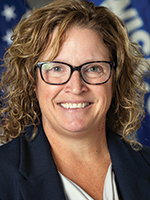
Rep. Joan Fitzgerald
Sponsored bills
Maddy summaryAB 765 creates a state bonding program to fund lead service line replacement for private water users connected to public water systems. It authorizes up to $274.95 million in state bonds (increasing previous limits) and allocates $200 million from bond proceeds to provide forgivable loans covering up to 50% of replacement costs for homeowners. The bill directly affects private residents with lead pipes by reducing their financial burden for replacing hazardous infrastructure. Key provisions include the new bonding authority and the specific allocation for forgivable loans to address public health concerns related to lead in drinking water.
Maddy summaryAB 782 bans restaurants and food vendors from serving food or beverages in foam polystyrene containers, directly affecting retail food businesses like restaurants, cafes, and vending machine operators. The bill includes exemptions for containers pre-sealed outside the state and raw meat/fish packaging for off-premise consumption. Businesses violating the ban after receiving written notice face fines up to $250 for the first offense and $500 for repeated violations. A waiver may be granted for undue hardship, but it cannot extend beyond 13 months after the effective date. The law aims to reduce single-use plastic waste while allowing limited exceptions for practical food handling needs.
Maddy summaryAB 753 creates a state program to provide matching grants to Wisconsin counties for investments they make in their healthcare, public health, and care provider workforce. Counties can receive state funds equal to their previous fiscal year's spending on recruitment, retention, mental health, trauma care, and wellness programs for workers in health care, public health, child care, and long-term care. The grant amount for each county is capped at $1.11 multiplied by the county's population. This bill establishes the funding mechanism and sets the maximum grant level, requiring the state to appropriate funds for these matching grants annually.
Maddy summaryAB 769 creates a new grant program to fund food waste reduction pilot projects, allocating $100,000 annually for fiscal years 2025-26 and 2026-27. The grants support projects focused on preventing food waste, redirecting surplus food to hunger relief organizations, and composting food waste. The Department of Agriculture must prioritize proposals serving low-income census tracts (below statewide median income) without grocery stores. The bill also authorizes the department to create rules for administering the program. This directly affects local pilot projects and hunger relief organizations in underserved communities.
Maddy summaryAB 783 repeals statute 66.0419, which previously governed local regulations on certain containers. This bill removes an existing legal provision but does not create new regulations or directly affect residents, businesses, or local governments. It is a procedural repeal with no new policy changes or implementation mechanisms.
Maddy summaryAB 773 requires correctional facilities to provide specific care for incarcerated pregnant and postpartum individuals (within 6 weeks of birth). It prohibits unnecessary restraints on these individuals except in extreme safety circumstances, mandating written documentation and staff training. Facilities must offer pregnancy testing, STI/HIV screening, continuing medication, doula/lactation support (if available at no cost), mental health assessments, and breastfeeding supplies. The bill directly affects all pregnant or postpartum people held in state prisons or jails, ensuring access to healthcare and support services during incarceration.
Maddy summaryAB 708 extends the lifespan of tax incremental districts (TIDs) used for housing improvements by up to three years after a city pays off project costs. It directly affects cities that have established TIDs for housing development, allowing them to continue using tax increment financing beyond the district's original expiration. The bill requires cities to submit extension resolutions to the Department of Revenue and obtain joint review board approval for extensions longer than one year. This change aims to provide more flexibility for cities to complete housing projects without losing access to dedicated funding streams.
Maddy summaryAB 721 creates a new income tax credit for beginning farmers and owners of farm assets in Wisconsin. Beginning farmers who lease or purchase agricultural assets (like land, equipment, or livestock) and asset owners who lease those assets to them can claim a credit equal to 5% of the lease or sales price paid each year. The credit is capped at $75,000 annually and only applies to the first three years of a lease. To qualify, claimants must provide eligibility certification and meet residency requirements, with partnerships and LLCs passing credit amounts to individual members.
Maddy summaryAB 706 modifies Wisconsin's tax increment district (TID) rules by reducing the local tax base limit from 18% to 12% of a city's total taxable value for certain districts. It restricts residential use in mixed-use TID projects to 35% of the district area and expands allowable TID spending to include park development costs. These changes directly affect cities and towns operating TIDs by altering how they calculate tax base limits and fund eligible projects. The bill aims to clarify TID management while controlling tax impacts on non-district areas.