

Maddy summaryAB 851 authorizes $25 million from the capital improvement fund to purchase agricultural conservation easements, which are agreements that limit development on farmland to preserve agricultural use. The bill creates new funding mechanisms (20.115 (7) (br) and (tb)) to reimburse costs for these easements and specifies payment procedures for the Department of Agriculture, Trade and Consumer Protection. It directly affects landowners selling conservation easements and state agencies administering the program. The appropriation supports farmland conservation by enabling the state to acquire easements under Section 93.73. The bill repeals an outdated statute (23.197 (15)) and amends related sections to implement these funding changes.
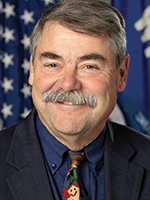
Rep. Joe Sheehan
Sponsored bills
Maddy summaryAB 852 establishes new grants for local governments to implement farmland preservation plans, including activities like updating zoning, creating farmland agreements, and monitoring compliance. It also requires the state to automatically adjust the farmland preservation tax credit for inflation annually using agricultural price data, ensuring the credit keeps pace with rising costs. These changes directly affect Wisconsin farmers who claim the tax credit and local governments (counties, cities, tribes) that receive implementation grants. The bill creates specific funding mechanisms through the working lands fund and sets eligibility criteria for grant recipients based on plan alignment and project effectiveness.
Maddy summaryAB 876 creates a new $10 million annual grant program for Wisconsin school districts to fund energy efficiency projects in school buildings, starting in the 2025-2026 school year. The program prioritizes projects focused on heating, ventilation, and air conditioning (HVAC) systems for schools. The Department of Public Instruction will administer the grants and may develop rules to implement the program. This directly affects public school districts seeking funding for building upgrades to reduce energy costs.
Maddy summaryAB 879 creates grants for cities, towns, nonprofits (501(c)(3) organizations), and tribes to plant and maintain trees in urban areas to reduce "urban heat islands" (warmer city zones). It provides up to $100,000 per project for tree planting, maintenance, and replacement, with no cost-sharing required for recipients. The bill also adds $500,000 in funding for 2025-26 and includes separate grants for tree recovery after storm damage in declared emergency areas. These grants cover full project costs without requiring applicants to pay any portion upfront.
Maddy summaryAB 821 creates a $2.5 million biennial grant program to help health care facilities recruit and retain staff who perform forensic exams on crime victims. It requires facilities to establish new positions, recruitment programs, or training for providers conducting exams related to domestic abuse or strangulation cases. The bill also revises reimbursement rules to ensure health care providers receive payment for exam costs (including STD testing/treatment) regardless of whether victims cooperate with law enforcement. This directly affects health care facilities and providers who conduct these forensic examinations for victims of specific offenses.
Maddy summaryAB 829 gives the state superintendent (or their designated representative) the authority to issue subpoenas during investigations into revoking professional licenses. This applies specifically to cases involving license revocation for "incompetency or immoral conduct." The bill allows the superintendent to compel witness testimony or document production using standard subpoena forms, as defined in existing law. It directly affects license holders facing revocation proceedings and individuals or entities required to provide evidence during these investigations. The change streamlines the investigation process by formalizing subpoena power within the superintendent's existing authority.
Maddy summaryAB 873 increases annual funding for crime victim services by $17,101,350 for both fiscal years 2025-26 and 2026-27, totaling $34.2 million over two years. It specifically allocates $4,025,800 to convert 17 existing full-time positions (FED) to permanent positions (GPR) within the Department of Justice. This funding directly supports state-run crime victim services programs that assist individuals impacted by crime. The bill makes no changes to eligibility or service scope - only increases the budget for existing programs.
Maddy summaryAB 917 creates a $150 million First-Time Home Buyer Purchasing Assistance Fund to provide interest-free loans for eligible buyers. It directly affects first-time homebuyers who have never owned a home (or lost one to foreclosure), earn at or below 100% of local median income, complete homebuyer education, and occupy the home as their primary residence. Loans cover up to $35,000 or 10% of the home’s purchase price (whichever is lower) for down payments, closing costs, and other expenses, with 12.5% forgiveness after 2.5 years and full forgiveness after 10 years. Repayment is triggered if the home is sold, stops being the primary residence, or if the borrower violates loan terms. The program is administered by Wisconsin’s Housing and Economic Development Authority.
Maddy summaryAB 824 requires businesses and facilities that serve the public to display a human trafficking resource center hotline poster. It specifically applies to hotels, motels, bed-and-breakfasts, campgrounds, tattoo shops, job recruitment centers, and community residential facilities. The bill directs the Department of Justice to make the poster available online and encourages its display in these locations. Schools must display the poster in areas accessible only to adult staff. The law modifies existing statutes to define these venues and update display requirements.
Maddy summaryAB 976 clarifies how tax credits for low-income housing projects are claimed by business entities. It modifies rules so partnerships, limited liability companies, and tax-option corporations cannot claim the credit directly; instead, their members or shareholders (including insurers who are part of such entities) may claim it based on the entity's eligible costs. The bill requires entities to calculate and distribute credit amounts to members/shareholders, with specific allocation rules for ownership interests or written agreements. It directly affects housing developers, investors, and insurers involved in low-income housing projects financed through tax-exempt bonds in the state. The changes standardize credit allocation across multiple tax code sections without altering eligibility or credit amounts.