

Maddy summaryAB 1067 requires broadband providers to advertise and sell services based on consistent, verifiable speeds - minimum 100 Mbps download and 20 Mbps upload - matching federal standards. It mandates standardized broadband labels using FCC templates for all consumers before sale, preventing misleading speed claims. Providers violating these rules face consumer refunds if they fail to correct misrepresentations within a month of written notice. The bill directly affects broadband companies and protects consumers by ensuring accurate speed disclosures.
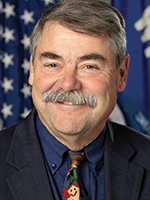
Rep. Joe Sheehan
Sponsored bills
Maddy summaryAB 1048 repeals statute 66.0104, which governed local regulations of landlords. This procedural bill removes an existing legal provision without creating new rules or directly affecting landlords, tenants, or local governments. It was introduced by multiple legislators and referred to the Housing Committee. The bill's sole action is eliminating the referenced statute from the code.
Maddy summaryAB 823 creates a program to provide electronic benefit transfer (EBT) and credit/debit card processing equipment and services to farmers' markets and farmers who sell directly to consumers. It allocates $367,500 biennially for this payment processing program and increases funding by $1 million annually for the healthy food incentive program. The bill requires participating vendors to process local purchasing incentives (even if funded by third parties) and adds 0.625 FTE positions to administer the program. This directly affects farmers' markets and farmers selling directly to consumers who participate in EBT or incentive programs.
Maddy summaryAB 835 establishes $10 million annually in grants for students enrolled in approved teacher education programs, requiring recipients to work as teachers in Wisconsin public or tribal schools for at least four years after graduation. It adjusts the reimbursement rate for special education costs to 90% of eligible expenses for school districts. The bill also modifies school district revenue limits by adding specific dollar amounts ($325 for 2023-24, $146 for 2023-24-2025-26) to calculate annual funding caps. These changes directly affect education students, school districts, and special education programs through concrete funding adjustments.
Maddy summaryAB 875 creates a new funding line for county conservation staff focused on climate change resiliency. It directly affects counties that have approved land and water conservation plans and choose to allocate matching funds. The bill adds "climate change personnel" as a specific budget item under soil and water management, requiring counties to specifically request funding for these roles in their annual grant applications to the Department of Agriculture. This changes how counties can use state grants by mandating explicit requests for climate-focused staff positions within their conservation planning process. The bill appropriates $1.8 million for the 2026-27 fiscal year for this purpose.
Maddy summaryAB 859 adjusts the state reimbursement rate for special education and school-age parent program costs. It sets the reimbursement rate at 42% of eligible costs for the 2025-26 school year, increasing to 45% for the 2026-27 school year and all subsequent years. The bill applies to costs covered under sections 115.88(1m)-(3), (6), (8), 115.93, and 118.255(4), which include services for students in hospitals, convalescent homes, and school programs. This change directly affects school districts and programs providing these services by altering the state's financial contribution toward their expenses. The bill amends statutes to ensure state funds are distributed according to these revised percentages.
Maddy summaryAB 857 creates a climate change scholarship program funding $5 million annually for Wisconsin students enrolled in climate-related academic programs at eligible colleges and universities (including UW System, technical colleges, tribal colleges, or private nonprofits). It requires scholarships to be split equally between merit-based and need-based awards, with a $5,000 annual limit per student. The program is funded through a dedicated appropriation in the state budget, administered by the Higher Educational Aids Board. Students with unresolved child support liens may be excluded unless they provide approved payment plans.
Maddy summaryAB 858 requires Wisconsin's Public Service Commission to consider a minimum "social cost of carbon" of $185 per metric ton of CO2 emissions when reviewing energy certificates. It mandates that costs for expanding fossil fuel infrastructure can only be recovered from customers who directly benefit from that infrastructure, and prohibits passing transition costs to renewable energy onto ratepayers. The bill directly affects utilities seeking infrastructure investments and residential/commercial electricity customers paying rates. Key provisions ensure fossil fuel expansion costs are tied to specific beneficiaries while shielding customers from transition expenses during the shift to renewables.
Maddy summaryAB 860 requires state and county correctional facilities to provide written guides detailing inmates' and juveniles' rights, updated annually or after legal changes. These guides must account for individual circumstances like confinement status and location, and be posted throughout facilities, provided upon entry or transfer, and explained by staff to all affected individuals. The bill appropriates $200,000 for the Department of Administration to contract with legal organizations - including formerly incarcerated individuals - to develop these guides by June 2027. The law takes effect July 1, 2027, directly affecting all inmates in state prisons, county jails, and juveniles in youth facilities across Wisconsin.
Maddy summaryAB 846 increases state funding for two Wisconsin promotion programs. It adds $200,000 annually for fiscal years 2025-26 and 2026-27 to advertise the "Something Special from Wisconsin" brand and logo, and $300,000 annually for "Buy Local, Buy Wisconsin" grants. These funds, managed by the Department of Agriculture, Trade and Consumer Protection, directly support Wisconsin businesses participating in the state's marketing campaigns and local purchasing initiatives. The bill makes no new policy changes but allocates additional state appropriations to existing programs.