

Maddy summaryAB 744 would provide free vehicle access to Wisconsin state parks for veterans and gold star families. The bill creates a new statute allowing any vehicle (excluding motor buses) occupied by a veteran - verified using the federal definition in 38 USC 101 - or a family member meeting gold star lapel button criteria (per 10 USC 1126) to enter parks without paying admission fees. It directly affects eligible veterans and surviving family members of service members who died in combat. The policy change removes a fee requirement for these groups when entering parks by private vehicle, with proof of eligibility required at the park entrance. The bill is currently in committee review after its December 2025 introduction.
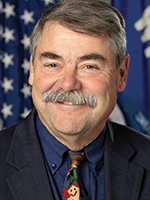
Rep. Joe Sheehan
Sponsored bills
Maddy summaryAB 765 creates a state bonding program to fund lead service line replacement for private water users connected to public water systems. It authorizes up to $274.95 million in state bonds (increasing previous limits) and allocates $200 million from bond proceeds to provide forgivable loans covering up to 50% of replacement costs for homeowners. The bill directly affects private residents with lead pipes by reducing their financial burden for replacing hazardous infrastructure. Key provisions include the new bonding authority and the specific allocation for forgivable loans to address public health concerns related to lead in drinking water.
Maddy summaryAB 753 creates a state program to provide matching grants to Wisconsin counties for investments they make in their healthcare, public health, and care provider workforce. Counties can receive state funds equal to their previous fiscal year's spending on recruitment, retention, mental health, trauma care, and wellness programs for workers in health care, public health, child care, and long-term care. The grant amount for each county is capped at $1.11 multiplied by the county's population. This bill establishes the funding mechanism and sets the maximum grant level, requiring the state to appropriate funds for these matching grants annually.
Maddy summaryAB 704 increases fees for snowmobile registration and trail use stickers in Wisconsin. It raises the public-use registration fee from $30 to $45 (with a $5 fee for political subdivisions), keeps private-use registration fee-free, and increases trail sticker fees: from $49.25 to $69.25 for exempt snowmobiles, $9.25 to $19.25 for club members meeting specific criteria, and $29.25 to $49.25 for others. The bill directly affects snowmobile owners who register their vehicles or use public trails. Key provisions include standardized fee increases and a reduced rate for members of qualifying snowmobile clubs.
Maddy summaryAB 708 extends the lifespan of tax incremental districts (TIDs) used for housing improvements by up to three years after a city pays off project costs. It directly affects cities that have established TIDs for housing development, allowing them to continue using tax increment financing beyond the district's original expiration. The bill requires cities to submit extension resolutions to the Department of Revenue and obtain joint review board approval for extensions longer than one year. This change aims to provide more flexibility for cities to complete housing projects without losing access to dedicated funding streams.
Maddy summaryAB 760 raises the monetary threshold for certain small claims court cases from $5,000 to $10,000. It directly affects individuals filing third-party complaints, personal injury claims, or tort actions with claims of $10,000 or less. The bill changes the statute to allow these specific claim types to be handled in small claims court instead of regular civil court when the amount sought is $10,000 or less. This policy change simplifies access to a faster, less formal court process for qualifying cases.
Maddy summaryAB 706 modifies Wisconsin's tax increment district (TID) rules by reducing the local tax base limit from 18% to 12% of a city's total taxable value for certain districts. It restricts residential use in mixed-use TID projects to 35% of the district area and expands allowable TID spending to include park development costs. These changes directly affect cities and towns operating TIDs by altering how they calculate tax base limits and fund eligible projects. The bill aims to clarify TID management while controlling tax impacts on non-district areas.
Maddy summaryAB 809 prohibits state and local government funding for investigations into pregnancy outcomes (like miscarriage or stillbirth) when treating the person as a crime suspect. It bans law enforcement from investigating individuals as suspects solely due to their own pregnancy outcomes, requiring consent before investigating cases involving others' pregnancy outcomes. The bill exempts women from civil or criminal liability for pregnancy outcomes (including miscarriage, abortion, or stillbirth) and amends statutes to clarify that abortion-related legal protections apply. It directly affects women experiencing pregnancy outcomes, law enforcement agencies, and health services (with limited exceptions for health investigations). The bill creates new legal protections by restricting investigations and eliminating liability for pregnancy-related events.
Maddy summaryAB 803 would expand state funding for workforce training grants to specifically include programs preparing individuals to become teachers. The bill creates a new grant category (106.27 (1) (b) 1. b.) for programs offering evidence-based training, leadership development, on-site job experience, and support to build teaching skills. This directly affects teacher preparation programs, including those in dual enrollment settings, by adding them to eligible grant recipients. The key change is codifying support for structured career pathways into teaching, moving beyond current grant scope. The bill is currently pending in the Rules committee after passing its primary committee unanimously.
Maddy summaryAB 797 creates a $2.5 million grant program to help counties, cities, and towns test privately owned wells for water quality and map well locations. It provides up to $10,000 per grant for well testing, groundwater assessment, and geologic studies, plus separate grants for county health departments to offer well-testing education. The bill also requires municipalities with private wells to inform residents about testing importance and exempts the department from standard emergency rule procedures for implementing this program. The law appropriates funds for fiscal years 2025-26 and 2026-27 to support these concrete actions.