

Maddy summaryAB 383 increases funding for Wisconsin's Veterans Housing and Recovery Program. It allocates an additional $900,000 for fiscal year 2025-26 and $1,050,000 for 2026-27 to cover program supplies, services, and leasing costs for the Chippewa Falls-based program. This adjustment addresses space and facility deficiencies at the current location by enabling a facility move. The bill directly affects veterans utilizing this housing program in Chippewa Falls. The changes are purely fiscal, with no new program requirements or policy shifts.
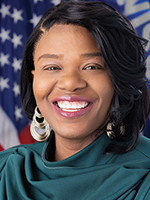
Rep. Sequanna Taylor
Sponsored bills
Maddy summaryAB 404 establishes and funds the Veterans Outreach and Recovery Program, which provides direct support services to veterans in need. The bill appropriates state funds to cover outreach, counseling, and recovery resources for veterans facing challenges like homelessness, mental health issues, or unemployment. It directly affects veterans seeking these services and the state agencies or community organizations delivering them. The program’s implementation is contingent on the approved budget allocation, with no policy changes beyond the funding mechanism. As a fiscal bill, it focuses on resource allocation rather than new legal requirements.
Maddy summaryAB 504 requires property tax bills to include specific information about state aid reductions for school districts. It mandates disclosing the dollar amount and percentage change in state aid reductions from the previous year to the current year, and explicitly identifies if reductions resulted from enrollment in choice programs (like Milwaukee or Racine Choice) or special needs scholarships. School districts receiving reduced aid must also note that they could raise property taxes to offset the loss. This applies only when an actual aid reduction occurs, not every year. The bill aims to provide property owners with clear, transparent details about how state funding changes affect their local schools.
Maddy summaryAB 533 requires all public K-12 schools in the state to incorporate at least one hour of voter education annually into the social studies curriculum, effective July 1, 2026. It mandates age-appropriate content: elementary students learn election basics, voting importance, and mock elections, while high school students receive instruction on voter registration, absentee ballots, military/student voting procedures, and accessing official election resources. The bill updates state social studies standards to include these requirements and applies to all public schools, including charter schools, through curriculum adjustments. This policy directly affects students, educators, and school districts by embedding civic education into standard coursework.
Maddy summaryAB 586 amends Wisconsin statutes to clarify and strengthen shared governance at University of Wisconsin System institutions by defining the roles of faculty, academic staff, and students in institutional decision-making. The bill requires faculty to ensure STEM disciplines are represented in governance structures, gives academic staff the right to organize and advise on policies affecting them, and ensures students actively participate in policies related to student life and fee management. Key provisions specify that faculty have primary responsibility for academic matters, academic staff for their own policies, and students for advising on campus life and fee use. These changes directly affect all faculty, academic staff, and students across UW System campuses by formalizing their participation in governance and policy development.
Maddy summaryAB 495 adjusts Wisconsin's school funding system to protect districts from funding cuts between 2024 and 2025. It creates a "supplemental hold harmless aid" provision (20.255(2)(ab)) to ensure districts receiving higher state aid in 2024 retain that level in 2025-26. The bill also modifies per-pupil revenue limits, adding $325 for the 2023-24 and 2024-25 school years, and increases state funding appropriations by $493.8 million for 2025-26 and $699.9 million for 2026-27. These changes directly affect public school districts receiving state equalization aid.
Maddy summaryAB 325 modifies Wisconsin's firearm transfer rules to require most sales or transfers to go through a licensed firearms dealer, with exceptions for direct family gifts, bequests, or inheritances (if the recipient is at least 18 and not prohibited from owning firearms). It adds a $10 fee for background checks conducted by dealers and mandates new forms requiring transferees to confirm they aren’t transferring to prohibited individuals. Violating these rules carries a misdemeanor penalty of fines ($500-$10,000) or up to 9 months in jail, plus a 2-year firearm possession ban. The bill directly affects gun sellers, buyers, and family members transferring firearms without a dealer.
Maddy summaryAB 539 allows 16- and 17-year-olds to preregister to vote in the state. This preregistration becomes active when they turn 18, enabling them to vote in future elections without needing to re-register. The bill amends voter registration rules to require that preregistered 16-17 year olds only appear on voter lists once they reach age 18 on election day. It does not permit their names to appear on election lists before they turn 18.
Maddy summaryAB 531 creates a $200,000 annual grant program for counties and law enforcement agencies to establish safe firearm disposal initiatives. Agencies must advertise the program, use law enforcement personnel (with grant funds covering overtime), securely store firearms until destruction, prevent fraud, and have firearms inspected by licensed dealers before payment. Participants receive gift cards (not cash) that cannot be redeemed for guns or ammo, and agencies must report firearm details and program outcomes to the state. The bill also funds staff positions to administer the program and requires annual reports on participation and improvements.
Maddy summaryAB 434 creates a new $60 million annual state grant program to fund local traffic calming projects. It directly affects counties, cities, villages, towns, and federally recognized tribes by providing funding for infrastructure projects designed to reduce vehicle speeds. The program, administered by the Department of Transportation, will award grants for projects eligible under federal transportation alternatives programs. Grants require applications with specified details, and the department will set evaluation criteria for funding decisions. This is a concrete policy change establishing ongoing state funding for community safety improvements.