Issue · Healthcare

Healthcare

Every healthcare bill, vote, and legislator stance in Wisconsin, automatically classified by Maddy, our AI policy reader.

Total bills
399
2025-2026 Regular Session
Top supporter
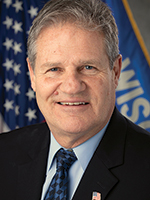
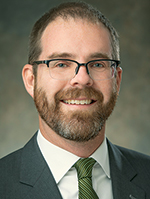
Shannon Zimmerman
79% support rate
Top opponent
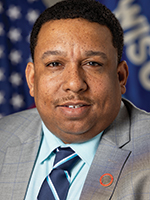
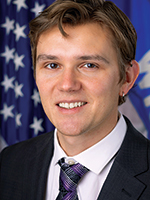
Russell Goodwin
31% support rate
Ranked legislators
10
5 support · 5 oppose
Key legislators

Who's moving healthcare in Wisconsin

Legislators moving healthcare in Wisconsin
Legislator Party Stance Support rate Votes
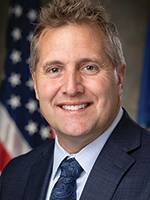
Shannon Zimmerman
Shannon Zimmerman House · District 30
R
Support
79% 35
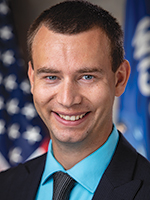
Will Penterman
Will Penterman House · District 38
R
Support
71% 41
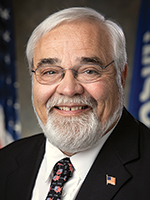
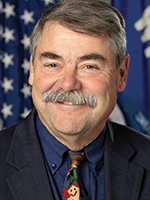
Jeff Mursau
Jeff Mursau House · District 36
R
Support
69% 44
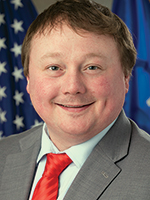
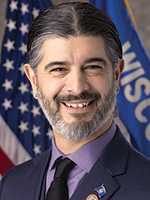
Chanz Green
Chanz Green House · District 74
R
Support
67% 47
Paul Melotik
Paul Melotik House · District 22
R
Support
67% 47
Russell Goodwin
Russell Goodwin House · District 12
D
Oppose
31% 42
Joe Sheehan
Joe Sheehan House · District 26
D
Oppose
33% 43
Vinnie Miresse
Vinnie Miresse House · District 71
D
Oppose
35% 46
Ryan Clancy
Ryan Clancy House · District 19
D
Oppose
38% 44
Christian Phelps
Christian Phelps House · District 93
D
Oppose
39% 47
Showing 71–80 of 399 bills

All healthcare bills

failed · Wisconsin · Senate Apr 7, 2026

SB 959: Relating to: requirements for the use of a memory care designation by community-based residential facilities. (FE)

SB 959 sets new requirements for community-based residential facilities that use the "memory care" designation in their name, advertising, or communications. It requires these facilities to serve residents with irreversible dementia (like Alzheimer’s) and provide staff with comprehensive dementia care training, including dementia basics, person-centered care strategies, communication techniques, non-drug behavioral interventions, and supporting independence. Facilities must complete initial training for administrators and resident care staff by July 1, 2027, and provide annual refresher training on these topics. Existing facilities using "memory care" before July 1, 2027, must comply with these rules by that date to continue the designation.
Sub-Topics Long-Term Care
failed · Wisconsin · Senate Mar 23, 2026

SB 1004: Relating to: ratification of the Interstate Massage Compact. (FE)

SB 1004 ratifies the Interstate Massage Compact (IMpact), enabling licensed massage therapists to practice across state lines in participating states without needing separate licenses. It creates an interstate commission and defines key terms like "multistate license" (allowing therapists to practice in compact states) and "authorization to practice" (for license holders from other compact states). The bill also updates licensing rules to prevent employment discrimination based on certain criminal convictions when granting multistate licenses and adjusts fingerprinting requirements for credentialing. This directly affects licensed massage therapists, the state credentialing board, and healthcare providers seeking cross-state practice opportunities.
failed · Wisconsin · Senate Mar 23, 2026

SB 1014: Relating to: expanding the Wisconsin deflection initiative and making an appropriation. (FE)

SB 1014 expands Wisconsin's existing deflection initiative by providing grants to current participating sites during 2025-27. The bill allows grants for hiring staff, contracting vendors for evaluations, or acquiring care coordination technology that meets legal privacy standards. It increases annual funding by $400,000 for two years and adds $107,100 to support an additional staff position for the Department of Justice. This directly affects current deflection initiative sites, the Department of Justice, and qualified technology vendors.
Sub-Topics Appropriations
failed · Wisconsin · Senate Mar 23, 2026

SB 1054: Relating to: a Medical Assistance coordination working group. (FE)

SB 1054 creates a Medical Assistance coordination working group to improve statewide program coordination and recipient experience. The working group, requiring specific members including department staff, resource centers, tribal bodies, legislators, healthcare providers, and a recipient, must convene by June 1, 2026. It will study the program's coordination and recipient experience following changes from P.L. 119-21, then submit a report to the department and legislature within seven months. The bill directly affects Medical Assistance recipients and the agencies managing the program, focusing on process improvement rather than altering benefits or eligibility.
failed · Wisconsin · Senate Jul 8, 2026

SB 1001: Relating to: the establishment of a family and medical leave insurance program; family leave to care for a family member and for the active duty of a family member; the employers that must allow an employee to take family or medical leave; allowing a local government to adopt ordinances requiring employers to provide leave benefits; providing an exemption from emergency rule procedures; providing an exemption from rule-making procedures; granting rule-making authority; making an appropriation; and providing a penalty. (FE)

SB 1001 establishes a state-run family and medical leave insurance program requiring employers with 50+ employees to provide up to 14 weeks of paid leave annually for qualifying reasons like caring for a newborn, a seriously ill family member, or a family member on active military duty. The bill creates a dedicated trust fund financed through employee and employer contributions to cover leave benefits and amends statutes to define key terms like "family member" and "serious health condition." It also allows local governments to adopt stricter leave requirements and exempts the program from standard rule-making procedures. This policy directly affects employees seeking leave for family or medical needs and employers meeting the 50-employee threshold.
failed · Wisconsin · Assembly Apr 6, 2026

AB 1044: Relating to: grants for patient lift devices and making an appropriation. (FE)

AB 1044 creates a state grant program allocating $300,000 for the 2025-26 fiscal year to help adult family homes, community-based residential facilities, nursing homes, and residential care apartment complexes purchase patient lift devices. These devices must be state-approved, allow independent or staff-assisted operation, and mechanically lift a person. Facilities receiving grants must report usage data, with up to $100,000 of the appropriation reserved for collecting and analyzing this information.
Sub-Topics Appropriations
failed · Wisconsin · Assembly Mar 23, 2026

AB 1084: Relating to: dental services for pregnant persons under the Medical Assistance program. (FE)

AB 1084 expands dental coverage for pregnant individuals enrolled in Wisconsin's Medical Assistance program (Medicaid). The bill requires that pregnant recipients referred for dental care must be seen by a dentist or dental therapist within 30 days of referral. It defines "dental therapist" as a licensed professional under existing law and ensures referrals for basic dental services include this option. This directly affects pregnant Medical Assistance recipients who need dental care, guaranteeing timely access to covered services.
Sub-Topics Medicaid
failed · Wisconsin · Senate Apr 15, 2026

SB 1020: Relating to: grants for patient lift devices and making an appropriation. (FE)

SB 1020 creates a $300,000 grant program to help specific healthcare facilities purchase patient lift devices. Eligible facilities include adult family homes, nursing homes, community-based residential facilities, and residential care apartment complexes. Grants cover devices approved by the department that can be operated independently by residents or with staff assistance, and mechanically lift people. Recipients must report usage data, with up to $100,000 of the appropriation reserved for data collection and analysis.
Sub-Topics Appropriations
failed · Wisconsin · Senate Mar 23, 2026

SB 1077: Relating to: health insurance coverage of prosthetic limbs and custom orthotic braces. (FE)

SB 1077 requires health insurance plans - including self-insured plans operated by state/local governments - to cover prosthetic limbs and custom orthotic braces when medically necessary for daily activities, job functions, or bathing. It mandates coverage equal to federal standards (42 USC 1395k-1395m), including materials, repairs, and replacement without lifetime restrictions if repairs exceed 60% of replacement costs. The law applies to all covered individuals (enrollees in private plans or government self-insured plans) and requires insurers to provide written explanations for coverage denials based on medical necessity. It also ensures access to at least two in-network providers for these devices.
Sub-Topics Insurance
failed · Wisconsin · Assembly Mar 23, 2026

AB 1071: Relating to: testing and labeling related to toxic heavy metals in baby food and providing a penalty. (FE)

AB 1071 requires baby food manufacturers selling in the state to test for arsenic, cadmium, lead, and mercury (toxic heavy metals) and publicly disclose results. If tested, manufacturers must post metal levels, testing dates, and product details on their website with a QR code on the product label linking to this information. If not tested, they must clearly state this on the label and website with a QR code. The law applies to all baby food (including infant formula) sold in the state, with violations subject to a $100 daily penalty per product. It aims to provide consumers with transparent safety information about heavy metals in products for children under age 2.
Showing 71 to 80 of 399 bills
Previous 1 7 8 9 40 Next