Issue · Healthcare

Healthcare

Every healthcare bill, vote, and legislator stance in Wisconsin, automatically classified by Maddy, our AI policy reader.

Total bills
399
2025-2026 Regular Session
Top supporter
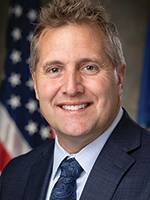
Shannon Zimmerman
79% support rate
Top opponent
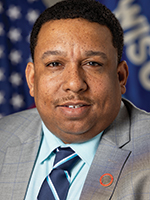
Russell Goodwin
31% support rate
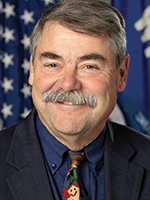
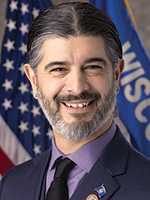
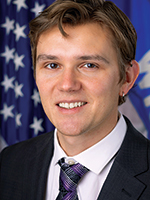
Ranked legislators
10
5 support · 5 oppose
Key legislators

Who's moving healthcare in Wisconsin

Legislators moving healthcare in Wisconsin
Legislator Party Stance Support rate Votes
Shannon Zimmerman
Shannon Zimmerman House · District 30
R
Support
79% 35
Will Penterman
Will Penterman House · District 38
R
Support
71% 41
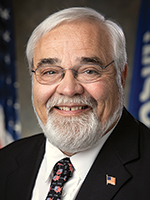
Jeff Mursau
Jeff Mursau House · District 36
R
Support
69% 44
Chanz Green
Chanz Green House · District 74
R
Support
67% 47
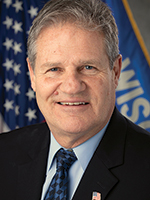
Paul Melotik
Paul Melotik House · District 22
R
Support
67% 47
Russell Goodwin
Russell Goodwin House · District 12
D
Oppose
31% 42
Joe Sheehan
Joe Sheehan House · District 26
D
Oppose
33% 43
Vinnie Miresse
Vinnie Miresse House · District 71
D
Oppose
35% 46
Ryan Clancy
Ryan Clancy House · District 19
D
Oppose
38% 44
Christian Phelps
Christian Phelps House · District 93
D
Oppose
39% 47
Showing 351–360 of 399 bills

All healthcare bills

failed · Wisconsin · Assembly Mar 23, 2026

AB 589: Relating to: elimination of certain abortion-related regulations.

AB 589 eliminates specific abortion-related requirements from medical licensing regulations. It removes references to abortion procedures from statutes governing medical board investigations (amending §448.02) and repeals sections requiring parental consent, ultrasound disclosures, or abortion-specific definitions (like §253.10). This directly affects physicians and medical licensing boards by removing mandatory reporting obligations related to abortion care. The bill streamlines medical oversight by excluding abortion-related violations from the list of unprofessional conduct that triggers board investigations.
failed · Wisconsin · Senate May 26, 2026

SB 74: Relating to: ratification of the Social Work Licensure Compact. (FE)

SB 74 ratifies the Social Work Licensure Compact, allowing social workers licensed in one participating state to practice in other compact states without reapplying for a new license. The bill creates a commission to manage the compact and amends multiple statutes to align licensing requirements across participating states, ensuring social workers meet standardized qualifications. This directly affects social workers seeking to practice across state lines, child welfare agencies (which must employ licensed social workers per amended statutes), and licensing boards. Key provisions include standardizing definitions for "social worker" and "licensed treatment professional" in statutes governing employment and service delivery. The compact aims to streamline licensure for social workers while maintaining consistent professional standards.
Sub-Topics Medical Licensing
failed · Wisconsin · Senate Mar 23, 2026

SB 306: Relating to: provision of virtual mental health services for students at certain UW System institutions. (FE)

SB 306 requires the University of Wisconsin (UW) System Board to contract with a vendor providing virtual mental health services for students at UW institutions with 30,000 or fewer full-time undergraduate students (based on April 1 enrollment data). The services must complement existing campus mental health resources, extend support beyond regular hours, and include licensed providers with higher education experience. Vendors must have at least five years of experience in student mental health services and submit annual reports on student usage to the board and legislature. This bill directly affects eligible UW students and aims to expand access to virtual mental health support through a structured vendor partnership.
failed · Wisconsin · Assembly Mar 23, 2026

AB 410: Relating to: grants for falls prevention awareness and initiatives and making an appropriation. (FE)

AB 410 provides state funding through grants to community organizations for falls prevention awareness programs and initiatives. It directly affects local health agencies, senior service providers, and community groups working with at-risk populations, particularly older adults. The bill establishes a specific appropriation from the state budget to support these prevention efforts. This is a funding measure, not a regulatory change, and focuses on allocating resources for education and outreach programs.
failed · Wisconsin · Senate Mar 23, 2026

SB 672: Relating to: prohibiting knowingly covering organ transplantation and related care under health insurance policies and the Medical Assistance program if the organ is transplanted in or originates from a country known to have participated in forced organ harvesting. (FE)

SB 672 prohibits health insurance plans (including Medical Assistance) from covering organ transplants or related care if the organ was transplanted in, originates from, or was procured in a country designated by the department as participating in forced organ harvesting. The bill defines forced organ harvesting as the removal of organs through coercion, deception, or abuse of power. It exempts life-saving post-transplant care for individuals who already received a prohibited transplant. The department will designate qualifying countries, and the law applies to all disability insurance, self-insured health plans, and Medical Assistance programs. (SB 672, Section 1)
Sub-Topics Insurance
failed · Wisconsin · Assembly Mar 23, 2026

AB 571: Relating to: a statewide Parkinson’s disease registry. (FE)

AB 571 creates a statewide Parkinson’s disease registry to collect and track health data on Parkinson’s disease and related conditions (like multiple system atrophy). Health care providers must report anonymized patient data - including diagnosis, treatment, outcomes, and demographics - to the University of Wisconsin-Madison for storage and analysis. The registry will generate annual public reports on disease incidence, prevalence, and trends via a dedicated website, with strict privacy safeguards (e.g., coded data, IRB-approved research access). This affects health care facilities, providers, and patients, but does not impose new costs or treatment requirements.
failed · Wisconsin · Senate Mar 23, 2026

SB 137: Relating to: the duty of a pharmacist to dispense lawfully prescribed drugs and devices. (FE)

SB 137 requires pharmacists to dispense lawfully prescribed contraceptives and other drugs without delay, unless specific exceptions apply. It defines "absolute contraindication" (a condition making a drug unsafe) and lists valid refusal reasons, such as prescription errors, drug incompatibility, or fraud. If a pharmacist refuses for religious or moral reasons, they must immediately transfer the prescription to another pharmacy without delay. The bill also prohibits pharmacy benefit managers from penalizing pharmacists for dispensing drugs for off-label uses under a valid prescription.
Sub-Topics Prescription Drugs
failed · Wisconsin · Assembly Mar 23, 2026

AB 353: Relating to: price transparency in hospitals, restricting certain debt collection actions against patients, and providing a penalty. (FE)

AB 353 requires hospitals to provide clear, upfront pricing for services and restricts certain aggressive debt collection tactics against patients. It directly affects hospitals by mandating transparent cost disclosures and patients by limiting how debt collectors can pursue unpaid medical bills. Key provisions include requiring hospitals to publish standard charges and prohibiting collectors from garnishing wages or threatening lawsuits for small amounts. The bill also establishes penalties for violations of these transparency and debt collection rules. This legislation aims to make healthcare costs more understandable and protect patients from excessive collection practices.
Sub-Topics Hospitals
failed · Wisconsin · Senate Mar 23, 2026

SB 39: Relating to: establishment of a Palliative Care Council. (FE)

SB 39 proposes the establishment of a Palliative Care Council. This council would likely address matters related to palliative care services, which aim to provide comfort and support for patients with serious illnesses. An amendment to the bill details the required composition of the council's physician members. Specifically, it mandates that five physicians serve on the council, including two palliative care physicians (one specializing in pediatric palliative care) and two primary care physicians.
failed · Wisconsin · Assembly Mar 23, 2026

AB 127: Relating to: the duty of a pharmacist to dispense lawfully prescribed drugs and devices. (FE)

AB 127 modifies pharmacy laws regarding the dispensing of lawfully prescribed contraceptives. It allows pharmacists to refuse dispensing for reasons of conscience but requires them to immediately transfer the prescription to another pharmacy at the patient’s direction without delay. This directly affects pharmacists in community and hospital settings who dispense contraceptives, ensuring patients can access their prescribed medication without unnecessary delays. The bill specifies that refusals cannot be based on prescription errors, potential fraud, or drug incompatibility, and clarifies that pharmacists must transfer prescriptions rather than deny service.
Showing 351 to 360 of 399 bills
Previous 1 35 36 37 40 Next