Issue · Healthcare

Healthcare

Every healthcare bill, vote, and legislator stance in Wisconsin, automatically classified by Maddy, our AI policy reader.

Total bills
399
2025-2026 Regular Session
Top supporter
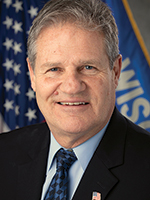
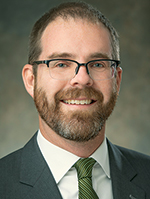
Shannon Zimmerman
79% support rate
Top opponent
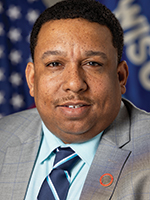
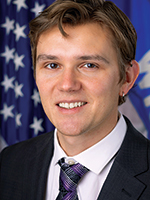
Russell Goodwin
31% support rate
Ranked legislators
10
5 support · 5 oppose
Key legislators

Who's moving healthcare in Wisconsin

Legislators moving healthcare in Wisconsin
Legislator Party Stance Support rate Votes
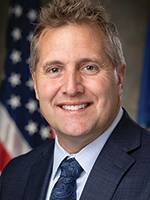
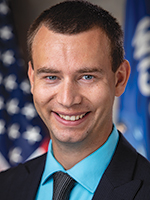
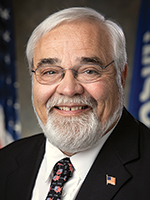
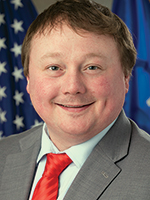
Shannon Zimmerman
Shannon Zimmerman House · District 30
R
Support
79% 35
Will Penterman
Will Penterman House · District 38
R
Support
71% 41
Jeff Mursau
Jeff Mursau House · District 36
R
Support
69% 44
Chanz Green
Chanz Green House · District 74
R
Support
67% 47
Paul Melotik
Paul Melotik House · District 22
R
Support
67% 47
Russell Goodwin
Russell Goodwin House · District 12
D
Oppose
31% 42
Joe Sheehan
Joe Sheehan House · District 26
D
Oppose
33% 43
Vinnie Miresse
Vinnie Miresse House · District 71
D
Oppose
35% 46
Ryan Clancy
Ryan Clancy House · District 19
D
Oppose
38% 44
Christian Phelps
Christian Phelps House · District 93
D
Oppose
39% 47
Showing 301–310 of 399 bills

All healthcare bills

signed · Wisconsin · Senate Aug 11, 2025

SB 14: Relating to: pelvic exams on unconscious patients and creating an administrative rule related to hospital requirements for pelvic exams on unconscious patients.

This bill requires hospitals to obtain written permission from patients before performing pelvic exams for educational purposes on patients who are unconscious (e.g., under anesthesia). It directly affects hospitals, medical staff, and patients undergoing such exams during medical training. The key provision mandates that hospitals create written policies ensuring patients provide explicit, prior consent for these specific exams. The law, now Wisconsin Act 22, applies to all facilities conducting such educational procedures on unconscious individuals.
Sub-Topics Hospitals
failed · Wisconsin · Assembly Mar 23, 2026

AB 198: Relating to: emergency medical services education, tuition and materials reimbursement for emergency medical responders and emergency medical services practitioners, and a live 911 pilot program. (FE)

AB 198 creates two key programs: (1) grants for technical colleges offering emergency medical services (EMS) training, provided they don't give admission priority based on residency; and (2) a reimbursement program for individuals or their employers who paid tuition/materials for initial EMS certification/licensure as an emergency medical responder or practitioner. Eligible applicants must complete required courses, pass exams, and obtain their license/certification through the Department of Health Services. The bill also establishes a "live 911" pilot program allowing grants for real-time video communication during emergency calls, requiring a performance report by October 2027. This directly affects EMS students, practitioners, their employers, and public safety answering points.
Sub-Topics Medical Licensing Professional Licensing Tags Public Safety
failed · Wisconsin · Senate Mar 23, 2026

SB 327: Relating to: emotional support animals in housing; falsely claiming that an animal is a service animal; and providing a penalty. (FE)

SB 327 ensures landlords cannot deny housing to tenants with emotional support animals based solely on the animal's presence. It requires tenants to provide a letter or prescription from a healthcare provider to verify their need for the animal. The bill also establishes penalties for individuals who falsely claim their pet is a service animal to gain housing access. This directly affects landlords, tenants, and housing providers across the state.
failed · Wisconsin · Senate Mar 23, 2026

SB 538: Relating to: use of certain statements as evidence in prosecution for prostitution.

SB 538 prevents law enforcement from using statements about prostitution as evidence in prosecution if those statements were gathered while someone sought medical care or reported another crime (not prostitution). It protects individuals who contact police, medical providers, or emergency services for reasons unrelated to prostitution, as well as those reporting crimes or seeking care on behalf of others. The bill creates a clear rule that statements obtained during these unrelated interactions cannot be used to prosecute a person for prostitution. This change directly affects people interacting with authorities for medical or non-prostitution-related crime reporting, ensuring such statements remain inadmissible in prostitution cases.
failed · Wisconsin · Senate Mar 23, 2026

SB 50: Relating to: health care costs omnibus, granting rule-making authority, making an appropriation, and providing a penalty. (FE)

SB 50 establishes a Prescription Drug Affordability Review Board to address prescription drug costs, requiring it to meet quarterly and include balanced representation from pharmaceutical manufacturers, health insurers, healthcare providers, and the public. The bill allocates $500,000 annually for state operations related to this board and funds a pilot project to create value-based diabetes medication arrangements with pharmacy benefit managers. It also modifies Medicaid copayment rules to prevent providers from denying care due to inability to pay copays, while creating a new tool for prescribers to disclose drug costs to patients. Additionally, the bill authorizes partnerships with out-of-state drug repositories and allows pharmacists to count free clinic volunteer hours toward continuing education requirements.
signed · Wisconsin · Assembly Apr 9, 2026

AB 700: Relating to: an appropriation for refundable long-term care insurance assessment credits and making an appropriation. (FE)

AB 700 appropriates state funds to cover refundable credits for Wisconsin taxpayers who pay long-term care insurance assessments. It directly affects residents who pay these assessments by ensuring they receive the full credit amount through a dedicated budget appropriation. The bill amends statute 20.835(2)(de) to specify the funding needed for credits under existing laws (sections 71.07(12)(d)2., 71.28(12)(d)2., 71.47(12)(d)2., and 76.633(4)). This creates a permanent funding mechanism for the credits rather than relying on annual budget adjustments.
Sub-Topics Long-Term Care
failed · Wisconsin · Assembly Mar 23, 2026

AB 432: Relating to: transparency and regulation of prior authorization requirements under health insurance plans. (FE)

AB 432 regulates prior authorization processes for health insurance plans in Wisconsin. It requires insurance companies to follow specific transparency rules when denying coverage for medical services (called "adverse determinations"), mandating that these decisions be made by qualified health providers like physicians or nurse practitioners under medical directors' oversight. The bill defines key terms like "prior authorization" (pre-approval for services) and "urgent health care service" (requiring faster decisions), and sets deadlines for non-urgent cases. It directly affects health insurance plans, self-insured employer plans, and enrollees who seek covered services. The law aims to make the approval process clearer and more timely for patients.
signed · Wisconsin · Senate Mar 19, 2026

SB 264: Relating to: coverage of breast cancer screenings by the Medical Assistance program and health insurance policies and plans. (FE)

SB 264 requires health insurance plans and the Medical Assistance program to cover specific breast cancer screenings without out-of-pocket costs for enrollees. It defines two key types of screenings: "diagnostic breast examinations" (used to evaluate symptoms or abnormalities, like mammograms) and "supplemental breast screening examinations" (for high-risk individuals without symptoms, using MRI or ultrasound). The bill prohibits cost-sharing (such as copays) for all diagnostic screenings and for the first supplemental screening per year, while allowing limited cost-sharing for additional supplemental screenings in the same year. This directly affects individuals with health insurance or Medical Assistance who require these screenings, particularly those at higher risk for breast cancer.
Sub-Topics Insurance
failed · Wisconsin · Assembly Mar 23, 2026

AB 76: Relating to: creating an individual income tax deduction for certain income earned by an individual from the practice of psychiatry or from providing psychiatric or mental health services. (FE)

AB 76 creates a state income tax deduction for Wisconsin psychiatrists and psychiatric mental health nurse practitioners. It allows eligible professionals to deduct up to $100,000 annually from their taxable income if they practice outside medically underserved areas, or up to $200,000 if they work in such areas (as defined by statute). The deduction applies only to income earned from their specific practice in Wisconsin and is limited to 5 consecutive taxable years, starting within 2 years of beginning or returning to practice in the state. To qualify, practitioners must be licensed and certified as specified in the bill, with the higher deduction requiring service in designated underserved regions.
failed · Wisconsin · Assembly Mar 23, 2026

AB 178: Relating to: expanding the treatment alternatives and diversion programs. (FE)

AB 178 creates a new state grant program to fund county and tribal programs that offer treatment alternatives to jail for people facing criminal charges related to substance use or mental health issues. It requires these programs to use evidence-based treatment, integrate mental health services, and include graduated incentives for participants. The bill directly affects criminal defendants with substance use disorders or mental illness who qualify for these programs, as well as counties and tribes receiving grants. Key provisions include mandating collaboration between courts, prosecutors, public defenders, and health agencies to develop and oversee the programs, while exempting participants in approved programs from losing good time credit in jail.
Showing 301 to 310 of 399 bills
Previous 1 30 31 32 40 Next