Issue · Healthcare

Healthcare

Every healthcare bill, vote, and legislator stance in Wisconsin, automatically classified by Maddy, our AI policy reader.

Total bills
399
2025-2026 Regular Session
Top supporter
Shannon Zimmerman
79% support rate
Top opponent
Russell Goodwin
31% support rate
Ranked legislators
10
5 support · 5 oppose
Key legislators

Who's moving healthcare in Wisconsin

Legislators moving healthcare in Wisconsin
Legislator Party Stance Support rate Votes
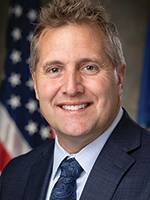
Shannon Zimmerman
Shannon Zimmerman House · District 30
R
Support
79% 35
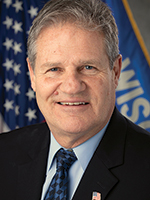
Will Penterman
Will Penterman House · District 38
R
Support
71% 41
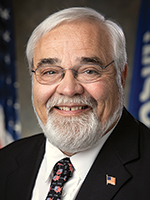
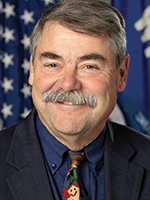
Jeff Mursau
Jeff Mursau House · District 36
R
Support
69% 44
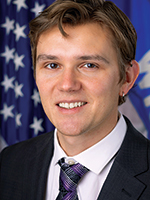
Chanz Green
Chanz Green House · District 74
R
Support
67% 47
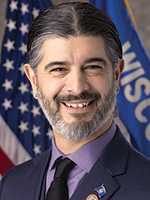
Paul Melotik
Paul Melotik House · District 22
R
Support
67% 47
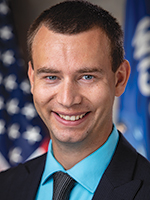
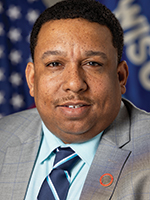
Russell Goodwin
Russell Goodwin House · District 12
D
Oppose
31% 42
Joe Sheehan
Joe Sheehan House · District 26
D
Oppose
33% 43
Vinnie Miresse
Vinnie Miresse House · District 71
D
Oppose
35% 46
Ryan Clancy
Ryan Clancy House · District 19
D
Oppose
38% 44
Christian Phelps
Christian Phelps House · District 93
D
Oppose
39% 47
Showing 291–300 of 399 bills

All healthcare bills

failed · Wisconsin · Senate Mar 23, 2026

SB 324: Relating to: prohibiting conversion therapy.

SB 324 prohibits mental health providers from offering conversion therapy to individuals under 18 years old. The bill defines conversion therapy as any attempt to change a person’s sexual orientation or gender identity, while exempting counseling supporting gender transition, providing acceptance/support, or addressing unsafe behaviors without intent to change orientation/identity. Violations could result in disciplinary actions against providers, including license suspension or revocation by state licensing boards. The law applies to licensed psychologists, counselors, social workers, and other mental health professionals covered under state licensing statutes.
Sub-Topics Mental Health
failed · Wisconsin · Senate Mar 23, 2026

SB 578: Relating to: consent to admissions to certain health care facilities by patient representatives without requiring a petition for guardianship or protective placement. (FE)

SB 578 allows designated patient representatives to consent to health care facility admissions for individuals who cannot manage their own health care decisions (incapacitated) without requiring a court-appointed guardian or protective placement petition. The bill mandates that incapacity be certified by two physicians or one physician and one advanced practice clinician, excluding individuals diagnosed with developmental disability or mental illness. Patient representatives can make health care decisions, enroll the individual in Medical Assistance, and authorize health care costs until the individual is no longer deemed incapacitated or a court appoints a guardian. This streamlines consent for eligible patients while maintaining medical oversight and avoiding traditional guardianship processes.
Sub-Topics Mental Health
vetoed · Wisconsin · Senate May 13, 2026

SB 4: Relating to: agreements for direct primary care.

SB 4 establishes legal requirements for direct primary care agreements in Wisconsin. It defines these contracts as written arrangements between healthcare providers and patients (or employers) where providers offer ongoing primary care services for a fixed subscription fee. Key provisions mandate that agreements must detail specific services, specify the fee, allow termination with written notice, and be signed by both parties. The bill was vetoed by the Governor on August 11, 2025, preventing it from becoming law.
Sub-Topics Primary Care
failed · Wisconsin · Senate Mar 23, 2026

SB 450: Relating to: nonprofit agricultural organization health benefit coverage.

SB 450 allows specific member-owned agricultural cooperatives (defined as pre-1922 organizations with 501(c)(5) status) to provide health benefit coverage exclusively for their members and families. The bill requires these organizations to offer coverage in all state counties, file insurance commissioner attestations, and provide annual actuarial reviews to ensure financial stability. It mandates clear written notice that this coverage is not health insurance and cannot satisfy federal insurance requirements, while prohibiting exclusions for preexisting conditions beyond six months or denying coverage based on provider type. Organizations must also reinsure risks with state-authorized companies and establish complaint resolution processes similar to standard health insurance.
Sub-Topics Insurance
failed · Wisconsin · Senate Mar 23, 2026

SB 492: Relating to: coverage of nonopioid drug alternatives for the treatment and management of pain.

SB 492 requires health insurance plans and self-insured employers to cover nonopioid pain treatment options equally with opioids. It mandates coverage for at least two nonopioid prescription drugs (approved by the FDA and not controlled substances) and three non-drug pain management options, such as physical therapy. The bill prohibits health plans from imposing stricter prior authorization or step therapy rules on nonopioid drugs compared to opioids. It also requires annual public reporting of pain management coverage details on plan websites. This affects all health plans covering prescription drugs in Wisconsin, directly impacting patients seeking nonopioid pain treatment options.
Sub-Topics Insurance
failed · Wisconsin · Assembly Mar 23, 2026

AB 583: Relating to: resolution of claims against the state for wrongful imprisonment of innocent persons, exempting from taxation certain amounts an individual receives from the claims board or legislature, health benefits and other assistance for wrongfully imprisoned persons, and making an appropriation. (FE)

AB 583 helps people wrongfully imprisoned in Wisconsin by providing them with tax-exempt compensation, health coverage, and transition support. It exempts state compensation payments for wrongful imprisonment from state income tax, covers health insurance premiums (with shared costs), and requires a 5-day transition plan for released individuals to access housing, job help, and healthcare. The bill creates new funding mechanisms (like appropriations under 20.515) to pay for these benefits and mandates state agencies to coordinate with counties on post-release support. It directly affects individuals who receive state compensation under wrongful imprisonment claims (s. 775.05) and the state budget.
failed · Wisconsin · Assembly Mar 23, 2026

AB 212: Relating to: registration of out-of-state health care providers to provide telehealth services. (FE)

AB 212 requires out-of-state health care providers to register with the state department or credentialing board to legally offer telehealth services to patients within the state. To register, providers must hold an active, unencumbered license from another state or territory that permits similar services, provide proof of malpractice insurance, disclose disciplinary history, and designate a state agent for legal notices. The state will maintain a public online registry listing registered providers, including their out-of-state credentials, specialty, insurance details, and disciplinary history. This bill directly affects telehealth providers from other states seeking to serve patients in this state, while prohibiting them from opening local offices or offering in-person care without a full state license.
signed · Wisconsin · Senate May 13, 2026

SB 45: Relating to: state finances and appropriations, constituting the executive budget act of the 2025 legislature. (FE)

SB 45 is the 2025 executive budget act, primarily allocating state funds through new grant programs and modifications to existing funding mechanisms. It creates a grant program for local construction projects requiring 50% nonstate funding, allocates $10 million to the Medical College of Wisconsin Eye Institute (with matching private funding required), and establishes a state film office within the Department of Tourism. The bill also directs annual county grants, authorizes tribal government training grants for the Oneida Nation, and specifies annual transfers from the local government fund to the transportation fund. These provisions focus on funding distribution for infrastructure, healthcare, cultural programs, and tribal-state collaboration.
Sub-Topics State Budget
failed · Wisconsin · Senate Mar 23, 2026

SB 156: Relating to: requiring first responders to be trained to administer epinephrine delivery systems. (FE)

SB 156 requires specific first responders - including emergency medical personnel, firefighters, law enforcement officers, correctional officers, and conservation wardens - to complete training on recognizing severe allergic reactions, safely storing and administering epinephrine delivery systems, and following up after use. The bill mandates that all covered first responders must have an epinephrine system available during duty hours. It also directs the department to compile and maintain a list of approved training organizations and may distribute epinephrine systems using existing funds. This law directly affects over a dozen public safety roles by standardizing emergency allergy response protocols.
failed · Wisconsin · Senate Mar 23, 2026

SB 71: Relating to: ratification of the Dietitian Licensure Compact. (FE)

Senate Bill 71 ratifies the Dietitian Licensure Compact, a multi-state agreement designed to streamline the licensing process for dietitians. This bill allows licensed dietitians in participating states to practice in other compact member states by obtaining a "compact privilege" instead of a full separate license. It establishes a dietitian licensure compact commission and amends various state statutes to recognize this new privilege, affecting dietitians and their ability to practice across state lines.
Sub-Topics Medical Licensing
Showing 291 to 300 of 399 bills
Previous 1 29 30 31 40 Next