

Issue · Healthcare
Healthcare
Every healthcare bill, vote, and legislator stance in Wisconsin, automatically classified by Maddy, our AI policy reader.
Total bills
399
2025-2026 Regular Session
Top supporter
Shannon Zimmerman
79% support rate
Top opponent
Russell Goodwin
31% support rate
Ranked legislators
10
5 support · 5 oppose
Key legislators
Who's moving healthcare in Wisconsin
| Legislator | Party | Stance | Support rate | Votes |
|---|---|---|---|---|
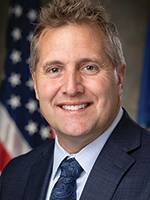
Shannon Zimmerman
House · District 30
|
R |
Support
|
79% | 35 |
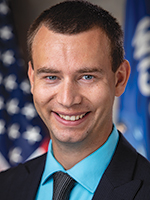
Will Penterman
House · District 38
|
R |
Support
|
71% | 41 |
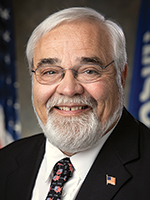
Jeff Mursau
House · District 36
|
R |
Support
|
69% | 44 |
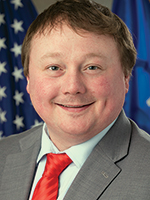
Chanz Green
House · District 74
|
R |
Support
|
67% | 47 |
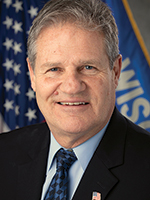
Paul Melotik
House · District 22
|
R |
Support
|
67% | 47 |
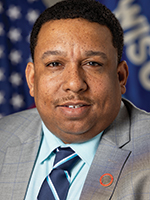
Russell Goodwin
House · District 12
|
D |
Oppose
|
31% | 42 |
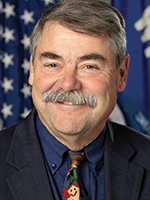
Joe Sheehan
House · District 26
|
D |
Oppose
|
33% | 43 |
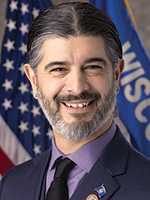
Vinnie Miresse
House · District 71
|
D |
Oppose
|
35% | 46 |
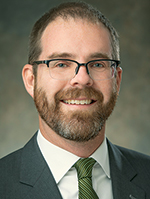
Ryan Clancy
House · District 19
|
D |
Oppose
|
38% | 44 |
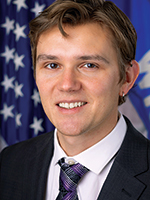
Christian Phelps
House · District 93
|
D |
Oppose
|
39% | 47 |
Showing 251–260 of 399
bills
All healthcare bills
SB 552: Relating to: funding for the birth defect prevention and monitoring system and making an appropriation. (FE)
Topics
✓ Budget & TaxesSupports Budget & TaxesBill explicitly increases state funding for public health program by $405k over two fiscal years, directly strengthening budget allocation for essential services.
✓ HealthcareSupports HealthcareBill increases funding for birth defect prevention system by $405,000 annually and adds staff positions to strengthen public health monitoring within healthcare services.
Sub-Topics
Appropriations
AB 563: Relating to: requiring hospitals and ambulatory surgical centers to implement policies to prevent exposure to surgical smoke in operating rooms. (FE)
Topics
✓ HealthcareSupports HealthcareBill mandates smoke evacuation systems in operating rooms to prevent health hazards from surgical smoke, directly improving patient and provider safety in healthcare services.
✓ Labor & EmploymentSupports Labor & EmploymentMandates smoke evacuation systems to prevent occupational exposure, directly improving workplace safety for healthcare workers in operating rooms.
Sub-Topics
Workplace Safety
AB 62: Relating to: health care costs omnibus, granting rule-making authority, making an appropriation, and providing a penalty. (FE)
Topics
✓ Budget & TaxesSupports Budget & TaxesBill appropriates $500,000 annually for healthcare cost transparency tools, directly funding a public service initiative under state budget management.
✓ HealthcareSupports HealthcareEstablishes Prescription Drug Affordability Review Board, funds cost transparency tools ($500k grants), and launches diabetes medication pilot to lower healthcare costs.
SJR 33: Relating to: declaration of the Economic Justice Bill of Rights.
Topics
✓ EducationSupports EducationExplicitly declares 'adequately funded public education' as a fundamental right in the Economic Justice Bill of Rights, directly advancing educational funding.
✓ EnvironmentSupports EnvironmentExplicitly declares 'a clean and sustainable environment' as a fundamental right, directly advancing environmental protection goals without ambiguity.
✓ HealthcareSupports HealthcareBill explicitly declares 'affordable healthcare' as a fundamental right in its Economic Justice Bill of Rights, directly advancing healthcare access and affordability for Wisconsinites.
✓ Labor & EmploymentSupports Labor & EmploymentBill explicitly declares right to 'a job that pays a living wage,' directly advancing worker compensation standards under Labor & Employment.
Sub-Topics
Minimum Wage
AB 261: Relating to: certification of surgical technologists.
AB 490: Relating to: implementing a suicide prevention program and making an appropriation. (FE)
Topics
✓ Budget & TaxesSupports Budget & TaxesBill allocates $250,000 annual appropriation for suicide prevention program, directly funding public health services per budget topic.
✓ HealthcareSupports HealthcareFunds suicide prevention program via $250k appropriation, targeting mental health services for at-risk groups through public health initiatives.
SB 243: Relating to: the age at which an infant is covered under the safe haven law.
Sub-Topics
Hospitals
AB 270: Relating to: a school psychologist loan program. (FE)
Topics
✓ Budget & TaxesSupports Budget & TaxesState-funded loan program allocates budget for school psychologist training, increasing public service funding without tax changes.
✓ EducationSupports EducationEstablishes state-funded loans for school psychologists, addressing workforce shortages and improving K-12 mental health support through financial incentives.
✓ HealthcareSupports HealthcareFunds school psychologist training to increase mental health professionals in schools, directly supporting mental health services under healthcare topic.
✓ Labor & EmploymentSupports Labor & EmploymentFunds graduate education for school psychologists with loan forgiveness tied to public/private school employment, strengthening workforce development in education sector.