Issue · Healthcare

Healthcare

Every healthcare bill, vote, and legislator stance in Wisconsin, automatically classified by Maddy, our AI policy reader.

Total bills
399
2025-2026 Regular Session
Top supporter
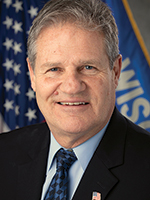
Shannon Zimmerman
79% support rate
Top opponent
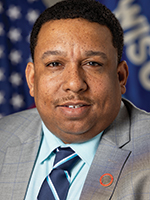
Russell Goodwin
31% support rate
Ranked legislators
10
5 support · 5 oppose
Key legislators

Who's moving healthcare in Wisconsin

Legislators moving healthcare in Wisconsin
Legislator Party Stance Support rate Votes
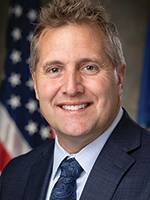
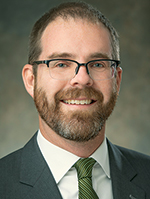
Shannon Zimmerman
Shannon Zimmerman House · District 30
R
Support
79% 35
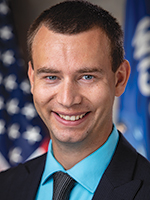
Will Penterman
Will Penterman House · District 38
R
Support
71% 41
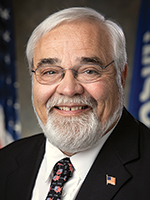
Jeff Mursau
Jeff Mursau House · District 36
R
Support
69% 44
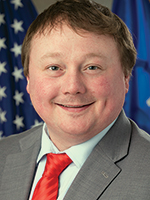
Chanz Green
Chanz Green House · District 74
R
Support
67% 47
Paul Melotik
Paul Melotik House · District 22
R
Support
67% 47
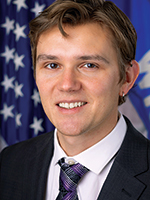
Russell Goodwin
Russell Goodwin House · District 12
D
Oppose
31% 42
Joe Sheehan
Joe Sheehan House · District 26
D
Oppose
33% 43
Vinnie Miresse
Vinnie Miresse House · District 71
D
Oppose
35% 46
Ryan Clancy
Ryan Clancy House · District 19
D
Oppose
38% 44
Christian Phelps
Christian Phelps House · District 93
D
Oppose
39% 47
Showing 241–250 of 399 bills

All healthcare bills

failed · Wisconsin · Senate Mar 23, 2026

SB 632: Relating to: naturopathic doctors. (FE)

SB 632 expands the legal scope of practice for naturopathic doctors in Wisconsin. It grants them the authority to prescribe, dispense, and administer prescription drugs (under specific rules) and allows them to provide expedited partner therapy for sexually transmitted infections like chlamydia and gonorrhea. The bill also requires naturopathic doctors to maintain malpractice insurance coverage (with limited exceptions for government employees) and formally includes them in the definition of "health care practitioner" for regulatory purposes. This legislation directly affects licensed naturopathic doctors by changing their legal practice boundaries and responsibilities.
signed · Wisconsin · Senate Jul 3, 2025

SB 106: Relating to: psychiatric residential treatment facilities, providing an exemption from emergency rule procedures, and granting rule-making authority.

SB 106 clarifies the authority of state departments to regulate psychiatric residential treatment facilities (PRTFs) by removing ambiguous language from existing rules. It requires facilities to follow department rules and allows departments to establish specific requirements, policies, and standards for PRTFs. The bill directly affects PRTFs and state departments responsible for oversight, ensuring rules are applied consistently. It became law as 2025 Wisconsin Act 9 after approval by the Governor on July 2, 2025. The changes focus on precise language to streamline regulatory processes, without creating new requirements.
Sub-Topics Mental Health
failed · Wisconsin · Senate Mar 23, 2026

SB 168: Relating to: changing the conditions of liability for worker’s compensation benefits for emergency medical responders, emergency medical services practitioners, volunteer firefighters, correctional officers, emergency dispatchers, coroners and coroner staff, and medical examiners and medical examiner staff. (FE)

SB 168 modifies Wisconsin's worker's compensation law to adjust how mental injury claims (specifically PTSD) are handled for certain public safety and emergency response professionals. It directly affects emergency medical responders, emergency medical services practitioners, volunteer firefighters, correctional officers, emergency dispatchers, coroners, medical examiners, and their staff. The bill creates new statutory definitions for these roles and requires that PTSD claims for these workers meet specific conditions to be compensable, rather than automatically covering all mental injuries without physical trauma. This change clarifies the process for filing such claims under the state's worker's compensation system.
Sub-Topics Workers' Compensation Tags Public Safety
failed · Wisconsin · Assembly Mar 23, 2026

AB 309: Relating to: immunity for 911 call centers and dispatchers that transfer callers to the national 988 Suicide and Crisis Lifeline.

AB 309 creates legal immunity for Wisconsin 911 call centers and dispatchers who transfer callers to the national 988 Suicide and Crisis Lifeline (or its successor number). The bill shields these entities from civil lawsuits related to outcomes of such transfers, unless the injury resulted from the dispatcher's gross negligence or willful misconduct. This directly affects public safety answering points statewide by reducing liability risks when connecting individuals in crisis to the 988 service. The law defines "national crisis hotline" as 988 or its successor under federal program 42 USC 290bb-36c.
Sub-Topics Mental Health
failed · Wisconsin · Assembly Mar 23, 2026

AB 114: Relating to: clinician initiation of emergency detention of a minor and providing a penalty.

AB 114 allows licensed clinicians (such as psychologists, psychiatrists, or clinical social workers) in counties with fewer than 750,000 residents to initiate emergency detentions for minors who are mentally ill, drug-dependent, or developmentally disabled. Clinicians must complete county-approved training, document specific reasons (including why detention is the least restrictive option), and obtain county department approval before initiating detention. The county department must arrange transport to a treatment facility and file documentation with the court within 24 hours. This bill does not apply to large counties (750,000+ population) and replaces existing law for clinician-initiated detentions.
Sub-Topics Mental Health
failed · Wisconsin · Assembly Mar 23, 2026

AB 303: Relating to: 988 Suicide and Crisis Lifeline grants. (FE)

AB 303 creates a new state grant program to fund crisis intervention services for people contacting the national 988 Suicide and Crisis Lifeline from within the state. The bill requires the state department to award grants to organizations providing crisis care coordination to individuals who call or text 988. This directly affects crisis service providers that serve callers within the state's geographic boundaries. The key mechanism is a state-funded grant program administered by the department to support these organizations, ensuring consistent access to crisis care for 988 users. The bill does not change the 988 hotline's operation but provides state funding to support local crisis response services.
Sub-Topics Mental Health
failed · Wisconsin · Assembly Mar 23, 2026

AB 631: Relating to: use of public lands to provide temporary residence for the homeless and providing a penalty. (FE)

AB 631 creates "structured camping facilities" on designated public lands (excluding parks and fairgrounds) to provide temporary housing for homeless individuals and families. Local governments or the state department can designate these facilities, requiring residents to complete mental health or substance use evaluations, with a waiting list system when capacity is reached. The bill also establishes penalties for unauthorized camping on public property, classifying second or subsequent violations as Class C misdemeanors. It mandates data collection on facility usage, including occupancy and referrals for services, while ensuring safety and sanitation at all sites.
failed · Wisconsin · Assembly Mar 23, 2026

AB 547: Relating to: regulating medical cannabis, the prescription drug monitoring program, and providing a penalty. (FE)

AB 547 establishes a new Office of Medical Cannabis Regulation within Wisconsin's Department of Health Services to oversee medical cannabis programs. It defines "medical cannabis product" consistently across state laws and adds protections preventing courts from denying child custody based solely on lawful medical cannabis use or registry enrollment. The bill also updates local ordinances to clarify restrictions on marijuana possession, ensuring penalties don't apply to medical cannabis users under specific circumstances. These changes aim to create a clearer regulatory framework while addressing legal inconsistencies in existing statutes.
Sub-Topics Prescription Drugs
failed · Wisconsin · Senate Mar 23, 2026

SB 72: Relating to: creating an individual income tax deduction for certain income earned by an individual from the practice of psychiatry or from providing psychiatric or mental health services. (FE)

SB 72 creates a state income tax deduction for psychiatrists and psychiatric mental health nurse practitioners who work in Wisconsin. It allows eligible individuals to deduct up to $100,000 annually from their taxable income if they practice outside medically underserved areas, or up to $200,000 if they work in such areas (as defined by state law). To qualify, professionals must claim the deduction within their first two years of practicing in Wisconsin or returning to the state, and can only use it for up to five consecutive years. The bill directly affects licensed psychiatrists and certified psychiatric mental health nurse practitioners who meet the location and eligibility requirements.
vetoed · Wisconsin · Assembly May 13, 2026

AB 73: Relating to: statutory recognition of specialized treatment court and commercial court dockets.

AB 73 creates a new statute (Chapter 798) to formally recognize two types of specialized court programs in Wisconsin: treatment courts and commercial courts. Treatment courts (e.g., drug, mental health, veterans courts) address underlying issues like addiction to reduce recidivism through treatment and supervision, while commercial courts handle business disputes more efficiently. The bill establishes these dockets within the existing court system, requiring judges to receive specialized training and operate using graduated sanctions and rewards. It directly affects courts handling these case types, aiming to improve outcomes for participants and streamline dispute resolution.
Showing 241 to 250 of 399 bills
Previous 1 24 25 26 40 Next