Issue · Healthcare

Healthcare

Every healthcare bill, vote, and legislator stance in Wisconsin, automatically classified by Maddy, our AI policy reader.

Total bills
399
2025-2026 Regular Session
Top supporter
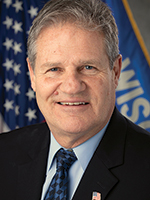
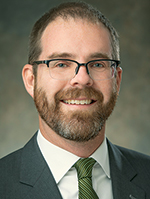
Shannon Zimmerman
79% support rate
Top opponent
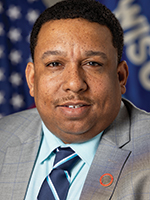
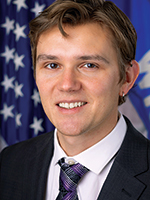
Russell Goodwin
31% support rate
Ranked legislators
10
5 support · 5 oppose
Key legislators

Who's moving healthcare in Wisconsin

Legislators moving healthcare in Wisconsin
Legislator Party Stance Support rate Votes
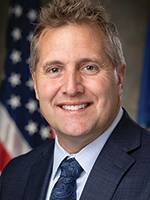
Shannon Zimmerman
Shannon Zimmerman House · District 30
R
Support
79% 35
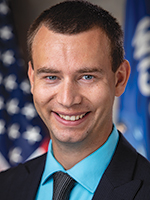
Will Penterman
Will Penterman House · District 38
R
Support
71% 41
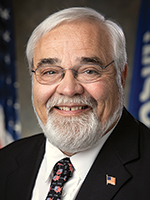
Jeff Mursau
Jeff Mursau House · District 36
R
Support
69% 44
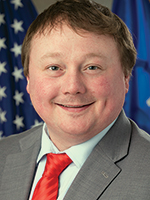
Chanz Green
Chanz Green House · District 74
R
Support
67% 47
Paul Melotik
Paul Melotik House · District 22
R
Support
67% 47
Russell Goodwin
Russell Goodwin House · District 12
D
Oppose
31% 42
Joe Sheehan
Joe Sheehan House · District 26
D
Oppose
33% 43
Vinnie Miresse
Vinnie Miresse House · District 71
D
Oppose
35% 46
Ryan Clancy
Ryan Clancy House · District 19
D
Oppose
38% 44
Christian Phelps
Christian Phelps House · District 93
D
Oppose
39% 47
Showing 171–180 of 399 bills

All healthcare bills

failed · Wisconsin · Senate Mar 23, 2026

SB 757: Relating to: coverage of tests for sexually transmitted diseases by health insurance policies and plans. (FE)

This bill requires health insurance plans covering state or local government employees (including disability insurance and self-insured health plans) to cover FDA-approved home test kits for sexually transmitted diseases, including HIV, when medically necessary and ordered by a healthcare provider. It defines "home test kits" as self-collection products meeting CDC/FDA standards (like CLIA waivers or FDA approval) for use outside clinical settings. Coverage must include all associated lab processing costs for qualifying kits. The law applies to government-affiliated health plans, effective 4 months after publication.
Sub-Topics Insurance
failed · Wisconsin · Senate Mar 23, 2026

SB 703: Relating to: plan sponsors’ right to access claims data.

SB 703 requires health insurers, administrators, and pharmacy benefit managers (PBMs) to provide large employer plan sponsors (those covering 50+ employees) with full access to their health claims data. Plan sponsors own this data and can request specific details - like itemized billing for high-cost claims ($25,000+ medical, $10,000+ pharmacy), payment histories, pharmacy rebates, and administrative fees - within 7 business days of a written request. Insurers and PBMs must deliver this data electronically in usable formats, and cannot sell the data without the plan sponsor’s and individual’s permission. The bill directly affects large employers managing health benefits and the companies providing those benefits, ensuring transparency in how claims data is handled and shared.
Sub-Topics Prescription Drugs
failed · Wisconsin · Assembly Mar 23, 2026

AB 756: Relating to: local health officer authority to mandate business closure to control communicable disease.

AB 756 repeals a specific statute (252.03(2j)) that granted local health officers the authority to mandate business closures to control communicable diseases. This bill directly affects local health officials, removing their existing legal power to order such closures, and impacts businesses that could have been subject to these mandates. The key mechanism is simply the removal of this statutory provision, with no new requirements or processes added. As a procedural repeal, it does not create new obligations but eliminates a specific existing authority.
Sub-Topics Public Health
failed · Wisconsin · Senate Mar 23, 2026

SB 797: Relating to: a onetime grant to establish an online dashboard of health care claims information, funding to support increased operational costs for the Wisconsin Health Information Organization, and making an appropriation. (FE)

SB 797 provides $600,000 in one-time funding to create an online dashboard tracking health care claims data, managed by the Wisconsin Health Information Organization (WHIO). It also allocates $1.38 million for 2025-26 and $1.56 million for 2026-27 to cover WHIO’s increased operational costs. The dashboard will display health care claims information and integrate data from new health insurers, directly affecting WHIO and the health care providers/payers contributing data. This bill makes specific budget adjustments to support these data-sharing and transparency efforts.
Sub-Topics Appropriations
signed · Wisconsin · Senate Mar 19, 2026

SB 309: Relating to: immunity for 911 call centers and dispatchers that transfer callers to the national 988 Suicide and Crisis Lifeline.

SB 309 grants legal immunity to 911 call centers and dispatchers who transfer callers to the national 988 Suicide and Crisis Lifeline. It specifically protects them from civil lawsuits related to those transfers, unless the harm resulted from gross negligence or willful misconduct by the dispatcher or center. The bill defines the "national crisis hotline" as the federally managed 988 number (or its successor). This law directly affects public safety answering points in Wisconsin by limiting their liability when connecting individuals in crisis to the 988 service.
Sub-Topics Mental Health
failed · Wisconsin · Senate Mar 23, 2026

SB 154: Relating to: requiring the Department of Health Services to seek any necessary waiver to prohibit the purchase of candy or soft drinks with FoodShare benefits. (FE)

Senate Bill 154 requires the Department of Health Services (DHS) to request a waiver from the U.S. Department of Agriculture. This waiver aims to prohibit the use of FoodShare benefits, also known as the federal food stamp program, for purchasing candy or soft drinks. If the waiver is granted, individuals receiving FoodShare benefits would no longer be able to use them to buy these specific items. The bill mandates that DHS continue to submit this waiver request annually until it is approved.
signed · Wisconsin · Assembly Apr 2, 2026

AB 596: Relating to: a state matching grant program for recipients of federal per diem payments and making an appropriation. (FE)

AB 596 creates a state matching grant program that allocates $950,000 to provide state funds matching federal per diem payments received by eligible non-state entities. It directly affects organizations or programs receiving federal per diem payments (such as those supporting veterans) by allowing them to access additional state funding. The bill establishes this program under the Veterans Affairs department budget, requiring the state to match federal payments without changing eligibility criteria or adding new requirements for recipients.
failed · Wisconsin · Assembly Mar 23, 2026

AB 141: Relating to: provisional social worker certificates and licenses.

AB 141 creates a temporary "provisional" pathway for social work licensure in Wisconsin, directly affecting individuals who have taken but not passed the required national social work exam. It allows these applicants to obtain a provisional certificate or license (valid for 36 months) while completing supervised practice, requiring 37.5 hours of supervision (including 25 hours of in-person one-on-one) over their first 2,000 hours of practice. The bill specifies that provisional credentials cannot be renewed and transition to full certification only after verified completion of supervised practice and meeting other requirements under Section 457.08(6). This change streamlines the process for entry-level social workers to gain practical experience while working toward full licensure.
Sub-Topics Medical Licensing
failed · Wisconsin · Senate Mar 23, 2026

SB 410: Relating to: grants for falls prevention awareness and initiatives and making an appropriation. (FE)

SB 410 allocates $450,000 annually for fiscal years 2025-26 and 2026-27 from the Department of Health Services' budget to fund statewide falls prevention awareness and initiatives. The grant will be awarded to the Wisconsin Institute for Healthy Aging to support programs reducing falls among older adults. This bill increases the department's appropriation by $450,000 each year to cover these specific grants. The funding supports education and community outreach efforts, not new regulations or direct services for individuals.
Sub-Topics Appropriations
signed · Wisconsin · Senate Mar 19, 2026

SB 23: Relating to: extension of eligibility under the Medical Assistance program for postpartum women. (FE)

SB 23 extends Medicaid eligibility for postpartum women from 60 days to 365 days (one year) after pregnancy, directly affecting pregnant and postpartum women enrolled in the Medical Assistance program. The bill modifies eligibility rules to ensure coverage continues without regard to income changes during this extended period. It also adds a provision allowing women with family income above 300% of the poverty line to qualify if medical expenses for family members are covered, extending this eligibility to all family members. The bill requires federal approval for the 365-day extension to take effect.
Sub-Topics Medicaid
Showing 171 to 180 of 399 bills
Previous 1 17 18 19 40 Next