Issue · Healthcare

Healthcare

Every healthcare bill, vote, and legislator stance in Wisconsin, automatically classified by Maddy, our AI policy reader.

Total bills
399
2025-2026 Regular Session
Top supporter
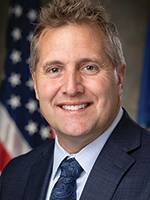
Shannon Zimmerman
79% support rate
Top opponent
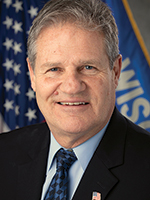
Russell Goodwin
31% support rate
Ranked legislators
10
5 support · 5 oppose
Key legislators

Who's moving healthcare in Wisconsin

Legislators moving healthcare in Wisconsin
Legislator Party Stance Support rate Votes
Shannon Zimmerman
Shannon Zimmerman House · District 30
R
Support
79% 35
Will Penterman
Will Penterman House · District 38
R
Support
71% 41
Jeff Mursau
Jeff Mursau House · District 36
R
Support
69% 44
Chanz Green
Chanz Green House · District 74
R
Support
67% 47
Paul Melotik
Paul Melotik House · District 22
R
Support
67% 47
Russell Goodwin
Russell Goodwin House · District 12
D
Oppose
31% 42
Joe Sheehan
Joe Sheehan House · District 26
D
Oppose
33% 43
Vinnie Miresse
Vinnie Miresse House · District 71
D
Oppose
35% 46
Ryan Clancy
Ryan Clancy House · District 19
D
Oppose
38% 44
Christian Phelps
Christian Phelps House · District 93
D
Oppose
39% 47
Showing 161–170 of 399 bills

All healthcare bills

failed · Wisconsin · Assembly Mar 23, 2026

AB 720: Relating to: coverage and reimbursement of emergency ambulance services under health insurance policies and plans. (FE)

AB 720 requires health insurance plans - including defined network plans, preferred provider plans, and government self-insured plans - to cover emergency ambulance services provided by non-participating ambulance providers. It mandates payment at the lowest of three rates: a mutually agreed rate, a local governmental rate, or 350% of the Medicare rate for the same area. Plans must pay ambulance providers directly within 30 days for clean claims, cannot impose additional costs on enrollees beyond standard cost-sharing, and must provide clear explanations for denied claims. The bill excludes air ambulance services and applies to all health insurance plans covering emergency medical services.
Sub-Topics Insurance Medicare
failed · Wisconsin · Senate Mar 23, 2026

SB 796: Relating to: mandatory participation in the Wisconsin Health Information Organization. (FE)

SB 796 creates a mandatory system requiring insurers, healthcare administrators, and certain government programs (like Medical Assistance) to submit health claims data to a centralized Wisconsin Health Information Organization. It mandates data be provided in machine-readable format within six months of the law's effective date, with standardized reporting schedules. The data organization must analyze and publicly report on healthcare costs, quality, and effectiveness in plain language, while the state may use the data for policy decisions. This bill directly affects healthcare providers, insurers, and government health programs by establishing new data collection requirements and reporting standards.
Tags Data Reporting
failed · Wisconsin · Senate Mar 23, 2026

SB 756: Relating to: coverage of sterilization procedures and patient education and counseling under health insurance policies and plans. (FE)

SB 756 requires health insurance plans in Wisconsin to cover sterilization procedures (such as vasectomies or tubal ligations) and associated patient education/counseling if the plan already covers other contraceptive services. This applies to all health insurance policies and plans that provide contraceptive coverage under existing rules. The bill amends Wisconsin Statute 632.895 to explicitly include sterilization under the same coverage requirements as other contraceptives. It takes effect for new policy years beginning in 2026.
Sub-Topics Insurance
failed · Wisconsin · Assembly Mar 23, 2026

AB 702: Relating to: income tax credit for in vitro fertilization medical expenses. (FE)

AB 702 creates a new income tax credit for individuals incurring unreimbursed medical expenses related to in vitro fertilization (IVF), directly affecting those who pay for IVF consultations, procedures, or prescribed drugs out-of-pocket. The credit allows a maximum $5,000 annual reduction against state income tax for eligible individuals with adjusted gross income under $100,000 (single) or $200,000 (joint filers). It excludes expenses covered by insurance, travel, lodging, or health savings accounts, and prohibits claiming the same expenses under other tax provisions. The credit must be claimed using forms provided by the state tax department when filing annual returns.
Sub-Topics Income Tax Tax Credits
failed · Wisconsin · Assembly Mar 23, 2026

AB 801: Relating to: mandatory participation in the Wisconsin Health Information Organization. (FE)

AB 801 establishes a mandatory "all-payer claims database" requiring insurers, healthcare administrators, and managed care organizations (including those serving Medicaid recipients) to submit health claims data in machine-readable format. It mandates data submission within six months of the law's effective date, with standardized electronic reporting and annual submission schedules. The data organization must analyze and publicly report on healthcare costs, quality, and effectiveness in plain language, while restricting data sharing to purposes like public health research or policy decisions. The bill repeals prior requirements and creates new provisions to standardize data collection, reporting, and transparency for the Wisconsin Health Information Organization.
Sub-Topics Medicaid Public Health
failed · Wisconsin · Assembly Mar 23, 2026

AB 775: Relating to: cost-sharing cap on epinephrine delivery systems under health insurance policies and plans. (FE)

AB 775 limits out-of-pocket costs for epinephrine delivery systems (like EpiPens) under specific health insurance plans. It caps cost-sharing at $60 for two doses of these devices, applying to disability insurance policies and self-insured health plans covering government entities (such as state agencies, schools, or local governments). Insurers cannot charge more than $60 per two-dose supply regardless of the device type, though they may charge less. The law takes effect for plan years beginning after its publication date.
failed · Wisconsin · Senate Mar 23, 2026

SB 711: Relating to: coverage and reimbursement of emergency ambulance services under health insurance policies and plans. (FE)

SB 711 requires health insurance plans (including preferred provider plans and self-insured government plans) to cover emergency ambulance services provided by non-participating ambulance providers at specific rates. It mandates payment at the lowest of: (1) a mutually agreed rate, (2) a local government-set rate, or (3) 350% of the Medicare rate for the same area. The bill also requires insurers to pay ambulance providers directly within 30 days for clean claims, prohibits billing patients for extra costs beyond standard copays/deductibles, and excludes air ambulance services from coverage. This directly affects health insurance plans, ambulance providers, and patients receiving emergency ambulance care.
Sub-Topics Insurance Medicare
failed · Wisconsin · Senate Mar 23, 2026

SB 764: Relating to: cost-sharing cap on epinephrine delivery systems under health insurance policies and plans. (FE)

SB 764 sets a $60 annual cap on out-of-pocket costs for two doses of epinephrine delivery systems (like EpiPens) under health insurance policies and self-insured plans. It directly affects people with severe allergies who rely on these devices and their insurers. The bill requires coverage for medically necessary epinephrine delivery systems with cost-sharing limited to $60 for two doses, regardless of device type, while allowing plans to charge less or nothing. This applies to disability insurance policies, state/local government health plans, and all health insurance plans covering these devices. The law takes effect four months after publication, with transitional rules for existing policies and collective bargaining agreements.
vetoed · Wisconsin · Senate May 13, 2026

SB 799: Relating to: parental access to health records of minors.

SB 799 modifies parental access to minors' health records. It requires parents to obtain written consent from minors aged 14 or older before accessing their health records, unless the minor is developmentally disabled (where consent isn't required). The bill also restricts access for parents who caused child protection cases (e.g., abuse/neglect), denying them access to health records if their child was placed under child protection services due to their actions. This applies specifically to health records covered under statutes related to patient care and treatment.
failed · Wisconsin · Assembly Mar 23, 2026

AB 776: Relating to: veterans mental health services and making an appropriation. (FE)

AB 776 allocates $5 million in state funds to expand veterans' access to mental health services. It requires the Department of Veterans Affairs to promote community-based mental health care and provide grants to organizations offering these services to veterans, including emergency crisis support. The bill streamlines implementation by allowing the department to issue emergency rules without standard public notice requirements. This directly affects veterans seeking mental health care and the community organizations delivering these services. The legislation creates new statutory provisions (45.49) to formalize this program.
Showing 161 to 170 of 399 bills
Previous 1 16 17 18 40 Next