Issue · Criminal Justice

Criminal Justice

Every criminal justice bill, vote, and legislator stance in Wisconsin, automatically classified by Maddy, our AI policy reader.

Total bills
250
2025-2026 Regular Session
Top supporter
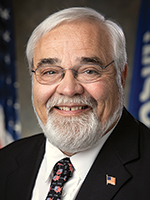
Jeff Mursau
70% support rate
Top opponent
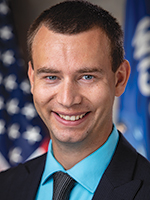
Ryan Clancy
32% support rate
Ranked legislators
10
5 support · 5 oppose
Key legislators

Who's moving criminal justice in Wisconsin

Legislators moving criminal justice in Wisconsin
Legislator Party Stance Support rate Votes
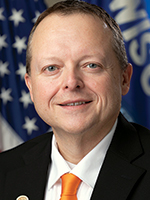
Jeff Mursau
Jeff Mursau House · District 36
R
Support
70% 54
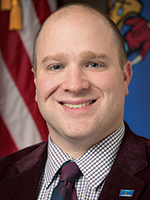
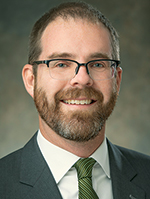
Will Penterman
Will Penterman House · District 38
R
Support
67% 48
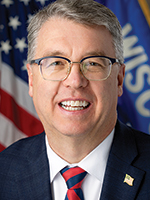
Brad Pfaff
Brad Pfaff Senate · District 32
D
Support
64% 36
Eric Wimberger
Eric Wimberger Senate · District 2
R
Support
64% 36
Scott Krug
Scott Krug House · District 72
R
Support
64% 58
Ryan Clancy
Ryan Clancy House · District 19
D
Oppose
32% 53
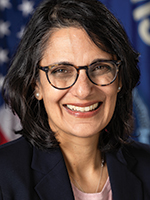
Renuka Mayadev
Renuka Mayadev House · District 77
D
Oppose
32% 58
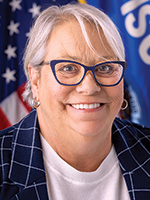
Christine Sinicki
Christine Sinicki House · District 20
D
Oppose
32% 58
Alex Joers
Alex Joers House · District 81
D
Oppose
32% 58
Christian Phelps
Christian Phelps House · District 93
D
Oppose
33% 57
Showing 181–190 of 250 bills

All criminal justice bills

vetoed · Wisconsin · Assembly May 13, 2026

AB 85: Relating to: recommendation to revoke extended supervision, parole, or probation if a person is charged with a crime. (FE)

AB 85 requires Wisconsin's Department of Corrections to recommend revoking parole, probation, or extended supervision whenever a person under supervision is charged with a new crime. This applies directly to individuals on community supervision who face new criminal charges. The bill mandates that the department submit this recommendation to the appropriate administrative body, triggering a hearing process unless the person waives it. The law changes existing statutes to make this recommendation automatic upon a new charge, without requiring proof of violation first.
vetoed · Wisconsin · Senate May 13, 2026

SB 431: Relating to: discrimination based on arrest record under the fair employment law.

This bill amends Wisconsin's fair employment law to prevent employers and licensing agencies from refusing employment or licenses solely because an applicant has a pending criminal charge. It allows such refusal only if the pending charge is substantially related to the specific job or licensed activity (e.g., refusing a security position for a theft charge). The law explicitly prohibits discrimination based on arrest record alone, requiring a direct job-related connection before denying employment or licensing. This directly affects job seekers and licensed professionals facing pending criminal charges who may have been automatically disqualified under previous rules. The change clarifies that pending charges cannot be the sole basis for denial without demonstrating relevance to the position.
Sub-Topics Civil Rights
failed · Wisconsin · Assembly Mar 23, 2026

AB 656: Relating to: the age for marriage and eliminating spousal exceptions for certain sex crimes against children.

AB 656 eliminates a legal exception that previously protected spouses from prosecution for sex crimes against child spouses. It amends statutes 948.09 (sexual intercourse with a child age 16+) and 948.093 (underage sexual activity) to remove the provision stating these laws "do not apply if the child is the defendant’s spouse." This change directly affects individuals in marriages where one spouse was a minor at the time of marriage, making spousal relationships no longer a defense for sex crimes against children. The bill also updates marriage-related provisions, including allowing minors under 18 to file for divorce (767.185) and clarifying consent requirements for minors seeking marriage licenses.
failed · Wisconsin · Senate Mar 23, 2026

SB 77: Relating to: entering certain places with intent to commit battery and providing a penalty.

SB 77 amends Wisconsin statute 943.10(1m) to criminalize intentionally entering a place without consent when intending to commit theft or specific battery-related offenses (under statutes 940.19 or 940.195). It classifies this as a Class F felony, directly affecting individuals who enter premises unlawfully with such criminal intent. The key provision raises the penalty for these specific acts by defining them as a felony rather than a lesser offense. This change applies to locations like homes, businesses, or vehicles where entry occurs without permission for the purpose of committing theft or battery. The bill focuses solely on the legal penalty structure, not broader policy impacts.
signed · Wisconsin · Senate Apr 9, 2026

SB 188: Relating to: reduction of penalty surcharge when certain fines or forfeitures reduced. (FE)

SB 188 changes how penalty surcharges are calculated when court fines or forfeitures are reduced. It requires that if a fine is suspended or reduced (in whole or part), the 26% penalty surcharge must be reduced proportionally. This applies to most fines for state law violations or local ordinances, but excludes nonmoving traffic violations, seatbelt offenses, and certain financial responsibility violations. The bill ensures that reduced fines directly lower the surcharge amount, affecting individuals paying fines and courts collecting these fees.
Sub-Topics Courts
passed · Wisconsin · Assembly Mar 23, 2026

AB 380: Relating to: suspension without pay in cases of judicial misconduct or pending final determination in proceedings involving alleged judicial misconduct or permanent disability.

AB 380 requires judges facing allegations of misconduct or permanent disability to be suspended without pay during disciplinary proceedings. It amends statutes to mandate that both final suspensions imposed by the Supreme Court for misconduct and temporary suspensions pending investigations must be without pay. The bill directly affects judges under investigation by the Judicial Commission or facing formal complaints. This policy change clarifies that judges cannot receive salary during these disciplinary processes, applying to all cases involving alleged misconduct or disability.
Sub-Topics Courts Judges
failed · Wisconsin · Assembly Mar 23, 2026

AB 583: Relating to: resolution of claims against the state for wrongful imprisonment of innocent persons, exempting from taxation certain amounts an individual receives from the claims board or legislature, health benefits and other assistance for wrongfully imprisoned persons, and making an appropriation. (FE)

AB 583 helps people wrongfully imprisoned in Wisconsin by providing them with tax-exempt compensation, health coverage, and transition support. It exempts state compensation payments for wrongful imprisonment from state income tax, covers health insurance premiums (with shared costs), and requires a 5-day transition plan for released individuals to access housing, job help, and healthcare. The bill creates new funding mechanisms (like appropriations under 20.515) to pay for these benefits and mandates state agencies to coordinate with counties on post-release support. It directly affects individuals who receive state compensation under wrongful imprisonment claims (s. 775.05) and the state budget.
failed · Wisconsin · Assembly Mar 23, 2026

AB 414: Relating to: immunity from prosecution for certain crimes based on assisting a victim of sexual assault, extending the time limit for prosecution of second-degree sexual assault, and the standard for terminating residential residency when tenant is the victim of sexual assault.

AB 414 helps sexual assault victims by creating legal protection for people who assist them (like friends or advocates) from being prosecuted for minor crimes committed while helping. It also extends the time limit for prosecuting second-degree sexual assault cases, giving victims more time to report crimes. Additionally, the bill changes rules for evictions, making it harder for landlords to remove tenants who are sexual assault victims from rental housing. These changes directly affect sexual assault victims, those who support them, and landlords in residential housing situations.
Sub-Topics Violent Crime Renters
failed · Wisconsin · Assembly Mar 23, 2026

AB 178: Relating to: expanding the treatment alternatives and diversion programs. (FE)

AB 178 creates a new state grant program to fund county and tribal programs that offer treatment alternatives to jail for people facing criminal charges related to substance use or mental health issues. It requires these programs to use evidence-based treatment, integrate mental health services, and include graduated incentives for participants. The bill directly affects criminal defendants with substance use disorders or mental illness who qualify for these programs, as well as counties and tribes receiving grants. Key provisions include mandating collaboration between courts, prosecutors, public defenders, and health agencies to develop and oversee the programs, while exempting participants in approved programs from losing good time credit in jail.
failed · Wisconsin · Assembly Mar 23, 2026

AB 441: Relating to: identity requirements for officers who arrest or detain individuals and providing a penalty.

AB 441 requires law enforcement officers to clearly identify themselves during arrests or detentions. Specifically, officers must state their name, display their badge number and agency insignia (with specified visibility standards), and state the legal authority for the action. The bill prohibits concealing identity except for medical masks, tactical gear, or during imminent danger. Violating these rules is a Class D felony, though courts cannot impose jail time. This directly affects officers employed by state or local law enforcement agencies during enforcement actions.
Showing 181 to 190 of 250 bills
Previous 1 18 19 20 25 Next