Issue · Criminal Justice

Criminal Justice

Every criminal justice bill, vote, and legislator stance in Wisconsin, automatically classified by Maddy, our AI policy reader.

Total bills
250
2025-2026 Regular Session
Top supporter
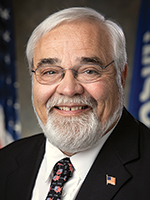
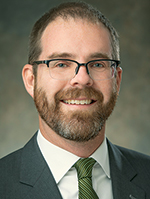
Jeff Mursau
70% support rate
Top opponent
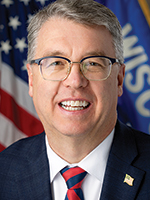
Ryan Clancy
32% support rate
Ranked legislators
10
5 support · 5 oppose
Key legislators

Who's moving criminal justice in Wisconsin

Legislators moving criminal justice in Wisconsin
Legislator Party Stance Support rate Votes
Jeff Mursau
Jeff Mursau House · District 36
R
Support
70% 54
Will Penterman
Will Penterman House · District 38
R
Support
67% 48
Brad Pfaff
Brad Pfaff Senate · District 32
D
Support
64% 36
Eric Wimberger
Eric Wimberger Senate · District 2
R
Support
64% 36
Scott Krug
Scott Krug House · District 72
R
Support
64% 58
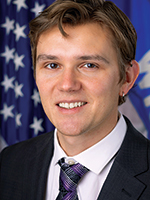
Ryan Clancy
Ryan Clancy House · District 19
D
Oppose
32% 53
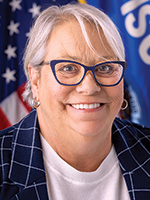
Renuka Mayadev
Renuka Mayadev House · District 77
D
Oppose
32% 58
Christine Sinicki
Christine Sinicki House · District 20
D
Oppose
32% 58
Alex Joers
Alex Joers House · District 81
D
Oppose
32% 58
Christian Phelps
Christian Phelps House · District 93
D
Oppose
33% 57
Showing 171–180 of 250 bills

All criminal justice bills

failed · Wisconsin · Senate Mar 23, 2026

SB 634: Relating to: the age for marriage and eliminating spousal exceptions for certain sex crimes against children.

SB 634 eliminates a legal exception that previously allowed spouses to avoid prosecution for sexual crimes against minor spouses. It amends statutes (948.09 and 948.093) to remove language stating that sexual assault laws do not apply when the victim is the defendant’s spouse, making it a crime for a spouse to engage in sexual activity with a minor regardless of marriage age. This change directly affects minors who married as children and their spouses, ensuring such acts can now be prosecuted under standard sexual assault laws. The bill also adds a new provision (767.185) allowing minors under 18 to file for divorce.
Sub-Topics Violent Crime
signed · Wisconsin · Assembly Dec 10, 2025

AB 265: Relating to: human trafficking and trafficking of a child and providing a penalty.

AB 265 strengthens Wisconsin's penalties for human trafficking by requiring minimum prison terms: 15 years for child trafficking and 10 years for general human trafficking convictions. It creates new felony charges for individuals who profit from trafficking (Class D C felony) or receive compensation from commercial sex acts or debt bondage (Class F E felony). The bill directly affects convicted traffickers, their financial beneficiaries, and those who facilitate trafficking through recruitment or harboring of children for commercial sex. These sentencing changes apply to offenses committed after the bill's effective date.
signed · Wisconsin · Assembly Apr 2, 2026

AB 19: Relating to: increased penalties for crimes against adults at risk; restraining orders for adults at risk; freezing assets of a defendant charged with financial exploitation of an adult at risk; sexual assault of an adult at risk; and providing a penalty.

AB 19 increases penalties for crimes against elders (60+ years) and adults at risk (a defined term under state law) by raising felony classifications for physical abuse and sexual assault. It requires courts to allow these victims to participate in hearings via phone or video, and allows asset freezes for defendants charged with financial exploitation of such victims. Crucially, the bill states that defendants cannot claim ignorance of the victim’s age or status as a defense. The bill directly affects vulnerable adults, courts handling related cases, and defendants facing charges under these provisions. It amends multiple statutes to implement these changes without creating new offenses.
Sub-Topics Violent Crime
failed · Wisconsin · Senate Mar 23, 2026

SB 64: Relating to: injuring or killing a police or fire animal and providing a penalty.

SB 64 increases penalties for harming police or fire department animals used in official duties. It creates three escalating offenses: intentional injury causing harm is a Class A misdemeanor, intentional injury causing death is a Class H G felony, and intentional injury causing death is a Class I H felony. The law specifically targets individuals who knowingly harm working animals (like police dogs or fire department horses) while aware of their official role. This directly affects anyone who intentionally harms these animals during their service, with penalties based on the severity of the outcome (injury or death). The bill does not cover accidental harm or animals not performing official duties.
Sub-Topics Policing
vetoed · Wisconsin · Senate May 13, 2026

SB 610: Relating to: increasing the maximum penalty for certain controlled substances offenses if the violation occurs near a homeless shelter and providing a penalty.

SB 610 increases the maximum prison sentence for distributing methamphetamine or similar drugs near homeless shelters. If someone distributes these drugs within 1,000 feet of a homeless shelter - knowing or reasonably aware the shelter is nearby - their maximum prison term rises by 5 years. The bill specifically targets violations of drug distribution laws (Section 961.65) occurring in these proximity circumstances. This policy change directly affects individuals convicted of such drug distribution offenses near shelters, without altering existing penalties for other drug offenses.
signed · Wisconsin · Assembly Apr 3, 2026

AB 86: Relating to: imposing the penalty of life imprisonment for the crime of child trafficking and providing a penalty. (FE)

AB 86 amends Wisconsin law to impose a life sentence without parole for individuals convicted of child trafficking involving three or more child victims. It specifically upgrades penalties under statutes 948.051(1)(b) and 948.051(2)(b), defining child trafficking as recruiting, transporting, or exploiting children for commercial sex acts. The bill requires courts to sentence offenders to life imprisonment without parole eligibility when three or more child victims are involved, affecting both traffickers and those who benefit from such crimes. This change applies to offenses committed on or after the bill’s effective date.
failed · Wisconsin · Assembly Mar 23, 2026

AB 124: Relating to: prohibiting persons who have been convicted of a violent crime from changing their name and providing a penalty.

AB 124 prohibits individuals convicted of a violent crime from changing their name, with violations punishable as a Class H felony. The bill amends existing state laws to explicitly block all name change requests - whether through court orders or vital records updates - for people with such convictions. This applies to all name change processes, including those for birth records, marriage records, or court-ordered changes. The law does not affect name changes for individuals without violent crime convictions.
Sub-Topics Courts Violent Crime
failed · Wisconsin · Senate Mar 23, 2026

SB 626: Relating to: police authority to disable drones threatening public safety and providing a penalty.

This bill prohibits drone operation over correctional facilities (prisons and jails) without specific authorization from facility leadership. It imposes a $5,000 fine for unauthorized flights and creates a Class H felony charge for using weaponized drones (equipped with tasers, firearms, or explosives) that threaten public safety. Law enforcement officers are authorized to detect, disable, or destroy such drones using lawful methods (like jamming or physical capture) if they reasonably believe immediate action is needed to prevent harm. The law also requires officers to seize drone-recorded footage during violations and shields them from liability for damaging intercepted drones.
failed · Wisconsin · Assembly Mar 23, 2026

AB 630: Relating to: tracking a person who is registered as a sex offender but unable to provide an address.

AB 630 requires sex offenders on parole or extended supervision who cannot provide a stable address to notify the state department within 24 hours of losing that ability. If they cannot provide an address, the state department must use passive positioning tracking (like GPS) to monitor their location. This applies specifically to individuals under supervision who are unable to meet standard address reporting requirements under existing law. The bill updates registration rules to ensure continuous oversight when address information is unavailable.
Sub-Topics Probation & Parole
failed · Wisconsin · Assembly Mar 23, 2026

AB 667: Relating to: prohibiting a law enforcement agency from accessing personal data in exchange for payment without a warrant.

AB 667 prohibits law enforcement agencies from paying third parties or government entities for access to an individual's personal data without a warrant. The bill defines "personal data" broadly to include names, location, financial records, health information, browsing history, and device identifiers. It allows exceptions only when a warrant is obtained, during emergencies involving immediate danger, if data is already public, or with the individual's explicit consent. This law directly affects law enforcement agencies and data-sharing companies by restricting how personal information can be acquired for investigations.
Showing 171 to 180 of 250 bills
Previous 1 17 18 19 25 Next