Issue · Criminal Justice

Criminal Justice

Every criminal justice bill, vote, and legislator stance in Wisconsin, automatically classified by Maddy, our AI policy reader.

Total bills
250
2025-2026 Regular Session
Top supporter
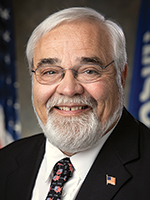
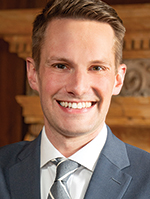
Jeff Mursau
70% support rate
Top opponent
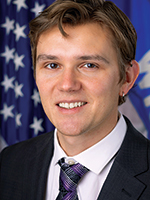
Ryan Clancy
32% support rate
Ranked legislators
10
5 support · 5 oppose
Key legislators

Who's moving criminal justice in Wisconsin

Legislators moving criminal justice in Wisconsin
Legislator Party Stance Support rate Votes
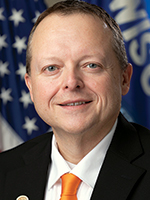
Jeff Mursau
Jeff Mursau House · District 36
R
Support
70% 54
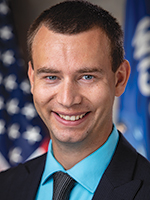
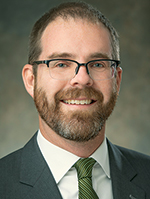
Will Penterman
Will Penterman House · District 38
R
Support
67% 48
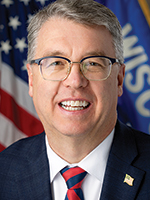
Brad Pfaff
Brad Pfaff Senate · District 32
D
Support
64% 36
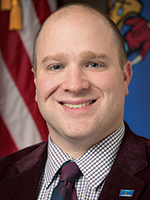
Eric Wimberger
Eric Wimberger Senate · District 2
R
Support
64% 36
Scott Krug
Scott Krug House · District 72
R
Support
64% 58
Ryan Clancy
Ryan Clancy House · District 19
D
Oppose
32% 53
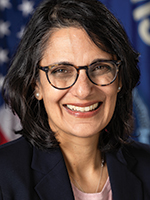
Renuka Mayadev
Renuka Mayadev House · District 77
D
Oppose
32% 58
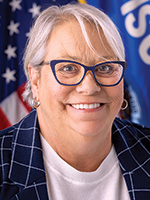
Christine Sinicki
Christine Sinicki House · District 20
D
Oppose
32% 58
Alex Joers
Alex Joers House · District 81
D
Oppose
32% 58
Christian Phelps
Christian Phelps House · District 93
D
Oppose
33% 57
Showing 161–170 of 250 bills

All criminal justice bills

failed · Wisconsin · Senate Mar 23, 2026

SB 404: Relating to: creating a Task Force on Missing and Murdered African American Women and Girls and making an appropriation. (FE)

SB 404 creates a Task Force on Missing and Murdered African American Women and Girls, directly affecting African American women and girls experiencing violence in Wisconsin. The task force, established by the attorney general within 45 days, will examine systemic causes of violence against this group, data collection methods, policing and institutional practices, and prevention strategies. It must submit a report by December 15, 2026, with recommendations for policy changes, violence reduction, and victim support. The bill appropriates $80,200 for fiscal year 2025-26 and $99,500 for 2026-27 to fund the task force, which terminates on January 1, 2027, or after the report is submitted.
failed · Wisconsin · Senate Mar 23, 2026

SB 621: Relating to: use of public lands to provide temporary residence for the homeless and providing a penalty. (FE)

SB 621 creates designated "structured camping facilities" on public lands (excluding parks and fairgrounds) for temporary homeless housing, directly affecting homeless individuals and local governments managing public property. It requires state or local approval to designate sites, mandates mental health/substance use evaluations for residency, and establishes waiting lists when facilities are full. Unauthorized camping on public lands not designated as such becomes a Class C misdemeanor (with a warning for first offenses), while those on waiting lists or using approved facilities cannot be penalized. The bill also requires tracking occupancy and service referrals at each facility.
Sub-Topics Homelessness
failed · Wisconsin · Assembly Mar 23, 2026

AB 392: Relating to: creating a Task Force on Missing and Murdered African American Women and Girls and making an appropriation. (FE)

AB 392 creates a state Task Force focused on addressing the crisis of missing and murdered African American women and girls in Wisconsin. The task force will develop recommendations to improve responses, prevention efforts, and support services for this community. The bill includes a funding appropriation to cover the task force’s operational costs. It was introduced by multiple legislators and referred to the Committee on Criminal Justice and Public Safety for further review.
Sub-Topics Appropriations
signed · Wisconsin · Senate Mar 20, 2026

SB 419: Relating to: emergency testing of a criminal defendant for certain diseases. (FE)

SB 419 allows courts to order emergency testing for certain diseases (like HIV or STIs) of criminal defendants without their consent in specific cases. It applies when a defendant allegedly committed a crime involving bodily fluids (blood, semen, etc.) that could transmit disease to public safety workers, prosecutors, or correctional staff. The bill requires court approval based on probable cause, mandates immediate disclosure of results to the defendant, and prohibits adding test results to the person's permanent medical record. It also creates new procedures for prosecutors to seek these orders quickly when public safety is at risk. This bill directly affects criminal defendants in cases involving potential disease transmission to protected public safety personnel.
Sub-Topics Courts
failed · Wisconsin · Senate Mar 23, 2026

SB 546: Relating to: authorizing additional circuit court and criminal justice system positions. (FE)

SB 546 expands court capacity in specific Wisconsin counties by adding new judicial branches and related positions. It increases circuit court branches in Kenosha County (from 8 to 9, effective 2028), Brown County (from 8 to 9 in 2027, then to 10 in 2028), and Menominee/Shawano Counties (from 2 to 3, effective 2027). The bill authorizes 4 new circuit judge positions, 4 new court reporter positions, and 30.5 additional assistant district attorney positions across 25 counties to support these expansions. All changes take effect between August 2027 and August 2028, with funding tied to existing state appropriations.
Sub-Topics Courts Judges
signed · Wisconsin · Assembly Mar 19, 2026

AB 78: Relating to: impoundment of vehicles used in certain reckless driving offenses. (FE)

AB 78 modifies Wisconsin law regarding vehicle impoundment for reckless driving offenses. It gives law enforcement officers discretion to impound vehicles used in certain reckless driving cases, rather than requiring mandatory impoundment. The bill directly affects drivers convicted of qualifying reckless driving offenses and law enforcement officers who decide whether to impound a vehicle. This change, now part of 2025 Wisconsin Act 46, alters the standard procedure for handling such vehicles.
Sub-Topics Law Enforcement
failed · Wisconsin · Senate Mar 23, 2026

SB 487: Relating to: training requirements for a license to carry a concealed weapon.

SB 487 modifies training requirements for concealed carry license applicants and renewers in this state. It expands acceptable proof of training to include out-of-state licenses that document required training, and adds new mandatory training components like suicide prevention, de-escalation techniques, and firearm safety storage practices. The bill requires applicants to submit proof of continuing training (including specific topics like live-fire practice and de-escalation) when renewing licenses. These changes apply to all new applications or renewals submitted on the bill's effective date.
failed · Wisconsin · Assembly Mar 23, 2026

AB 624: Relating to: increasing the maximum penalty for certain controlled substances offenses if the violation occurs near a homeless shelter and providing a penalty.

AB 624 increases penalties for distributing methamphetamine or similar drugs near homeless shelters. If someone distributes these substances within 1,000 feet of a homeless shelter (and knows or should know the location), the maximum prison sentence for that offense rises by 5 years. The bill defines "near a homeless shelter" as being on or within 1,000 feet of the shelter premises, including when the shelter is readily recognizable. This directly affects individuals convicted of drug distribution offenses in these specific locations. The policy change modifies existing sentencing rules without altering the core definition of drug offenses.
vetoed · Wisconsin · Assembly May 13, 2026

AB 672: Relating to: penalty enhancer for crimes committed by a person acting as an agent of a foreign government or terrorist organization with the intent to silence or punish persons for their political view, criminalizing the enforcement of foreign laws without federal or state approval, and providing a penalty. (FE)

AB 672 creates new Wisconsin statutes to address "transnational repression," defined as actions by foreign government or terrorist organization agents targeting dissidents (like activists, journalists, or minority group members) to silence them over political views. It establishes a state training program for law enforcement, a public awareness campaign, and a digital reporting portal to identify such cases. The bill increases penalties for crimes committed as part of this repression (e.g., elevating a Class B felony to a Class A felony) and criminalizes enforcing foreign laws without federal or state approval, punishable by a minimum 3-year prison term. These provisions directly affect foreign agents operating within Wisconsin and target actions intended to suppress political dissent.
signed · Wisconsin · Assembly Mar 27, 2026

AB 446: Relating to: consideration of a certain definition of antisemitism for purposes of laws, ordinances, policies, or criminal penalty enhancers concerning discrimination based on race, religion, color, or national origin.

AB 446 requires all state agencies and local governments (including cities, counties, and school districts) to use the International Holocaust Remembrance Alliance's 2016 definition of antisemitism when evaluating evidence in discrimination cases based on race, religion, color, or national origin. This applies to both civil policies prohibiting discrimination and criminal cases where bias against a victim's identity is a factor for enhanced penalties. The bill explicitly states it does not affect First Amendment rights or conflict with existing federal or state antidiscrimination laws.
Sub-Topics Civil Rights
Showing 161 to 170 of 250 bills
Previous 1 16 17 18 25 Next