

Issue · Criminal Justice
Criminal Justice
Every criminal justice bill, vote, and legislator stance in Wisconsin, automatically classified by Maddy, our AI policy reader.
Total bills
250
2025-2026 Regular Session
Top supporter
Jeff Mursau
70% support rate
Top opponent
Ryan Clancy
32% support rate
Ranked legislators
10
5 support · 5 oppose
Key legislators
Who's moving criminal justice in Wisconsin
| Legislator | Party | Stance | Support rate | Votes |
|---|---|---|---|---|
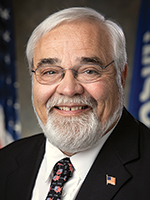
Jeff Mursau
House · District 36
|
R |
Support
|
70% | 54 |

Will Penterman
House · District 38
|
R |
Support
|
67% | 48 |
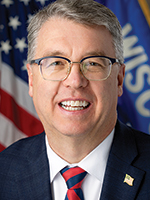
Brad Pfaff
Senate · District 32
|
D |
Support
|
64% | 36 |
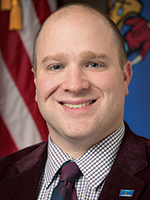
Eric Wimberger
Senate · District 2
|
R |
Support
|
64% | 36 |
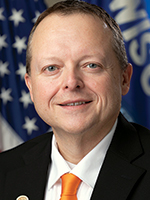
Scott Krug
House · District 72
|
R |
Support
|
64% | 58 |
Ryan Clancy
House · District 19
|
D |
Oppose
|
32% | 53 |

Renuka Mayadev
House · District 77
|
D |
Oppose
|
32% | 58 |
Christine Sinicki
House · District 20
|
D |
Oppose
|
32% | 58 |
Alex Joers
House · District 81
|
D |
Oppose
|
32% | 58 |

Christian Phelps
House · District 93
|
D |
Oppose
|
33% | 57 |
Showing 1–10 of 250
bills
All criminal justice bills
AB 1098: Relating to: depositing tires on private property and providing a penalty.
Sub-Topics
Victims' Rights
AB 1154: Relating to: firearm transfers and possession that are prohibited under federal law. (FE)
AB 1141: Relating to: public financing of campaigns for the offices of justice of the supreme court, court of appeals judge, and circuit court judge, and making an appropriation. (FE)
Topics
✓ Budget & TaxesSupports Budget & TaxesBill establishes public financing for judicial campaigns, increasing government funding for essential democratic processes and reducing reliance on private donations.
✓ Criminal JusticeSupports Criminal JusticeBill establishes public financing for judicial campaigns, enhancing judicial independence and reducing campaign influence, which strengthens the integrity of the criminal justice system.
SB 1160: Relating to: attorney general enforcement authority for civil rights violations and providing a penalty. (FE)
Topics
✓ Criminal JusticeSupports Criminal JusticeBill strengthens civil rights enforcement by empowering attorney general to investigate and sue for violations, enhancing accountability and protecting individual rights within the justice system.
✓ HousingSupports HousingBill strengthens tenant protections by expanding attorney general authority to investigate and sue for civil rights violations in housing, preventing discrimination.
Sub-Topics
Civil Rights
SB 1087: Relating to: disrupting access to a reproductive health service facility or place of religious worship and providing a penalty.
Topics
✓ Criminal JusticeSupports Criminal JusticeBill strengthens criminal justice by creating penalties for disrupting access to reproductive health services and places of worship, enhancing protection for individuals and facilities.
✓ HealthcareSupports HealthcareBill protects patient access to reproductive health services by criminalizing obstruction and intimidation, thereby safeguarding healthcare access and patient rights.
Sub-Topics
Women's Health
AB 1125: Relating to: disrupting access to a reproductive health service facility or place of religious worship and providing a penalty.
Topics
✓ Criminal JusticeSupports Criminal JusticeBill strengthens criminal justice by creating penalties for obstructing access to reproductive health facilities and places of worship, enhancing protection for individuals seeking services.
✓ HealthcareSupports HealthcareBill protects access to reproductive health services by criminalizing obstruction, directly supporting patient access to healthcare.
Sub-Topics
Women's Health
AB 1134: Relating to: information contained in the Consolidated Court Automation Programs Internet site related to dismissed eviction actions. (FE)
Topics
✓ Criminal JusticeSupports Criminal JusticeBill protects civil rights by removing dismissed eviction records from public view, reducing stigma and potential barriers to employment for individuals with dismissed cases.
✓ HousingSupports HousingBill protects tenant rights by removing names from public eviction records after dismissal, reducing stigma and potential discrimination against tenants.
✓ TechnologySupports TechnologyBill protects individuals' privacy by removing names from public eviction records, enhancing data privacy protections for citizens accessing court information online.
SB 1165: Relating to: creating an Office of Civil Legal Aid to be overseen by a Civil Legal Aid Board, providing a right to the appointment of counsel at state expense for residential tenants in eviction actions, and making an appropriation. (FE)
Topics
✓ Budget & TaxesSupports Budget & TaxesBill includes explicit appropriation for civil legal aid services, expanding access to justice for tenants through state-funded legal representation.
✓ Criminal JusticeSupports Criminal JusticeBill guarantees right to counsel for tenants facing eviction, protecting civil rights and ensuring fair legal representation in civil proceedings.
✓ HousingSupports HousingBill establishes right to legal counsel for tenants facing eviction, strengthening tenant protections and preventing wrongful displacement.
AB 1238: Relating to: allocation of building trust funds to develop preliminary plans and specification for expansion of the mother-young child care program under the Department of Corrections. (FE)
Sub-Topics
Corrections