

Maddy summarySB 677 establishes a new licensing framework for genetic counselors in West Virginia, requiring a valid license to practice and mandating criminal background checks for all applicants. It prohibits genetic counselors from representing themselves as licensed physicians, with violations punishable by up to two years in prison or a $2,000 fine. The bill also sets continuing education requirements, defines the scope of practice for genetic counselors, and creates separate disciplinary procedures under the West Virginia Board of Medicine.
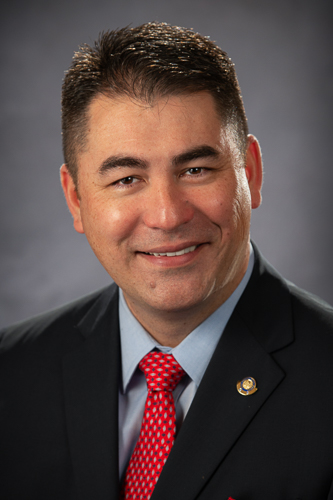
Sen. Tom Takubo
Sponsored bills
Maddy summarySB 1035 amends West Virginia's Judges' Retirement System to adjust contribution rates and benefit calculations for judges. It requires current and future judges to contribute 7% of salary (up to 10.5%) to the retirement fund, suspends court contributions until certain conditions are met, and retroactively treats post-2005 retirees as pre-2005 retirees for benefit purposes. The bill increases surviving spouse benefits for certain judges, removes limits on retirement benefit increases, and eliminates distinctions in calculating benefits for surviving spouses, dependents, and adjusted retirement amounts. These changes directly affect active judges, current retirees, and their dependents under the system.
Maddy summarySB 972, or "Raylee's Law," temporarily restricts custodial parents or guardians from arranging home instruction for their child during an active West Virginia Department of Human Services (DHS) child abuse or neglect investigation where they are the alleged perpetrator. The law prohibits withdrawing a child from school for home instruction or resuming home instruction as the primary provider during the investigation. This restriction ends when DHS closes the case without substantiation or a court orders otherwise. The bill explicitly states it does not create a presumption of guilt, permanently ban home education, or limit court authority to order alternative educational placements for the child’s safety.
Maddy summarySB 676 would move employees in West Virginia's Division of Protective Services into the state police retirement system. This change directly affects staff currently covered under a different retirement plan, requiring them to participate in the West Virginia State Police Retirement Fund instead. The bill amends existing law to define these employees as "members" of the retirement system, aligning their contribution rates, benefit calculations, and eligibility rules with those of state police officers. This is a procedural policy change affecting retirement benefits for specific state workers.
Maddy summarySB 580 updates West Virginia's licensing rules for medical imaging and radiation therapy professionals, directly affecting radiologic technologists, MRI technicians, radiation therapists, and nuclear medicine technologists. Key changes include allowing radiation therapists to earn licensure through direct degree programs (without prior radiography training), restricting denial of licensure to only healthcare-related criminal convictions, and aligning their scope of practice with national standards. The bill also eliminates six-month temporary licenses, transfers oversight of radiologist assistants from the Board of Medicine to the Medical Imaging Board, and adds new definitions to clarify regulations. These updates aim to modernize licensing requirements while maintaining public safety standards.
Maddy summarySenate Resolution 48 memorializes the late Sarah Abigail (Mullennex) Minear, a former West Virginia State Senator (1994-2006) and community leader, by formally honoring her life and public service. The resolution recognizes her roles as a philanthropist, founding president of the Tucker Community Foundation and West Virginia Grantmakers Association, and her decades of volunteer work across West Virginia. It extends the Senate’s condolences to her family and directs the Clerk to send a copy of the resolution to her loved ones. This is a ceremonial resolution with no policy or financial impact, solely commemorating her legacy.
Maddy summarySB 619, the Stop the Bleed Act, requires West Virginia public schools to implement bleeding control programs starting in the 2026-2027 school year. It mandates schools to place bleeding control kits (containing tourniquets, bandages, gauze, gloves, and DHS/ACS instructional materials) in accessible locations, train staff every other year on wound control techniques, and integrate bleeding control education into high school curricula for grades 9-12. The bill also requires annual kit inspections, post-use restocking, and provides civil immunity for school personnel using kits unless gross negligence occurs. Funding may come from private donations or legislative appropriations. This law directly affects all West Virginia county school districts and their students and staff.
Maddy summaryThis is a ceremonial resolution (SR 45), not a substantive bill. It designates February 23, 2026, as "West Virginia American Academy of Pediatrics Child Health Advocacy Day" at the state legislature. The resolution recognizes the West Virginia Chapter of the American Academy of Pediatrics (a group of 267 pediatric providers) for their work promoting children's health. It does not create new laws or affect any policies; it simply honors the organization's advocacy efforts. The resolution was adopted by the Senate on February 23, 2026, via voice vote.
Maddy summarySB 1078 clarifies rules for schools to stock and use epinephrine auto-injectors to treat severe allergic reactions (anaphylaxis). It allows schools to maintain epinephrine supplies without requiring a prior diagnosis for each student or staff member, and permits trained non-medical staff (including bus drivers) to administer it during emergencies if they reasonably believe anaphylaxis is occurring. The bill specifies that epinephrine must be stored securely, accessible only to medical personnel or designated trained staff, and can be used for students with existing prescriptions or in emergency situations. This directly affects schools, students, staff, and visitors who may experience allergic reactions during school activities or transportation.
Maddy summarySB 1075 creates a dedicated "Tobacco Cessation Initiative Program Special Revenue Account" in West Virginia's state treasury, managed by the Bureau for Public Health. It directs $5 million annually - starting July 2026 - from interest earned on the Revenue Shortfall Reserve Fund to fund tobacco use cessation programs. The bill specifies these funds must be used exclusively for cessation services, such as counseling and nicotine replacement therapies, administered by the Bureau for Public Health. This initiative directly affects West Virginians seeking tobacco cessation support through state-funded programs.