

Maddy summaryThis bill modifies insurance coverage rules for drivers using vehicles provided by businesses that sell, repair, lease, or service motor vehicles. It establishes that the driver's personal auto insurance will be primary coverage, while the business's insurance acts as secondary coverage when the vehicle is used as a replacement while the driver's own car is being repaired or serviced. The change applies only when no additional payment is made for the vehicle's use and the driver has the business owner's permission. An exception exists for employees using company vehicles during work hours, where the business's insurance remains primary.
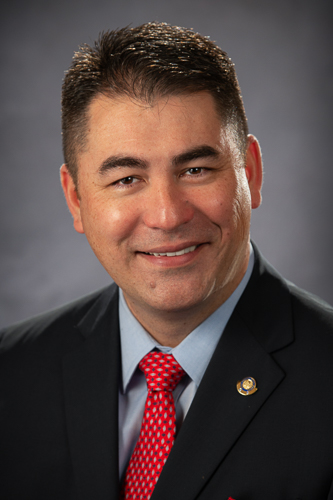
Sen. Tom Takubo
Sponsored bills
Maddy summaryWest Virginia Senate Bill 4 creates a new law requiring people to stay at least 30 feet away from first responders (including police, firefighters, probation officers, and emergency medical personnel) while they are lawfully performing duties. It makes it a misdemeanor to knowingly approach within 30 feet after being verbally warned, if the action impedes their work, threatens them, or harasses them (defined as causing substantial emotional distress without legitimate purpose). Violators face fines of $50-$500, up to one year in jail, or both. The bill directly affects individuals near emergency scenes and aims to protect responders from interference. It amends West Virginia Code §61-5-30.
Maddy summarySB 607 allows West Virginia airport authorities to use federally approved project delivery methods - such as design-build or construction manager-at-risk - for airport capital improvement projects funded by the Federal Aviation Administration (FAA) Airport Improvement Program or Airport Terminal Program. This overrides state procurement laws (like §5-22-1 et seq.) that would otherwise require specific contracting processes, as long as projects meet FAA safety and engineering standards. The bill directly affects airport authorities managing FAA-funded airport projects in West Virginia, streamlining their ability to implement federal-approved construction approaches.
Maddy summaryThis Senate resolution formally recognizes the dedicated public service of Honorable Michael Andrew Woelfel, a former West Virginia State Senator. The bill honors his career as a prosecutor, juvenile court referee, university professor, and legislator who served three consecutive terms in the Senate. It expresses the Senate's appreciation for his contributions to West Virginia citizens and directs the Clerk to send a copy of the resolution to Woelfel. This is a commemorative measure with no policy changes or budgetary impact.
Maddy summaryThis Senate resolution formally recognizes the dedicated public service of Honorable Charles Houston Clements, a former West Virginia state senator. The bill honors Clements for his legislative career, including his service as Chair of the Transportation and Infrastructure Committee and his decision not to seek reelection in 2026. It expresses the Senate's appreciation for his commitment to serving West Virginia citizens and directs the Clerk to send a copy of the resolution to Clements.
Maddy summarySB 774 allows county emergency medical services (EMS) officers to join the Emergency Medical Services Retirement System (EMSRS), removing a prior requirement that they be certified as law enforcement officers. It enables current EMS officers enrolled in the Public Employees Retirement System (PERS) to elect to switch to the EMSRS and transfer their eligible service years to the new system. The bill clarifies how retirement benefits are calculated for these officers, ensuring their prior service counts toward future benefits. This change directly affects county EMS officers by providing them with a retirement system tailored to their profession.
Maddy summarySB 928 defines "Low-Proof Spirit Alcohol Products" as beverages containing 0.5% to 15.5% alcohol by volume (not including wine, beer, or nonintoxicating beer), packaged in containers under 25 fluid ounces. It establishes new regulatory requirements for manufacturers, distributors, and retailers of these products, including specific sales and distribution rules. The bill also specifies a tax methodology for these products and grants the West Virginia Alcohol Beverage Control Commission authority to create implementing rules. This legislation directly affects businesses producing or selling low-proof alcohol beverages, creating a distinct regulatory category separate from traditional spirits, beer, or wine.
Maddy summaryThis Senate resolution designates the month of March as American Red Cross Month to recognize the organization's humanitarian work in West Virginia. The measure formally acknowledges the Red Cross's services, which include disaster relief, blood donation collection, military family support, and lifesaving skills training for residents. By adopting this resolution, the Senate expresses appreciation for the organization's efforts and directs the Clerk to send a copy to the Central Appalachian Regional office of the American Red Cross.
Maddy summarySB 1074 allows newly hired emergency medical vehicle operators in West Virginia to join the Emergency Medical Services Retirement System. The bill amends state law to include these new employees as eligible members of the retirement system, expanding coverage beyond current participants. This change directly affects new hires in emergency medical services who were previously excluded from the system. The legislation modifies eligibility definitions in the Emergency Medical Services Retirement System Act without altering existing contribution rates or benefit calculations. It does not impact current system members or require additional state funding.
Maddy summarySB 583 creates a free, honorific "emeritus physician license" for retired physicians, podiatric physicians, and physician assistants in West Virginia who have fully retired from clinical practice after at least 10 years of active practice in the state, with no current disciplinary issues. The license allows no clinical practice, exempts holders from continuing education requirements, and remains valid for life unless the holder returns to active practice or the board revokes it. It explicitly prohibits using the emeritus status to obtain licenses in other states or to reactivate active practice. The bill establishes application criteria and revocation grounds, including proof of voluntary retirement and absence of pending investigations.