

Maddy summarySB 1062 creates TEAM-WV, a new nonprofit corporation to advance West Virginia's economic development by focusing on job creation, retention, training, and business recruitment. The Governor must establish the corporation by filing articles of incorporation, with a 9-member board of directors appointed by the Governor (subject to Senate approval) to oversee operations. The board must set strategic goals, approve the chief executive officer's compensation and major contracts, conduct annual financial audits by independent auditors, and adopt a conflicts of interest policy. This structure requires regular board meetings and financial transparency to ensure accountability in executing the corporation's economic development mission.
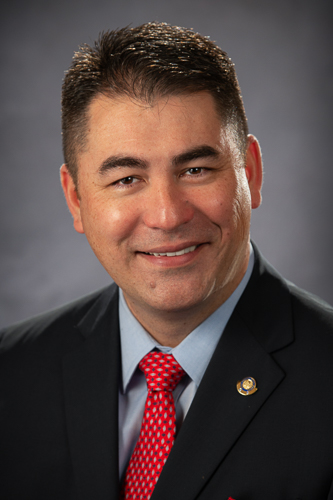
Sen. Tom Takubo
Sponsored bills
Maddy summarySenate Bill 765 amends West Virginia law to allow retail liquor outlets to discount "stagnant" liquor (inventory not sold for over two years) below standard minimum markup requirements. Retailers can now sell such liquor to other licensees at 85% of their cost (down from 115%) and to the general public at 90% of cost (down from 110%), after submitting documentation and commissioner approval. This directly affects licensed retail liquor stores in West Virginia that hold unsold inventory. The bill changes specific pricing provisions in §60-3A-17 without altering the requirement that retailers must purchase liquor from the state.
Maddy summarySB 549 would increase the daily payment for jurors in West Virginia from a current range of $15 to $40 per day to a new range of $40 to $100 per day. This change applies to both trial jurors (petit jurors) and grand jurors serving on court cases. The bill replaces the previous minimum of $15 with a new minimum of $40 and raises the maximum from $40 to $100. The reimbursement remains determined by the court and paid from the state treasury, but ensures jurors receive at least $40 per day.
Maddy summarySB 994 requires West Virginia Medicaid to set reimbursement rates for outpatient mental health services at the same level as Medicare Part B rates. It directly affects mental health providers in licensed behavioral health centers who offer services like psychotherapy, medication management, and psychiatric evaluations for adults, children, and families. The bill mandates a state board to develop a proposal for these rate increases by July 1, 2026, ensuring Medicaid rates never fall below Medicare rates for identical services. This change aims to improve payment equity for mental health care providers participating in Medicaid.
Maddy summarySB 1014 increases Medicaid dental reimbursement rates for providers in West Virginia to address rising costs, as noted in a 2024 state report showing current rates fail to cover service expenses. It expands dental coverage for adults 21+ to include diagnostic, preventative, and restorative services (excluding cosmetic procedures), with a $2,000 annual spending limit per beneficiary. The bill requires the state to implement a dental care system with quality oversight and submit annual cost reports to legislators starting in 2027. A 20% fee increase for dental services must be enacted by December 2028 to align with federal matching requirements.
Maddy summarySB 662 creates a pilot program to provide free colorectal cancer screening and treatment in West Virginia for "unserved populations" - individuals with inadequate access to care due to financial constraints. The program, administered by the Bureau for Public Health, awards grants to approved organizations (like clinics or hospitals) to deliver screenings, diagnostic colonoscopies, and treatment at no cost to patients. Covered services include pre-visit consultations, colonoscopy procedures, polyp removal, and pathology, with treatment initiated if cancer is detected. Organizations must meet quality standards, and the program requires annual reporting on metrics like screenings performed, costs, and outcomes to the Legislative Oversight Commission.
Maddy summaryThis is a ceremonial Senate Resolution (SR 38), not a substantive bill. It formally designates February 16, 2026, as "Rural Health Day" at the West Virginia Capitol. The resolution acknowledges rural health care providers - including hospitals, clinics, and emergency services - and recognizes their efforts in addressing health care challenges in rural West Virginia. It has no legal effect beyond this symbolic recognition and does not impose new requirements or change existing laws.
Maddy summarySR 42 is a ceremonial Senate resolution honoring the late Walter Dolph Helmick, a former West Virginia state legislator and public servant. It memorializes his life and career, noting his service as a coal miner, teacher, businessman, Mason, West Virginia House of Delegates member, Senate member (1989-2013), and Commissioner of Agriculture. The resolution formally recognizes his contributions to West Virginia and extends condolences to his family following his death in 2025. As a non-binding memorial resolution, it has no policy impact or effect on legislation.
Maddy summarySB 766 creates a nonrefundable tax credit for West Virginia family caregivers of eligible elderly relatives. It allows caregivers to claim a 50% credit on qualifying out-of-pocket expenses (up to $2,000 annually, or $3,000 for veteran caregivers), including home modifications, medical equipment, hiring care aides, respite care, and adult day care. The credit applies to expenses directly related to assisting an eligible family member (62+ years old, living at home, requiring help with daily activities like bathing or dressing, and certified by a healthcare provider). The credit begins for tax years starting January 1, 2028, with a $5 million annual cap on total credits, adjusted annually based on the consumer price index.
Maddy summarySB 914 increases taxes on all tobacco products, including cigarettes, cigars, chewing tobacco, and electronic smoking devices (like e-cigarettes and vape pens), which are now explicitly defined in the law. It repeals existing tax discounts and removes exemptions for certain products, directly affecting tobacco manufacturers, retailers, and consumers through higher prices. The bill dedicates 10% of the additional tax revenue to West Virginia’s Tobacco Prevention program. This is a direct policy change to raise revenue and fund prevention efforts, with no mention of specific tax rates or additional restrictions beyond taxation.