

Maddy summarySB 931 establishes the "West Virginia Utility Affordability and Economic Competitiveness Act" to address high utility costs by imposing a moratorium on rate increases for electricity and water utilities. The bill defines "affordability" as the lowest total cost of electricity (including all rates, fees, and charges) that minimizes financial burden on households and businesses while considering competitiveness with neighboring states. It sets reliability standards requiring electricity sources to maintain 80% performance without intermittent availability (excluding peaker plants) and mandates comprehensive cost evaluations factoring in environmental impacts and supply chain risks. These provisions aim to restore affordability and reliability for West Virginia residents and businesses, which the legislature states are foundational to economic development.
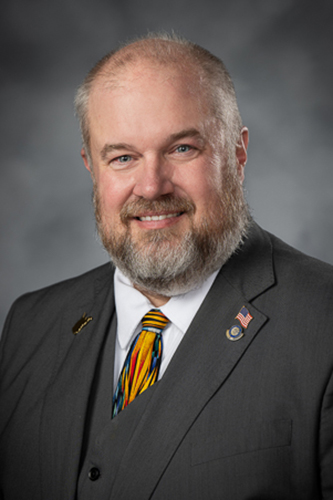
Sen. Jay Taylor
Sponsored bills
Maddy summarySB 633 modernizes West Virginia's Commission on Holocaust Education by updating its membership structure and governance. The bill replaces outdated provisions relying on Holocaust survivors (many now deceased) with a new framework allowing commission-appointed voting members and non-voting student advisory members, while explicitly requiring Holocaust education to remain the commission's sole purpose. It strengthens safeguards to protect historical accuracy and ensures the commission continues providing centralized educational resources for schools, churches, and communities studying the Holocaust. These changes aim to maintain the commission's mission as a permanent statewide resource for Holocaust education amid evolving circumstances.
Maddy summarySB 30 (West Virginia) removes the requirement for 18- to 20-year-olds to obtain a permit to carry a concealed weapon. The bill repeals prior restrictions that mandated permits for this age group and explicitly states that individuals aged 18-20 may carry concealed deadly weapons without a license, except when prohibited by other laws. Key exceptions remain in place, such as for carrying on personal property, transporting unloaded firearms from purchase to home, or during lawful hunting. The law clarifies that 18-20-year-olds are not subject to the "carrying without a license" crime under specific circumstances. This directly affects young adults in West Virginia who wish to carry concealed weapons without state-issued permits.
Maddy summarySB 921 prohibits West Virginia Medicaid from funding abortions (except as allowed under existing law) or gender transition procedures. It disqualifies healthcare providers performing these services from participating in Medicaid and bans Medicaid payments for referrals related to them. The bill defines "public funds" broadly to include state and federal healthcare funds and allows lawsuits by affected individuals or the Attorney General to enforce these restrictions. It directly affects Medicaid recipients seeking these services and healthcare providers who perform them.
Maddy summarySB 919, the Safe School Events Music Act, bans songs with explicit language (including profanity, sexual content, or references to illegal drugs) at West Virginia school sports events. It also prohibits "clean" versions of such songs, even if words are edited out. The bill requires the West Virginia Secondary School Activities Commission (WVSSAC) to create rules for enforcement, including penalties like fines or loss of postseason rights for violations. This applies to all music played at WVSSAC-sanctioned athletic events, such as during warm-ups, halftime, or pep band performances.
Maddy summaryThis bill removes a 10-absence limit for students participating in approved extracurricular and educational activities, such as SkillsUSA, FBLA, 4-H, or FFA programs. To qualify, activities must be pre-approved by a school principal, have parental consent, and be verified as educational by a teacher or sponsor. Students may miss school for these activities without the absence counting toward the yearly 10-absence cap, though they must still make up missed work without grade penalties. It directly affects students in recognized programs, parents, and school administrators who manage attendance policies.
Maddy summaryThis resolution designates February 10, 2026, as "Homeschool Day" at the West Virginia legislature to recognize homeschooling families, students, and educators. It acknowledges homeschooling's role in student achievement and citizenship through ceremonial recognition only, with no new policies, funding, or legal requirements. The resolution directs the Senate Clerk to share the designation with homeschooling organizations. As a procedural resolution, it has no binding effect on education policy or state operations.
Maddy summarySB 615 (West Virginia Senate Bill 615) requires all state and local law enforcement agencies in West Virginia to notify U.S. Immigration and Customs Enforcement (ICE) when they determine an individual is in the U.S. without legal authorization. The bill directly affects undocumented immigrants in West Virginia and mandates that law enforcement cooperate with federal immigration authorities under federal law. Key provisions include prohibiting any state or local policies that would block this notification, and requiring agencies to follow federal immigration enforcement procedures. This bill changes how West Virginia law enforcement handles immigration status determinations, making notification to ICE mandatory rather than optional.
Maddy summaryThis Senate Resolution (SR 28) expresses legislative support for extending Interstate 68 from Morgantown, West Virginia, to Kent, West Virginia, then across the Ohio River to Clarington, Ohio, and further to I-77 near Caldwell, Ohio. It does not create new policies or funding but urges state and federal officials to secure resources for this transportation corridor project. The resolution specifically references the "I-68 Energy Manufacturing AI Corridor" as a means to support economic growth in the Shale Crescent region, though it does not establish any new programs or obligations. It is a symbolic measure, not a substantive legislative bill.
Maddy summaryWest Virginia's SB 850 creates the "Second Amendment Preservation Act," prohibiting state enforcement of federal regulations on intrastate firearm sales, transfers, or possession within West Virginia. The bill declares such federal rules "null and invalid" and imposes civil penalties of $50,000 per violation plus attorney fees against federal entities like the ATF that attempt to enforce them. It requires the state Attorney General to defend West Virginia residents prosecuted by federal authorities for intrastate firearm transactions and to sue federal actors violating the act. The law specifically applies to transactions occurring entirely within West Virginia, not interstate commerce.