

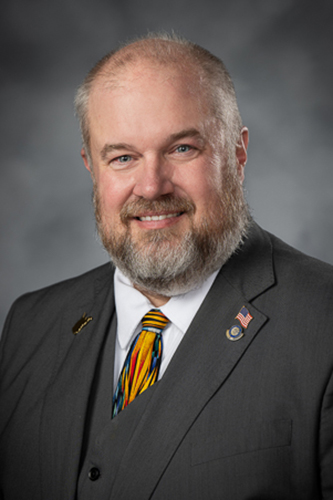
Photo of Jay Taylor
R West Virginia Senate · District 14 On the 2026 ballot

Sen. Jay Taylor

Compare
Total votes
1,767
all sessions
Attendance
100%
6 missed
Near the chamber average
With party
97%
of cast votes
Near the chamber average
Bipartisan score
1%
crosses aisle rarely
Near the chamber average
Sponsored
397
bills & resolutions
Near the chamber average
Committees
18
assignments
397 bills and resolutions

Sponsored bills

Total
397
Primary
64
Co-sponsor
333
This page
397
matching current filters
Co-sponsor SB 878
Signed into law · West Virginia Senate · Co-sponsor
Creating Office of Entrepreneurship within Office of Secretary of State

Maddy summarySB 878 creates a new Office of Entrepreneurship within West Virginia's Secretary of State's office to help entrepreneurs, startups (under 5 years old), and scale-ups (businesses with proven growth) navigate state requirements. The office will act as a central point of contact, coordinating with state agencies and support groups to identify barriers and streamline business setup and growth processes. It requires state agencies to share anonymized data and resources (while protecting sensitive information) and must report annually to the legislature on its activities and findings. This bill establishes a dedicated state resource to improve support for new and growing businesses across West Virginia.

Signed into law Jun 25, 2026 1 co-sponsor
Co-sponsor SB 982
Signed into law · West Virginia Senate · Co-sponsor
Creating Neighborhood Access Road Program

Maddy summarySB 982 creates a state program to fund improvements to public roads connecting residential neighborhoods and subdivisions to existing state roads. It establishes a special fund for projects serving at least 20 residential units (single or multifamily), with a $750,000 annual cap per project. The program excludes private roads, driveways, routine maintenance, and commercial areas, and requires annual reporting to the Legislature. The program expires after 10 years unless renewed by the Legislature.

Signed into law Jun 25, 2026 1 co-sponsor
Co-sponsor SB 1038
Signed into law · West Virginia Senate · Co-sponsor
Adjusting salaries for certain administrative law judges

Maddy summaryThis bill (SB 1038) increases salaries by 15% for three specific positions at the Unemployment Compensation Board of Review: Chief Administrative Law Judge, Administrative Law Judge 1, and Administrative Law Judge 2. The adjustment applies to salary levels effective when the bill takes effect and is separate from other 2026 budget salary changes. The stated purpose is to help ensure unemployment compensation hearings occur in a timely manner. The funding for this increase is exempt from standard budget constraints, and the law explicitly states it creates no legal liability for implementation.

Signed into law Jun 25, 2026 1 co-sponsor
Co-sponsor SB 499
Signed into law · West Virginia Senate · Co-sponsor
Requiring auto accident toxicology test be performed

Maddy summaryWest Virginia's SB 499 requires toxicology tests for drivers involved in any vehicle crash that results in death. The bill mandates these tests be performed "as soon as possible" after a fatal accident, directly affecting drivers in such crashes. It amends existing law (§17C-4-1) to add this requirement, specifying that testing applies to all drivers involved in fatal collisions. The bill, named "Erin’s Law," does not change penalties for hit-and-run offenses but adds this testing mandate as a new procedural step. This is a concrete policy change focused on gathering evidence in fatal crash investigations.

Signed into law Jun 25, 2026 1 co-sponsor
Primary SB 502
Signed into law · West Virginia Senate · Lead sponsor
Women’s Collegiate Sports Protection Act

Maddy summarySB 502 establishes permanent endowments to protect women’s collegiate Olympic sports programs at West Virginia’s public NCAA Division I universities. It requires that only endowment earnings - not principal - fund scholarships, coaching, equipment, and facilities for these programs. The bill creates tax credits (50% of donations) for private contributions and matching funds for institutions that document verified operational savings (e.g., energy efficiency, shared services), while prohibiting cuts to academic programs or Title IX compliance. All endowments must undergo annual audits, and institutions must report on cost savings, donations, and Title IX adherence to the state education commission.

Signed into law Jun 25, 2026 0 co-sponsors
Co-sponsor SB 231
Signed into law · West Virginia Senate · Co-sponsor
Relating to value-based payment requirements

Maddy summaryThis bill establishes a value-based payment system for West Virginia's Medicaid addiction care services, shifting from fee-for-service to rewarding providers based on patient recovery outcomes. It directly affects Medicaid providers treating substance use disorders by requiring them to use standardized billing codes starting in 2027 and report on five specific outcome metrics: housing stability, sobriety, avoidance of criminal justice involvement, self-sufficiency (employment/education), and provider transition plans. The bill mandates data collection and analysis by the Bureau for Medical Services to develop these metrics, with value-based payments requiring implementation by 2028. The goal is to create a coordinated care system focused on long-term recovery success rather than fragmented service volume.

Signed into law Jun 25, 2026 1 co-sponsor
Co-sponsor SB 586
Signed into law · West Virginia Senate · Co-sponsor
Modifying requirements for public water systems

Maddy summarySB 586 classifies backflow prevention devices in public water systems as "low-hazard" (causing only aesthetic issues or minor water quality effects) or "high-hazard" (risking disease or chemical contamination). It requires annual inspections for high-hazard systems but limits low-hazard system inspections to once every three years. This affects all public water systems in West Virginia, particularly smaller providers with low-hazard systems, by reducing their inspection burden. The bill amends existing water safety regulations to clarify these inspection frequency requirements without changing safety standards for high-hazard systems.

Signed into law Jun 25, 2026 1 co-sponsor
Co-sponsor SB 1
Signed into law · West Virginia Senate · Co-sponsor
Small Business Growth Act

Maddy summarySB 1, the Small Business Growth Act, creates a new tax credit program administered by the West Virginia Department of Commerce to incentivize investment in small businesses. It provides insurance companies with a credit against their state premium tax equal to 15% of qualifying capital investments made by certified "growth funds" into eligible West Virginia businesses. Eligible businesses must have fewer than 250 employees and principal operations in the state, and investments are limited to 20% of a growth fund's capital authority or $7.5 million per business. The credit is claimed annually based on certified investments, with the program requiring annual reporting and prohibiting certain investment types.

Signed into law Jun 25, 2026 1 co-sponsor
Co-sponsor SB 531
Signed into law · West Virginia Senate · Co-sponsor
Establishing First Amendment Preservation Act

Maddy summaryWest Virginia's SB 531, the First Amendment Preservation Act, prohibits state agencies from entering contracts with media monitoring organizations that rate news sources for factual accuracy, bias, or adherence to journalistic standards. It directly affects all state departments, institutions of higher education using state funds, and companies bidding for state advertising contracts. The bill requires contractors to provide written certifications confirming they do not use such media monitoring services, and clarifies that contracts for aggregating news or tracking ad performance are still permitted. The law takes effect July 1, 2026, for all new or renewed state contracts.

Signed into law Jun 25, 2026 1 co-sponsor
Co-sponsor SB 194
Signed into law · West Virginia Senate · Co-sponsor
Updating definition of "disabled veteran taxpayer"

Maddy summarySB 194 updates the definition of "disabled veteran taxpayer" in West Virginia's property tax law to clarify eligibility for the disabled veteran real property tax credit. The bill specifies that a qualifying veteran must have a 90% or greater service-connected disability rating from the U.S. Department of Veterans Affairs (VA) or meet VA eligibility for individual unemployability due to service-related injuries since September 11, 2001. This change directly affects veterans seeking the property tax credit, ensuring only those with the required VA determinations qualify. The bill does not alter the tax credit amount or eligibility for other benefits, focusing solely on refining the definition for administrative clarity.

Signed into law Jun 25, 2026 1 co-sponsor
Showing 1 to 10 of 397 bills
1 2 3 40 Next