

Maddy summaryThis Senate Resolution designates March 13, 2026, as Veterans Visibility Day within the West Virginia Legislature. The measure formally recognizes the service and sacrifice of West Virginia veterans and current military personnel, acknowledging the state's high rate of military service and the contributions of those who have served. The resolution directs the Senate Clerk to send a copy to the Department of Veterans Assistance, serving as an official gesture of gratitude rather than establishing new policies or funding.
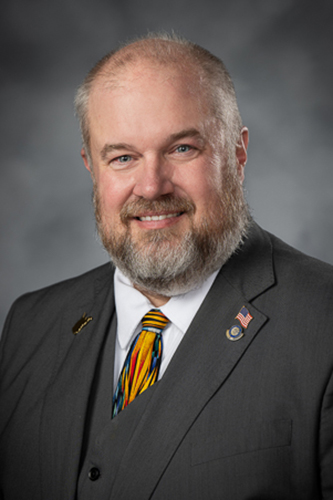
Sen. Jay Taylor
Sponsored bills
Maddy summarySB 420, the West Virginia First Energy Act, requires regulated utilities to maintain minimum operational standards for coal and natural-gas power plants. It mandates a 69% annual utilization rate for coal-fired facilities, a 30-day on-site coal inventory, and firm natural-gas supply contracts for gas plants. The bill prohibits retiring or reducing coal/gas capacity without Public Service Commission approval (unless an in-state replacement is available) and bans cost recovery for new wind or solar projects in utility rate bases. These provisions directly affect utilities operating in-state coal and natural-gas generation, aiming to preserve reliable, dispatchable power sources and limit reliance on intermittent renewables.
Maddy summarySB 804 exempts middle and high school students participating in extracurricular sports in "good standing" from mandatory physical education requirements. Specifically, students listed by their coach at the end of each sport season are not required to complete the standard PE classes for that school year (middle school: daily PE for one semester; high school: a full credit for graduation). The bill directly affects athletes who maintain coach-determined good standing in sports. It does not alter overall PE requirements but creates this specific exemption based on athletic participation. The change applies to students in grades 6-12 who meet the coach's criteria during their sport season.
Maddy summarySB 745 prohibits specific food additives in West Virginia school meals, banning dyes like Red 40 and Yellow 5 starting August 1, 2025, and additional preservatives like BHT and artificial sweeteners starting August 1, 2027. It limits added sugars to no more than 5% of daily calories and requires a minimum fiber-to-carbohydrate ratio of 1 gram of fiber per 10 grams of carbs in school meals. Schools must post full ingredient lists for all breakfast and lunch menu items online. The bill directly affects all West Virginia public schools operating nutrition programs, aiming to improve meal nutritional standards.
Maddy summaryThis bill creates a new felony offense for indecent exposure committed in front of minors and requires individuals convicted of this crime to register as sex offenders. The legislation defines indecent exposure as exposing one's nude penis, vagina, or anus and includes undressing in opposite-sex locker rooms as a violation while removing exemptions for breastfeeding. Penalties increase with repeat offenses, and the new crime counts as a qualifying offense for recidivist sentencing enhancements. The bill also clarifies that registration requirements apply retroactively to past convictions involving these offenses.
Maddy summarySB 929, the "Taxpayer Transparency in Education Act," requires West Virginia county school boards to publish detailed annual financial statements within 120 days of each fiscal year. These statements must disclose all expenditures over $250 to individuals or firms, debts, school personnel pay, and budget estimates, either as legal ads or on public websites. County boards failing to submit these reports within 90 days face a State Auditor noncompliance notice, and after 60 days of noncompliance, they lose access to discretionary state education funds. The bill directly affects all 55 county school boards by mandating greater financial transparency for taxpayers.
Maddy summarySJR 11 proposes a constitutional amendment to increase West Virginia's homestead exemption from $20,000 to $25,000 for qualifying homeowners. It would exempt the first $25,000 of assessed value on primary residences owned by residents aged 65+ or permanently disabled. The amendment requires voter approval in the 2026 general election to take effect. This change would directly affect eligible homeowners by reducing their property tax burden on their primary residence. The bill is a constitutional proposal, not an immediate law, and must be ratified by voters.
Maddy summarySB 540 requires Child Protective Services (CPS) workers in West Virginia to wear body-worn cameras during investigations of child abuse or neglect, but only after obtaining consent from the person being investigated in private settings where privacy is expected. CPS workers may skip using the camera if it would compromise a child's privacy or hinder the investigation, but they must document the reason in the case file. All audio and video recordings must be kept confidential, stored until all appeals are resolved, and treated as part of the official child welfare record, not subject to public disclosure. This bill directly affects CPS workers and individuals involved in child welfare investigations.
Maddy summarySB 981 imposes a one-year pause (July 1, 2026-June 30, 2027) on the Public Service Commission approving new rate increases for electric, natural gas, and water utilities serving residential, commercial, and industrial customers in West Virginia. It allows the Commission to reduce rates, disallow costs, or approve refunds during this period but prohibits new rate hikes. The bill requires a comprehensive study of methods to lower utility rates and mandates a report on findings and recommendations. This directly affects utilities and their customers by temporarily halting rate increases while evaluating long-term affordability solutions.
Maddy summaryThis Senate resolution formally recognizes honeybees and their vital role in West Virginia's agriculture and economy. It highlights that honeybees pollinate crops worth billions of dollars annually and supports over 16,000 beekeeping colonies in the state. The document also notes challenges like disease and habitat loss that threaten bee populations while affirming the state's commitment to supporting beekeepers and healthy pollinator populations. This measure does not change laws or create new regulations but serves as an official acknowledgment of honeybees' importance.