

Maddy summarySB 1077 (West Virginia Senate Bill 1077) prevents county school boards from reducing funding for vocational agriculture programs during the 2027 fiscal year below what they spent in the current fiscal year. It directly affects county boards of education across West Virginia by requiring them to maintain existing funding levels for these programs. The bill’s key provision, added as §18-5-55 to the state code, aims to protect these programs from budget cuts during fiscal year 2027. It does not create new programs or require universal student enrollment, but rather safeguards existing vocational agriculture funding. This is a procedural funding protection measure, not a new educational mandate.
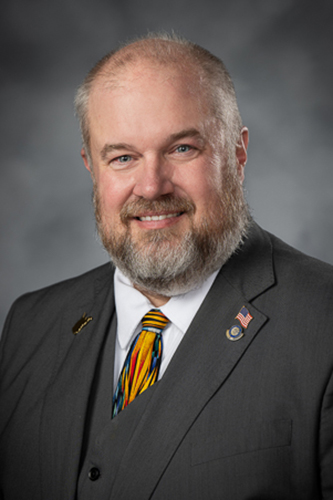
Sen. Jay Taylor
Sponsored bills
Maddy summarySB 1081 creates a temporary School Finance Transparency Commission to study how West Virginia allocates and spends state education funds at the county level. The commission, including state officials, legislators, and local school representatives, will review spending data on personnel, operations, and instructional services across counties to identify trends and gaps between funding formulas and actual expenditures. It must submit findings and recommendations to the Governor and legislature by December 1, 2026, before terminating on December 31, 2026. This bill directly affects county school districts by examining their funding mechanisms and reporting on potential improvements to financial transparency.
Maddy summarySB 880, titled "Recognizing Judea and Samaria," requires West Virginia state agencies to replace the term "West Bank" with "Judea and Samaria" in all official government materials, including rules, press releases, and communications. The bill defines "official government material" broadly and prohibits using state funds to create such materials referencing the territory as the "West Bank." It allows limited waivers for agency heads who provide written justification to the Legislature or Governor. This is a procedural naming change affecting only state communications, not land policy or citizen rights.
Maddy summarySB 935 repeals a tax exemption for certain coal-fired power plants in West Virginia, directly affecting owners/operators of coal plants operational before January 1, 1995. The bill reduces the taxable generating capacity for these plants to 45% of their official capability (instead of 100%) for tax years starting July 1, 2021, but requires plants to remain operational until at least July 1, 2025, to qualify. If such plants close before July 1, 2025, owners must repay tax savings through a recapture tax, though federal mandates exempting closures avoid this requirement. The law applies specifically to "merchant power plants" (independent generators) and modifies existing tax calculation rules under West Virginia Code §11-13-2o.
Maddy summarySJR 21 proposes a constitutional amendment (designated "Amendment 1") that would require West Virginia's state government to limit annual spending increases to no more than the combined growth of the state's population plus inflation. This would directly affect state budget decisions by imposing a strict cap on how much spending can rise each year. The amendment would be submitted to voters in the 2026 general election for approval. If adopted, it would become part of the West Virginia Constitution, altering how state expenditures are managed. The resolution includes procedural steps to number and name the proposed amendment as the "Taxpayers' Bill of Rights Amendment."
Maddy summarySB 996 designates Jennings Randolph Lake in Mineral County as an official West Virginia State Park, adding it to the existing state park system. The bill authorizes the Division of Natural Resources to manage, maintain, and improve the park, including entering cooperative agreements with entities like the U.S. Army Corps of Engineers for operations and recreation. It clarifies that federal jurisdiction over the lake and dam remains unaffected. The bill title mentions "Teter Creek Lake State Park," but the text only creates Jennings Randolph Lake State Park (the Teter Creek reference appears to be an error in the title). This change directly affects visitors, local communities, and park management authorities by formalizing the lake's status for recreation and conservation.
Maddy summaryThis bill requires West Virginia's Bureau for Social Services to officially file its entire policy manual - including all rules on Child Protective Services, foster care, youth services, licensing, and casework - as a legislative rule by July 1, 2026. Future updates to these policies must also be filed as amendments to this rule under state procedures. The law aims to make bureau policies transparent and subject to standard rulemaking processes, directly affecting how the agency operates. It does not change program eligibility or funding but ensures policies are formally documented and accessible.
Maddy summarySenate Resolution 48 memorializes the late Sarah Abigail (Mullennex) Minear, a former West Virginia State Senator (1994-2006) and community leader, by formally honoring her life and public service. The resolution recognizes her roles as a philanthropist, founding president of the Tucker Community Foundation and West Virginia Grantmakers Association, and her decades of volunteer work across West Virginia. It extends the Senate’s condolences to her family and directs the Clerk to send a copy of the resolution to her loved ones. This is a ceremonial resolution with no policy or financial impact, solely commemorating her legacy.
Maddy summarySB 718 increases the annual salary for magistrates in West Virginia to $70,000, effective July 1, 2026. This bill amends West Virginia Code §50-1-3, which sets magistrate compensation, building on previous increases from $60,375 (2021) to $63,250 (2022). The measure directly affects all magistrates serving in West Virginia courts. The change is a straightforward salary adjustment with no additional mechanisms or eligibility requirements specified in the bill text.
Maddy summarySB 1080 requires West Virginia to redirect any reduction in state education funding from the previous fiscal year to support specific school districts. It targets the 10 lowest-enrollment county school districts with maximum local tax levies (excess levies), plus extremely remote schools within those districts. Funding is distributed proportionally based on kindergarten through fifth-grade student enrollment, with students counted twice in certain cases to ensure adequate support. This policy change ensures that state aid cuts directly benefit the most vulnerable school districts rather than reducing overall funding.