

Maddy summarySB 505 requires West Virginia electric utilities to factor system reliability into their rate-setting decisions, directly affecting utilities and their customers. The bill mandates that utilities consider the "capacity value" and reliability of generation assets when replacing older facilities, ensuring new assets maintain equivalent reliability and affordability. It establishes a legal standard for the Public Service Commission to review rate applications, requiring that only costs for reliable service can be recovered through customer rates. The law applies to all utilities under the Commission's jurisdiction, focusing on maintaining consistent power supply for homes, hospitals, businesses, and critical infrastructure during the energy transition.
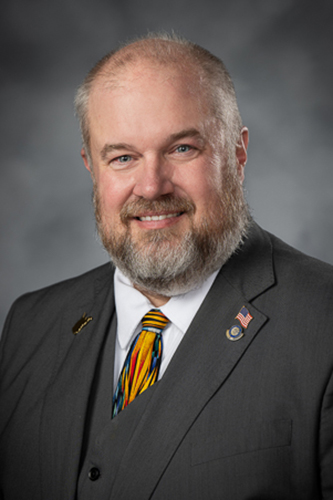
Sen. Jay Taylor
Sponsored bills
Maddy summarySB 705 requires the West Virginia State Board of Education to submit newly created or amended rules to the Legislature's Legislative Rule-Making Review Committee for review. The Legislature has 15 months to approve, amend, or reject each rule; if it does not act within that timeframe, the rule becomes effective automatically. This directly affects the State Board of Education (which must submit rules) and the Legislature (which must review them within the specified period). The bill adjusts existing processes to clarify that the Legislature retains ultimate authority over education rules, as established by state constitutional provisions.
Maddy summarySB 579 prohibits municipalities participating in West Virginia's Home Rule Program from creating local nondiscrimination ordinances that add protected classes beyond those specified in state law. This directly affects cities and towns seeking to expand anti-discrimination protections for groups like LGBTQ+ residents or other categories not covered by existing state statutes. The bill restricts local authority by requiring all municipal nondiscrimination policies to align strictly with state-defined protected classes, preventing communities from implementing broader local protections. It does not change other aspects of the Home Rule Program, such as board structure or fee requirements.
Maddy summarySB 589 increases annual salaries for West Virginia judges effective July 1, 2025. Magistrates will earn $75,840, Supreme Court justices $157,600, circuit court judges $146,600, and family court judges $111,950. The bill also suspends court contributions to the judicial retirement system until specific conditions are met and adjusts survivor benefit calculations for judges' families. These changes directly affect current judges across all state court levels.
Maddy summaryThis West Virginia Senate Concurrent Resolution (SCR 15) is a formal statement opposing China's misuse of UN Resolution 2758 to exclude Taiwan from international organizations. It clarifies that the resolution's purpose was solely to determine China's UN representation, not Taiwan's political status, and rejects China's "One China Principle" as conflated with the UN resolution. The resolution calls on the UN to stop using Resolution 2758 to deny Taiwan participation in UN bodies and reaffirms that the U.S. "one China policy" does not recognize China's claim over Taiwan. It directly affects Taiwan's ability to engage with international institutions, where it has been excluded since 1971 despite its population of 23.5 million.
Maddy summarySB 841 prohibits all West Virginia state government entities - including public schools, universities, healthcare facilities, and social services offices - from promoting, facilitating, or funding any discussions, programs, or medical procedures related to sexual orientation or gender transitioning. The bill bans state funds for gender transition treatments (like hormone therapy or puberty blockers), restricts school materials discussing gender identity, and prohibits staff from engaging in related training or curriculum. Violations could result in employee termination, funding suspension, or lawsuits by West Virginia residents. This directly affects state-funded institutions and their educational, medical, and administrative activities.
Maddy summaryThis bill prohibits the sale of unauthorized electronic smoking devices, such as vapes, in West Virginia and directly affects retailers, wholesalers, and manufacturers of these products. It requires manufacturers to provide FDA authorization documentation to wholesalers and retailers, while wholesalers must only sell authorized devices and verify that retailers are not on a tobacco noncompliance database. The legislation establishes penalties for selling unauthorized devices or selling authorized devices to individuals under 21, and mandates that the Alcohol Beverage Control Commission maintain a database of retailers and receive reports of citations. Additionally, the bill requires the Secretary of State to develop a list of retailers selling electronic smoking devices and allows existing enforcement entities to enforce the new provisions.
Maddy summarySB 697 creates a nonrefundable tax credit for West Virginia family caregivers who provide unpaid care to eligible relatives. It allows a 50% credit on qualifying out-of-pocket expenses for caregiving, capped at $2,000 annually, covering costs like home modifications, medical equipment, hiring aides, or transportation. To qualify, the caregiver must be a West Virginia resident, and the care recipient must be 18+ years old, live in a private home (not a facility), and require assistance with daily activities like bathing or eating, as certified by a healthcare provider. The credit applies to expenses incurred after January 1, 2027, and excludes general home maintenance or reimbursed costs.
Maddy summarySB 804 gives public charter schools direct control over all extracurricular activities for their students, replacing county board oversight. It allows charter schools to optionally delegate athletic and band activities to the West Virginia Secondary School Activities Commission (WVSSAC), which would now be a state agency managing rules for competitive balance (including transfer counts) and handling disputes through its executive director. The bill removes a written permission requirement for homeschoolers, Hope Scholarship participants, and microschool students to join school activities, while modifying fees they pay. It also changes commission membership to include athletic directors (or their representatives) from schools that delegate authority, and shifts all commission funds to public funds.
Maddy summaryThis Senate Resolution designates March 18, 2025, as "West Virginia Homeschool Day" at the state legislature. It recognizes homeschooling families, students, and educators for their contributions to education, citing studies about academic achievement and citizenship. The resolution has no binding policy impact - it is purely a commemorative gesture, directing the Senate Clerk to send a copy to the West Virginia Home Educator’s Association. It does not alter education laws, funding, or requirements for homeschooling families.