

Maddy summaryThis Senate Joint Resolution proposes a constitutional amendment to change West Virginia's constitution, removing the prohibition on incorporating churches or religious denominations. If approved by voters, it would allow religious groups to form legal entities (incorporate) if they choose, while maintaining existing laws governing church property ownership, sale, and transfer. The amendment specifically revises Article VI, Section 47 of the state constitution to state that "incorporation of religious denominations is permitted" rather than prohibited. It does not create new requirements but clarifies that churches may opt to incorporate under general laws, with no direct impact on existing unincorporated religious organizations.
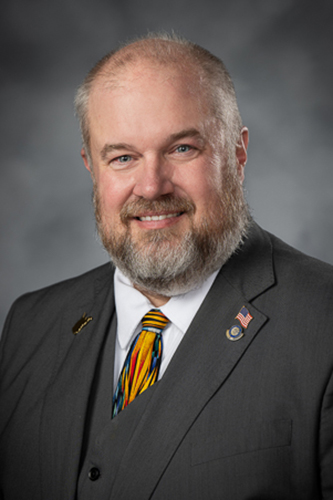
Sen. Jay Taylor
Sponsored bills
Maddy summarySJR 8 proposes a constitutional amendment requiring all voters in West Virginia elections to be U.S. citizens. The amendment would add language to the state constitution stating: "Only citizens of the state who are citizens of the United States shall be entitled to vote at all elections." This would codify the existing requirement that voters must be U.S. citizens, which is already enforced under current law. The proposal must be approved by voters in the 2026 general election to take effect.
Maddy summarySB 848 (Enacting bank protections for eligible adults from financial exploitation) protects vulnerable adults by giving banks, broker-dealers, and investment advisors new tools to prevent financial exploitation. It applies to adults aged 65+ or those with significant mental impairments affecting financial decision-making, or adults with court-appointed guardians. The law allows financial institutions to delay, refuse, or stop transactions they believe risk harming an eligible adult, and requires them to report suspected exploitation to state agencies like the West Virginia Department of Human Services. It explicitly states that institutions acting in good faith cannot be sued for these interventions.
Maddy summarySCR 23 is a resolution requesting the Joint Committee on Government and Finance to study the West Virginia Secondary School Activities Commission (WVSSAC). The study will examine the commission's mission, effectiveness, efficiency, transparency, accountability, and whether a performance evaluation would be appropriate. The committee must gather input from coaches, parents, and athletes and report findings to the 2026 legislative session. The WVSSAC manages high school sports and activities, funded by ticket sales and corporate sponsors rather than taxpayer money. This resolution follows concerns about the commission's operations that prompted a similar reform bill with over 20 sponsors.
Maddy summarySB 85 prohibits the mailing, distribution, prescribing, or dispensing of abortifacients (drugs intended to cause abortion) within West Virginia. It specifically bans sending abortifacients via mail to residents, placing them in commerce for use in the state, prescribing them (even by out-of-state providers), or distributing without a valid prescription. Violations by non-medical professionals carry felony charges with 3-10 year prison sentences, while medical license revocation is possible for licensed providers. The law includes exceptions for medical emergencies that threaten a patient's life or major bodily function, as defined in the bill. This directly affects healthcare providers, pharmacies, and anyone involved in distributing abortion-related medications in West Virginia.
Maddy summarySB 943 clarifies that apiaries (beekeeping operations) are protected agricultural activities under West Virginia law. The bill amends the Code to explicitly state that beekeeping and honeybee colonies are agricultural operations regulated by the Commissioner of Agriculture, directly affecting beekeepers and agricultural regulations. Key provisions include legislative findings that pollinator decline threatens agriculture, that beekeeping supports the economy and food security, and that apiaries are critical to agricultural operations relying on pollinators. This legal clarification ensures apiaries are treated as agricultural operations for regulatory purposes, not subject to conflicting classifications. The bill does not create new regulations but formally recognizes existing beekeeping practices within agricultural protections.
Maddy summarySB 707 increases payments by 25% for therapists and other contracted professionals providing in-person early intervention services to children with developmental delays through West Virginia's Birth-to-Three program. It directly affects non-state-employee therapists and professionals working under contract with the program. The bill amends the Birth-to-Three Fund provisions to require this higher payment rate for in-person services starting July 1, 2025. This is a concrete payment adjustment, not a change to program eligibility or service delivery methods.
Maddy summarySB 690 allows West Virginia county commissions to increase pay for elected county officials - including county commissioners, sheriffs, clerks, assessors, and prosecutors - when property valuations rise significantly, justifying new duties. The bill requires two key steps: county auditors must certify improved fiscal health (including sufficient funds for salary increases and taxes), and officials must submit written requests for higher pay. It bases increases on property valuation changes, noting that higher valuations correlate with expanded responsibilities like public safety and economic development. The law ensures compliance with state constitutional limits on salary adjustments. This affects all counties and directly impacts the compensation of 12 specific elected county roles.
Maddy summaryThis bill establishes a new market pay enhancement for certified teachers in West Virginia to address regional cost-of-living disparities. It calculates an additional payment based on comparing the median home price in a teacher's county (or surrounding region including bordering states) to the statewide median home price, using data from the National Association of Realtors. The state board of education will determine the higher of two multipliers (regional or county-based) to apply to the average teacher base salary, with the enhancement capped at 50% of that base salary. The adjustment will occur annually starting December 1, 2026, aiming to make teacher compensation more competitive with neighboring states.
Maddy summarySB 763, the "Creating Public Electrical Savings Act," establishes rules for solar power agreements between utility customers and third-party providers. It directly affects residential, commercial, and industrial customers installing solar systems, as well as public entities (like schools or government buildings) entering into power purchase agreements (PPAs) for onsite solar. Key provisions include limiting total PPAs to 3% of a utility’s peak demand, setting size caps (50kW for homes, 1,000kW for businesses), requiring 48-hour backup power during outages, and mandating that public entity PPAs offer rates cheaper than the utility’s standard rate for the full agreement term. The bill also requires utilities to notify customers if caps are reached within 30 days or allow agreements to proceed if they don’t respond.