

Maddy summarySB 633 modernizes West Virginia's Commission on Holocaust Education by updating its membership structure and governance. The bill replaces outdated provisions relying on Holocaust survivors (many now deceased) with a new framework allowing commission-appointed voting members and non-voting student advisory members, while explicitly requiring Holocaust education to remain the commission's sole purpose. It strengthens safeguards to protect historical accuracy and ensures the commission continues providing centralized educational resources for schools, churches, and communities studying the Holocaust. These changes aim to maintain the commission's mission as a permanent statewide resource for Holocaust education amid evolving circumstances.
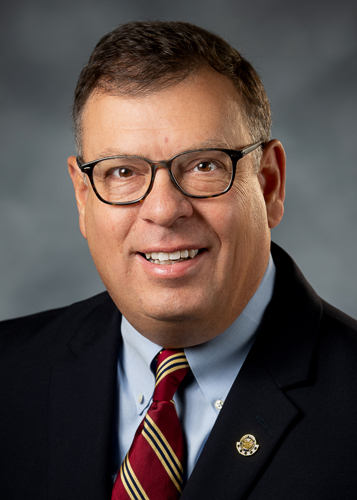
Sen. Mike Oliverio
Sponsored bills
Maddy summaryThis bill increases compensation rates for panel attorneys who provide court-appointed legal services to eligible clients in West Virginia. It directly affects public defense attorneys by requiring updated payment rates and mandating detailed time-tracking records (in tenths of hours) for case work. Key provisions include setting 45-day payment timelines after voucher submission, establishing clear appeal processes for rejected or reduced payments, and requiring Public Defender Services to annually report legal services data to oversight bodies like the Legislative Oversight Commission and Supreme Court. The bill also adds new requirements for electronic voucher processing and court review of payment disputes.
Maddy summaryThis Senate Resolution (SR 33) designates February 11, 2026, as "West Virginia Arts Day" at the Legislature. It symbolically recognizes the importance of arts and culture across the state, acknowledging support from the West Virginia Department of Tourism, State Arts Office, and Commission on the Arts. The resolution encourages all citizens to celebrate arts and culture and directs the Senate Clerk to forward a copy to the Department of Tourism. As a ceremonial resolution, it has no binding policy impact or funding changes - it serves solely to honor the arts' role in West Virginia's communities, economy, and education.
Maddy summaryThis Senate Resolution (SR 28) expresses legislative support for extending Interstate 68 from Morgantown, West Virginia, to Kent, West Virginia, then across the Ohio River to Clarington, Ohio, and further to I-77 near Caldwell, Ohio. It does not create new policies or funding but urges state and federal officials to secure resources for this transportation corridor project. The resolution specifically references the "I-68 Energy Manufacturing AI Corridor" as a means to support economic growth in the Shale Crescent region, though it does not establish any new programs or obligations. It is a symbolic measure, not a substantive legislative bill.
Maddy summarySB 758 would provide extra state funding to West Virginia school districts for students enrolled in schools designated as "extremely remote" under the bill. It prohibits county school boards from closing such schools during the fiscal year they receive the additional aid and requires submission of specific documentation and reporting. The bill also allows waivers for certain documentation requirements. These provisions aim to support remote schools by ensuring stable funding and operational continuity.
Maddy summarySB 740 allows brewers in West Virginia to create custom-labeled nonintoxicating beer (under 0.5% alcohol) for specific retailers, such as labels featuring local landmarks, sports events, or weddings. It requires commissioner approval for all private labels and prohibits designs appealing to people under 21 or encouraging drinking. The bill limits annual production to 1,000 cases (288,000 ounces), mandates brewers pay all taxes, and bans discounted pricing or cross-promotion between brewers and retailers. This exception modifies existing labeling rules to support tourism and the brewing industry while maintaining strict content and quantity controls.
Maddy summaryThis ceremonial Senate Resolution (SR 27) designates February 4, 2026, as "West Virginia University Day" at the West Virginia Capitol. It recognizes West Virginia University (WVU) as the state's flagship land-grant institution, highlighting its educational programs, extension services, and community impact across all 55 counties. The resolution has no legal effect or policy changes - it serves only as symbolic recognition, directing the Senate Clerk to send a copy to WVU leadership. It was adopted unanimously by voice vote on February 4, 2026.
Maddy summarySB 716 would lower the participation requirement for West Virginia's volunteer firefighter tax credit from 30% to 20% of department activities. This change directly affects volunteer firefighters seeking the tax credit, making it easier to qualify by reducing the minimum activity threshold. The bill amends Section 11-13JJ-4 of the state code to update the participation percentage while keeping other eligibility conditions unchanged. Currently, firefighters must participate in 30% of activities; the bill would require only 20%.
Maddy summaryThis bill allows licensed physicians in West Virginia to operate designated large medical vehicles with red flashing warning lights during medical emergencies, similar to ambulances and fire trucks. It requires the West Virginia Board of Medicine and Board of Osteopathic Medicine to create and manage programs designating which physicians' vehicles qualify as emergency vehicles. Physicians using these designated vehicles would be exempt from standard traffic laws (like speed limits) while responding to emergencies. The medical boards must propose specific rules for legislative approval before implementing this program.
Maddy summarySB 709 amends West Virginia law to clarify how county commissions collect unpaid special emergency ambulance service fees. Currently, counties impose these fees to fund emergency ambulance services, but the process for recovering delinquent payments was unclear. The bill allows counties to use magistrate court or judgment liens to collect overdue fees without paying court costs themselves, and shifts all court fees to the person who owes the debt if a court rules in the county's favor. County commissions may also appoint a representative to handle collection efforts. This change streamlines fee recovery while keeping the fee's purpose - funding emergency ambulance services - unchanged.