

Maddy summarySB 709 amends West Virginia law to clarify how county commissions collect unpaid special emergency ambulance service fees. Currently, counties impose these fees to fund emergency ambulance services, but the process for recovering delinquent payments was unclear. The bill allows counties to use magistrate court or judgment liens to collect overdue fees without paying court costs themselves, and shifts all court fees to the person who owes the debt if a court rules in the county's favor. County commissions may also appoint a representative to handle collection efforts. This change streamlines fee recovery while keeping the fee's purpose - funding emergency ambulance services - unchanged.
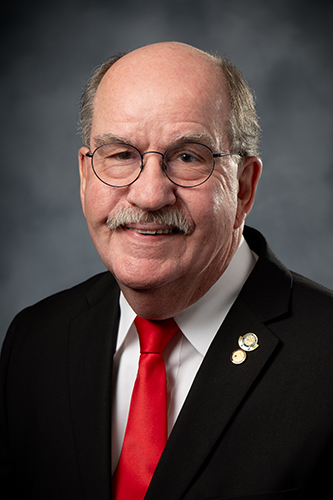
Sen. Bill Hamilton
Sponsored bills
Maddy summarySB 696 would amend West Virginia law to explicitly permit women's wrestling as a sanctioned sport in public high schools and public charter schools. The bill directs the West Virginia Secondary School Activities Commission (WVSSAC) to include women's wrestling in its list of approved athletic events, ensuring it can be offered as a competitive sport. This change directly affects public school athletic programs and students, allowing female athletes to participate in wrestling under the same rules as other sanctioned sports. The bill does not alter existing eligibility requirements for student athletes but adds wrestling to the Commission's approved sports list.
Maddy summarySB 700 allows municipal court clerks and city attorneys in West Virginia to file judgment liens against individuals who fail to pay court-imposed fines or costs for traffic violations, minor crimes, or municipal ordinances after missing payments for 90 days. It establishes a structured payment plan system requiring a $25 fee (or five installments), with monthly payments calculated as 2% of annual income (minimum $10) or spread over three years. If payments remain delinquent, clerks may charge $10 monthly late fees and file liens against property or send debts to collections - without reducing the full amount owed - after 90 days of nonpayment. This directly affects residents with unresolved court fines, providing a formal process for debt collection while requiring clerks to notify city attorneys before filing liens.
Maddy summaryThis Senate Resolution (SR 14) formally recognizes James and Lucille Pennington of Bartow, West Virginia, for receiving the 2025 West Virginia Logger of the Year award. The resolution acknowledges their logging business, J & L Trucking, for demonstrating safety, community involvement, and excellence in forest management. It specifically highlights their family legacy in logging, commitment to safety, community donations, and support for the West Virginia Forestry Association. As a ceremonial resolution, it does not create new laws or affect any regulations.
Maddy summarySB 688 creates a new criminal offense in West Virginia for recklessly harming or interfering with service animals that assist people with disabilities. It prohibits actions like striking, taunting, throwing objects at, or obstructing service animals - whether they are actively working or the offender knows the animal is a service animal. Violators face up to one year in jail, a $500 fine, or both, plus full restitution for costs including veterinary care, replacement animal expenses, and lost income for the handler. The bill directly affects service animal handlers and anyone who harms these animals during their duties.
Maddy summaryThis bill allows classroom teachers who joined the West Virginia Teachers Retirement System on or after July 1, 2015, to sell up to 10 unused personal leave days to their county school board for a cash payment. Teachers would receive 80% of the rate paid to a substitute teacher with a bachelor's degree and 10 years of experience for each day sold, with payment required by June 30. Once sold, the leave days are forfeited and cannot be used for future absences.
Maddy summaryThis bill grants municipal fire marshals in West Virginia the authority to assist law enforcement officers in carrying out their official duties. It allows fire marshals to arrest individuals who disobey lawful orders at fire scenes, violate arson or explosive offense prohibitions, obstruct a fire marshal, or fail to obey lawful commands, provided they receive required law enforcement training. The legislation also permits fire marshals to file criminal complaints to obtain arrest warrants and clarifies that assistance to federal law enforcement is subject to specific limitations. Additionally, fire marshals may help other law enforcement officers execute their duties when requested, but must work under the direct supervision of the requesting officer.
Maddy summarySB 445 adds Potomac State College of West Virginia University as an eligible institution for West Virginia's Learn and Earn Program, making its participation permanent instead of temporary. The bill removes the previous "pilot program" designation for Potomac State, which had limited eligibility through the 2025-2026 academic year. The Learn and Earn Program allows students in technical programs to work with participating employers while studying, requiring employers to provide a dollar-for-dollar cash match (not in-kind contributions) for student salaries. This change directly affects Potomac State College students and employers partnering with the college to offer paid work-study opportunities.
Maddy summaryThis Senate Concurrent Resolution (SCR 1) requests the West Virginia Division of Highways to rename specific bridges and road segments after military veterans and community members. It directly affects the Division of Highways, which would implement the proposed names for 15+ existing infrastructure locations across 10 counties. The resolution specifies exact locations (e.g., a bridge in Wayne County to be called the "Hercie Maynard Memorial Bridge" or a section of WV Route 10 as the "Purple Heart Trail") without creating new laws or funding. It is purely a naming request, not a policy change, and honors individuals with military service or local significance. The resolution was quickly adopted by both legislative chambers in January 2026.
Maddy summarySB 665 prohibits weather modification and geoengineering activities within West Virginia, including cloud seeding, stratospheric aerosol injections, and solar radiation modification. It defines prohibited actions as any intentional release of atmospheric contaminants (such as chemicals, particles, or radiation) that could harm human health, the environment, agriculture, or public safety. The law establishes enforcement through the Department of Environmental Protection and sets penalties for violations. This applies to all entities, including government agencies, corporations, and organizations conducting such activities in the state.