

Maddy summarySB 660 amends West Virginia's Public Employees Insurance Agency (PEIA) rules to change how spousal health coverage is paid. It removes the requirement for a "spousal surcharge" and instead requires employees to pay for their spouse's coverage based on their own salary and plan tier. This directly affects PEIA-covered state employees who wish to add a spouse to their health plan, particularly when the spouse already has employer-based insurance. The bill specifies that employees must cover the full "actuarial value" of the spouse's coverage (as defined by healthcare actuaries), rather than the previous surcharge model. This change applies to active employees, not retirees or certain other covered groups.
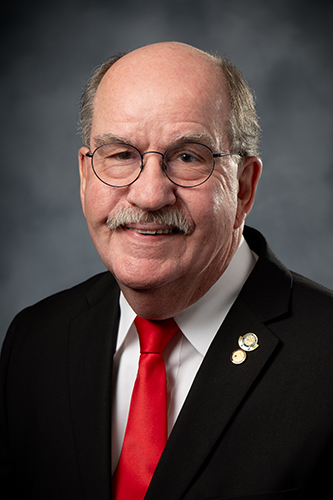
Sen. Bill Hamilton
Sponsored bills
Maddy summaryThis is a ceremonial resolution (not a policy bill) designating January 28, 2026, as "West Virginia Tourism and History Day" at the legislature. It recognizes tourism and history organizations, businesses, volunteers, and educators for their contributions to West Virginia's economy and cultural heritage. The resolution encourages citizens and visitors to explore the state's historic sites and cultural experiences. It has been adopted by the Senate with a voice vote.
Maddy summarySB 637 creates a tax credit for physicians who move to West Virginia and practice in medically underserved areas. To qualify, physicians must have graduated from an accredited U.S. medical school, completed residency within the past year, and agree to practice in designated underserved areas for six years. The credit equals up to their personal taxable income for three consecutive years, but any unused portion is forfeited after that period. This aims to address West Virginia’s physician shortage by incentivizing new medical professionals to locate in communities with limited healthcare access.
Maddy summarySB 396 creates the West Virginia Job Training and Placement Act, allowing certified retailers (specifically "workforce training community centers" meeting strict criteria) to keep 75% of sales tax revenue collected after their first $1 million in annual sales. These retailers must use the retained funds exclusively to provide job training and placement services for people facing barriers to employment, such as disabilities, criminal records, homelessness, or low education. The law requires certified organizations to serve at least three people per $10,000 retained, with an average of 2.25 successful job placements, and to monitor job retention for 90 days. Certification lasts three years, with renewal possible, and organizations must report usage to the state Department of Revenue.
Maddy summaryThis bill allows physician assistants (PAs) in West Virginia to own medical practices and have ownership stakes in healthcare businesses, which was previously prohibited. It removes restrictions preventing PAs from having a "proprietary interest" in practices they refer patients to and permits medical corporations to have PA shareholders. The bill also updates the state’s legal definition of "physician assistant" to align with the American Academy of Physician Associates and classifies PA services as a "professional service" under limited liability company laws. These changes directly affect PAs seeking practice ownership and impact how medical corporations structure ownership.
Maddy summarySB 635, the Mountain Bike Responsibility Act, requires commercial trail operators in West Virginia to implement specific safety signage and trail markings. It mandates operators to display trail network maps at key locations, mark trails by difficulty level (using industry-standard colors/symbols), and clearly indicate closed trails at trailheads and intersections. The bill applies directly to commercial entities operating mountain bike trails and aerial tramways, defining their duties while clarifying that mountain bikers assume inherent sport risks. Currently pending in the Senate Judiciary Committee (introduced January 28, 2026), this bill establishes operational standards but does not alter existing liability laws for injuries.
Maddy summaryThis Senate Resolution (SR 16) designates January 27, 2026, as "Civil Air Patrol Day" at the West Virginia Legislature. It formally recognizes the West Virginia Wing of the Civil Air Patrol (CAP), a volunteer organization supporting homeland security, search and rescue, and youth education programs. The resolution commends CAP members for their service and directs the Senate Clerk to forward the resolution to CAP leadership. As a ceremonial resolution, it has no policy or funding impact - it solely honors CAP's contributions.
Maddy summaryWest Virginia's SB 612 designates November 7 as "Victims of Communism Day" for public schools, requiring high school students in the mandated U.S. Government class to receive at least 45 minutes of annual instruction on this topic. The bill specifies instruction must cover historical communist regimes (including Mao Zedong's Cultural Revolution, Stalin's Soviet system, and others) and how victims suffered through poverty, violence, and suppression. It directs the State Board of Education to revise social studies standards by April 2026 to include these requirements. The observance applies to all public schools, with make-up days if November 7 falls on a non-school day. This bill directly affects West Virginia public school students and educators in required U.S. Government courses.
Maddy summarySB 602 requires repeat DUI offenders in West Virginia to carry a special identification card indicating they are prohibited from purchasing alcohol. The card must feature a prominent red stripe and the words "No Alcohol Sale" on its front. This applies to individuals identified as "interdicted persons" under the law, meaning those legally barred from alcohol sales due to DUI convictions. The bill establishes the card's design, application process, and enforcement mechanisms for businesses to verify compliance. It does not change DUI penalties but creates a new identification requirement for affected individuals.
Maddy summaryThis is a ceremonial resolution, not a law, designating January 27, 2026, as "West Virginia Banker’s Day" at the legislature. It recognizes the banking industry’s economic role in West Virginia, citing its employment of nearly 8,000 residents, 570 branch locations, and $2 billion in annual business loans. The resolution has no policy impact; it simply authorizes the legislature to formally acknowledge the industry’s contributions on that date. It directly affects the banking sector and the West Virginia Bankers Association, which will receive a copy of the resolution.