

Maddy summarySenate Bill 855 (SB 855) expands eligibility for mail-in absentee voting in West Virginia by clarifying specific circumstances under which qualified voters may request an absentee ballot by mail. It directly affects voters who are medically unable to vote in person (due to disability, advanced age, or illness), temporarily absent due to work, education, or travel, incarcerated under certain conditions, military/overseas voters, or those with inaccessible polling places due to disability. The bill also adds electronic absentee ballot options for voters with disabilities, military/overseas voters, and qualified first responders on emergency duty. Additionally, it establishes procedures for emergency absentee ballots in cases like hospitalization, nursing home residence, or last-minute medical confinement requiring physician verification. The bill aims to increase voting access while maintaining specific eligibility criteria.
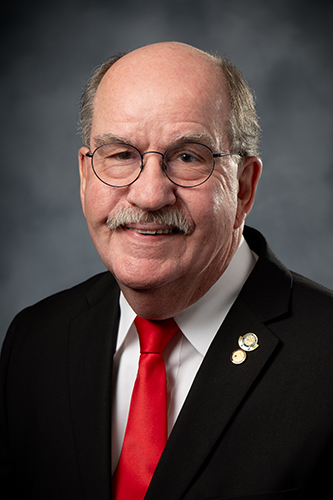
Sen. Bill Hamilton
Sponsored bills
Maddy summarySB 864 sets the annual report fee for businesses at $25, requiring corporations, limited partnerships, domestic limited liability companies, and foreign limited liability companies to pay this fee annually to the West Virginia Secretary of State. The bill also allows the Secretary of State to waive late fees and adds a provision for a veteran-owned business logo. This directly affects businesses that must file annual reports in West Virginia, changing the fee structure and introducing new administrative flexibility. The legislation focuses on standardizing business reporting costs and supporting veteran-owned enterprises through a new logo feature.
Maddy summarySB 803 requires public schools in West Virginia to assess the academic competency of students transferring from nonpublic schools (including homeschools, microschools, learning pods, or individualized instruction plans) before transcribing their previous grades onto a public school transcript. This applies specifically to students enrolling in public schools after receiving education outside the traditional public system. The key mechanism is a mandatory competency assessment administered by the public school upon enrollment, ensuring students meet academic standards before their prior coursework is recognized. The bill does not change graduation requirements or affect students already enrolled in public schools.
Maddy summarySB 758 would provide extra state funding to West Virginia school districts for students enrolled in schools designated as "extremely remote" under the bill. It prohibits county school boards from closing such schools during the fiscal year they receive the additional aid and requires submission of specific documentation and reporting. The bill also allows waivers for certain documentation requirements. These provisions aim to support remote schools by ensuring stable funding and operational continuity.
Maddy summaryThis bill reclassifies forestry equipment (such as skidders, forwarders, and processing machinery) as "Class I property" for tax purposes, aligning it with agricultural equipment. It exempts the sale of such equipment from West Virginia's consumers sales and service tax, directly benefiting forestry businesses engaged in harvesting, processing, or transporting forest products. The law also explicitly defines forestry as part of agriculture, recognizing its economic importance to the state. These changes take effect on July 1, 2026.
Maddy summaryThis ceremonial Senate Resolution (SR 27) designates February 4, 2026, as "West Virginia University Day" at the West Virginia Capitol. It recognizes West Virginia University (WVU) as the state's flagship land-grant institution, highlighting its educational programs, extension services, and community impact across all 55 counties. The resolution has no legal effect or policy changes - it serves only as symbolic recognition, directing the Senate Clerk to send a copy to WVU leadership. It was adopted unanimously by voice vote on February 4, 2026.
Maddy summaryThis Senate Resolution designates February 3, 2026, as "Marshall University Day" at the Capitol to honor the university's contributions. It recognizes Marshall University's history, alumni achievements, academic programs (including cybersecurity and health care), economic impact, and student-athlete success. The resolution has no binding policy effect - it is purely ceremonial, with no new requirements or funding for the university. The Senate adopted it unanimously by voice vote on February 3, 2026.
Maddy summarySB 716 would lower the participation requirement for West Virginia's volunteer firefighter tax credit from 30% to 20% of department activities. This change directly affects volunteer firefighters seeking the tax credit, making it easier to qualify by reducing the minimum activity threshold. The bill amends Section 11-13JJ-4 of the state code to update the participation percentage while keeping other eligibility conditions unchanged. Currently, firefighters must participate in 30% of activities; the bill would require only 20%.
Maddy summarySenate Resolution 20 (SR 20) is a symbolic resolution recognizing and honoring Vietnam War veterans exposed to Agent Orange. It directly affects living veterans and their families who suffered health consequences from the chemical herbicide, including cancers, birth defects, and other serious illnesses. The resolution formally acknowledges these veterans' sacrifices through Senate recognition, emphasizing their service and health struggles without creating new benefits or policy changes. It does not alter existing VA programs or provide financial compensation, as it is purely a commemorative measure.
Maddy summarySB 711 prohibits West Virginia's Division of Highways from discharging concentrated highway runoff onto private property if it causes flooding, erosion, or damage, unless water is directed to a "lawful outfall" like natural waterways, public drainage systems, or designed retention ponds. The bill authorizes the state highway agency to extend drainage facilities beyond road rights-of-way, acquire necessary easements (including via eminent domain), and perform limited temporary maintenance on private property to address drainage issues. It applies to new highway projects and existing drainage systems where infrastructure has altered natural patterns and caused recurring property damage. The law also limits the state's liability for unavoidable flooding during extreme weather or natural drainage conditions not caused by highway work.