

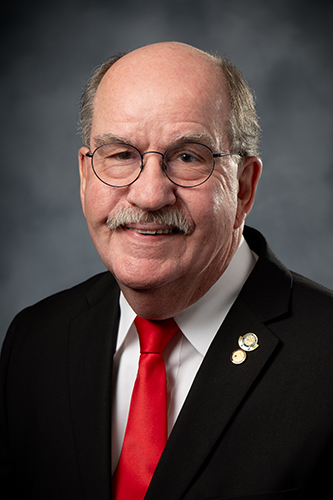
Photo of Bill Hamilton
R West Virginia Senate · District 11 On the 2026 ballot

Sen. Bill Hamilton

Compare
Total votes
2,027
all sessions
Attendance
100%
5 missed
Higher than 80% of chamber peers
With party
95%
of cast votes
Lower than 79% of chamber peers
Bipartisan score
3%
crosses aisle rarely
Near the chamber average
Sponsored
711
bills & resolutions
Higher than 84% of chamber peers
Committees
14
assignments
711 bills and resolutions

Sponsored bills

Total
711
Primary
139
Co-sponsor
572
This page
711
matching current filters
Co-sponsor SB 704
Passed · West Virginia Senate · Co-sponsor
Prohibiting certain compensation for advising or assisting with veterans benefits

Maddy summarySB 704 prohibits most compensation for assisting veterans with benefits claims, directly affecting advocates, attorneys, and support organizations who help veterans navigate the U.S. Department of Veterans Affairs (VA) system. Key provisions require written fee agreements filed with the VA, ban guarantees of specific benefit amounts, prohibit charging for services before a VA decision, and forbid contingent fees for medical evidence or testimony. The bill also restricts excessive fees and mandates compliance with federal fee guidelines (38 C.F.R. § 14.636). It does not override federal law but adds state-level safeguards to prevent exploitative practices in veterans' benefits assistance.

Passed Feb 13, 2026 1 co-sponsor
Co-sponsor SB 437
In committee · West Virginia Senate · Co-sponsor
Fair State Aid Formula Act of 2026

Maddy summarySB 437 replaces West Virginia's current school funding formula with a new system that allocates state aid to county school districts based on student needs and local resources. It directly affects all county boards of education by adding weighted factors for low-income students (+0.30), special education (+0.80), and rural schools meeting specific criteria (e.g., population density under 50/sq mi or bus routes over 15 miles). The formula calculates aid as (base per-pupil amount × weighted enrollment) minus local revenue capacity, plus rural adjustments of $250-$600 per pupil. This aims to reduce funding gaps for high-need and rural districts while requiring annual transparency reports and capping annual aid changes at 3% during implementation.

In committee Feb 13, 2026 1 co-sponsor
Co-sponsor SB 646
In committee · West Virginia Senate · Co-sponsor
Relating to WV employer-provided or sponsored child care tax credit program

Maddy summarySB 646 modifies West Virginia's employer child care tax credit program to make it more accessible. It clarifies that employer-sponsored child care includes third-party providers funded by one or more employers (regardless of location or how many employees use the service), eliminating the previous requirement that centers primarily serve a single employer's workforce. The bill also removes employee usage ratio limits and extends the time employers can carry forward unused tax credits. These changes directly benefit West Virginia employers offering or sponsoring child care, aiming to simplify participation and increase program utility.

In committee Feb 13, 2026 1 co-sponsor
Primary SB 761
In committee · West Virginia Senate · Lead sponsor
Relating to in-state production of value-added forest products

Maddy summaryThis bill creates tax credits for West Virginia manufacturers that transform locally harvested wood into finished "value-added" products like plywood, wood pellets, or engineered lumber. It provides tiered credits ($1.25-$3 per ton) based on the volume of West Virginia-sourced wood processed, with higher rates for new facilities or expansions ($2.50-$6 per ton) for five years. To qualify, manufacturers must meet a "minimum transformation standard" (e.g., altering wood’s structure), avoid basic handling like debarking, and self-report production data. Credits are capped at $1.25 million annually per facility and apply to corporate or personal income tax. The law aims to incentivize local processing of forest resources while preventing credits for raw log handling.

In committee Feb 12, 2026 0 co-sponsors
Co-sponsor SB 604
Passed · West Virginia Senate · Co-sponsor
Extending Alzheimer's Disease and Other Dementia Advisory Council sunset date

Maddy summaryThis bill extends the expiration date of West Virginia's Alzheimer's Disease and Other Dementia Advisory Council, preventing it from sunsetting (ending) as originally scheduled. The council, composed of voting members including people with dementia, caregivers, healthcare providers, and advocacy representatives, reviews state dementia care services, assesses healthcare system capacity, and makes recommendations on policies and resources. The extension maintains the existing council structure and responsibilities without altering its duties or creating new policies. It directly affects the council's continued operation to address dementia care needs across the state. (100 words)

Passed Feb 12, 2026 1 co-sponsor
Co-sponsor SB 895
In committee · West Virginia Senate · Co-sponsor
Removing time limits for filing or modifying claims for massive fibrosis

Maddy summaryThis bill removes time limits for workers to file or modify claims related to progressive massive fibrosis, a lung disease often linked to occupational exposure (like mining). It directly affects workers who develop this condition, allowing them to pursue or adjust compensation claims without being barred by past deadlines. The bill amends West Virginia's workers' compensation code to eliminate statute of limitations barriers specifically for these claims and adds a new impairment rating for progressive massive fibrosis. This change ensures affected workers can access benefits regardless of when symptoms first appeared or worsened.

In committee Feb 10, 2026 1 co-sponsor
Co-sponsor SR 15
Passed · West Virginia Senate · Co-sponsor
Recognizing 154th anniversary of Glenville State University

Maddy summaryThis Senate Resolution (SR 15) formally recognizes the 154th anniversary of Glenville State University, established in 1872 as a West Virginia state normal school. It acknowledges the university's historical role in teacher training and its current expansion into diverse academic programs (including business, health sciences, and criminal justice). The resolution expresses the Senate's appreciation for the university's contributions to West Virginia's education and economy and directs a copy to the university president. As a ceremonial resolution, it has no policy or financial impact.

Passed Feb 10, 2026 1 co-sponsor
Co-sponsor SB 861
In committee · West Virginia Senate · Co-sponsor
Making WV State Police Forensic Laboratory responsible for certification and standards for DUI tests

Maddy summarySB 861 transfers responsibility for certifying DUI testing equipment and standards from the Bureau of Public Health to the West Virginia State Police Forensic Laboratory. The bill eliminates the Bureau's rule-making authority over DUI testing procedures and grants this authority to the State Police instead. It also updates technical requirements, including removing outdated references to urine testing, adding provisions for trained phlebotomists to draw blood, and correcting juvenile blood alcohol level standards. This change directly affects law enforcement officers administering DUI tests and the forensic process for blood/breath analysis in DUI cases.

In committee Feb 9, 2026 1 co-sponsor
Co-sponsor SB 857
In committee · West Virginia Senate · Co-sponsor
Limiting county's responsibility for jail costs after sentences of time served

Maddy summarySB 857 amends West Virginia law to limit a county's payment obligation for jail costs when an inmate is sentenced to time served (meaning the inmate has already completed their sentence). Currently, counties pay a daily fee for inmates held in state jails, but this bill would exclude the time already served from the county's payment responsibility. The bill directly affects counties that pay per diem costs for inmates, reducing their financial burden for inmates who have completed their sentence. This change ensures county payments align with the actual time an inmate was incarcerated.

In committee Feb 9, 2026 1 co-sponsor
Co-sponsor SB 889
In committee · West Virginia Senate · Co-sponsor
Requiring recreational facilities have AED accessible

Maddy summarySB 889 requires West Virginia schools to develop and implement cardiac emergency response plans for athletic activities and school grounds. It mandates annual staff training in CPR and AED use, informational meetings for parents about sudden cardiac arrest warning signs, and written parental acknowledgment of the plan before student athletic participation. The bill also sets specific protocols for students with syncope history, requiring medical clearance before returning to sports. These requirements apply directly to public and private K-12 schools and youth sports teams operating under school jurisdiction, focusing on preventing fatalities during cardiac emergencies. The law specifies AED placement, maintenance, and integration with local emergency services as part of school safety protocols.

In committee Feb 9, 2026 1 co-sponsor
Showing 61 to 70 of 711 bills
Previous 1 6 7 8 72 Next