

Maddy summarySB 1062 creates TEAM-WV, a new nonprofit corporation to advance West Virginia's economic development by focusing on job creation, retention, training, and business recruitment. The Governor must establish the corporation by filing articles of incorporation, with a 9-member board of directors appointed by the Governor (subject to Senate approval) to oversee operations. The board must set strategic goals, approve the chief executive officer's compensation and major contracts, conduct annual financial audits by independent auditors, and adopt a conflicts of interest policy. This structure requires regular board meetings and financial transparency to ensure accountability in executing the corporation's economic development mission.
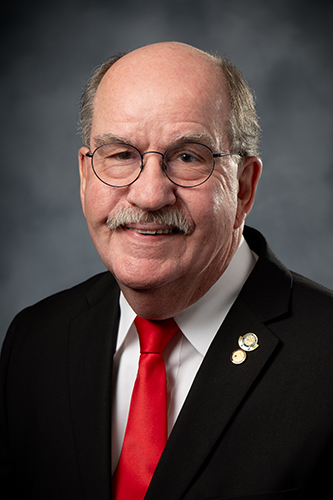
Sen. Bill Hamilton
Sponsored bills
Maddy summarySB 206 would allow sheriffs who are members of West Virginia's public retirement system to retire at age 62 with eight or more years of service as an elected sheriff. Currently, new members (joining after July 1, 2015) require 10 years of service for retirement at 62, but this bill creates a specific exception for sheriffs. The change applies only to sheriffs not participating in another retirement system and directly affects elected sheriffs seeking retirement under the state's public retirement program. This policy adjustment lowers the required service years for sheriffs from 10 to 8, making retirement eligibility more accessible for this group.
Maddy summarySB 549 would increase the daily payment for jurors in West Virginia from a current range of $15 to $40 per day to a new range of $40 to $100 per day. This change applies to both trial jurors (petit jurors) and grand jurors serving on court cases. The bill replaces the previous minimum of $15 with a new minimum of $40 and raises the maximum from $40 to $100. The reimbursement remains determined by the court and paid from the state treasury, but ensures jurors receive at least $40 per day.
Maddy summarySB 1014 increases Medicaid dental reimbursement rates for providers in West Virginia to address rising costs, as noted in a 2024 state report showing current rates fail to cover service expenses. It expands dental coverage for adults 21+ to include diagnostic, preventative, and restorative services (excluding cosmetic procedures), with a $2,000 annual spending limit per beneficiary. The bill requires the state to implement a dental care system with quality oversight and submit annual cost reports to legislators starting in 2027. A 20% fee increase for dental services must be enacted by December 2028 to align with federal matching requirements.
Maddy summarySB 1013 allows municipal police and firefighters in West Virginia to convert their accrued annual or sick leave into additional retirement service credit. Specifically, they can use unused leave days (at a rate of 1 day for 1 day, with monthly credits calculated at 20 days per month) to increase their retirement pension. However, this converted service cannot count toward the mandatory 20-year service requirement for retirement, and the additional pension benefit is capped at 1% of the member’s average annual salary. The bill applies to participants in municipal pension plans overseen by the Municipal Pensions Oversight Board.
Maddy summarySB 887 updates West Virginia's licensing rules for money transmission services to include virtual currency kiosks. It requires businesses operating these kiosks to obtain a money transmission license, sets disclosure requirements for customers using them, and clarifies that kiosks operate as delegates of licensed money transmitters. The bill directly affects businesses offering virtual currency services through kiosks in the state. Key provisions define "virtual currency kiosks" under money transmission regulations, establish a licensure start date for kiosks, and address conflicts between state and federal law on money transmission.
Maddy summarySB 97, the Equipment Right to Repair Act, requires manufacturers of farm equipment sold or used in West Virginia to provide independent repair shops and equipment owners with necessary documentation, tools, and firmware access after a new equipment warranty expires. It directly affects farmers, independent repair businesses, and manufacturers of agricultural machinery like tractors, harvesters, and sprayers (excluding road vehicles). Key provisions mandate that manufacturers make available repair manuals, diagnostic tools, security codes, and firmware updates to non-affiliated repair providers or owners, ensuring they can maintain or fix equipment without manufacturer restrictions. The bill establishes the Agriculture Commissioner as the enforcing authority and defines terms like "independent repair provider" and "embedded software" to clarify requirements. This law aims to increase repair options and reduce costs for agricultural operations by standardizing access to repair resources.
Maddy summaryThis Senate Resolution (SR 32) expresses the West Virginia Senate's commitment to protecting coal-dependent communities and energy infrastructure. It specifically requires coal-fired power plants to operate at a minimum 69% annual capacity factor to maintain grid reliability and protect over 10,000 coal jobs, while opposing actions that threaten mine closures or job losses. The resolution also pledges to prioritize local coal jobs over "out-of-state contracting" and prevent ratepayers from bearing higher costs due to reduced coal generation. As a non-binding resolution (adopted February 18, 2026), it does not create new law but formally commits the Senate to supporting coal through policy advocacy and oversight.
Maddy summarySB 94 continues the Robert C. Byrd Corridor H Highway Authority, which serves the economic development needs of seven counties (Lewis, Upshur, Barbour, Randolph, Tucker, Grant, and Hardy) along Corridor H. The bill establishes the authority’s structure, including 21 voting members appointed by the seven counties (three per county) and five ex-officio nonvoting members from state agencies (like the Department of Highways and Economic Development). It outlines meeting rules (requiring 11 voting members for a quorum), confirms members receive expense reimbursements but no salary, and defines the authority’s duties to foster economic partnerships, develop tourism assets, and manage property to support regional growth. The authority must report annually to the Joint Committee on Government and Finance.
Maddy summarySR 42 is a ceremonial Senate resolution honoring the late Walter Dolph Helmick, a former West Virginia state legislator and public servant. It memorializes his life and career, noting his service as a coal miner, teacher, businessman, Mason, West Virginia House of Delegates member, Senate member (1989-2013), and Commissioner of Agriculture. The resolution formally recognizes his contributions to West Virginia and extends condolences to his family following his death in 2025. As a non-binding memorial resolution, it has no policy impact or effect on legislation.