

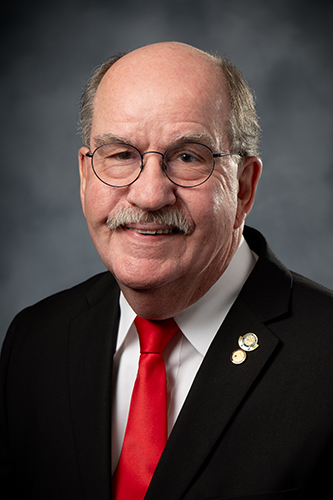
Maddy summarySB 141 increases retirement benefits for West Virginia Natural Resources Police Officers who retire on or after January 1, 2029. The bill amends the retirement system to set the accrued benefit at 2.75% of an officer's final average salary multiplied by years of service (up from 2.5% for those retiring after July 1, 2025). This change directly affects active members of the West Virginia Natural Resources Police Officer Retirement System who meet the retirement date criteria. The legislation also requires additional funding for the retirement system to cover this benefit increase. The bill focuses solely on adjusting the calculation method for retirement benefits, without altering other eligibility rules or funding mechanisms.
Sen. Bill Hamilton
Sponsored bills
Maddy summaryThis Senate Resolution (SR 52) designates February 27, 2026, as "West Liberty University Day" at the West Virginia Legislature. It formally recognizes the university's history as West Virginia's oldest institution of higher education (founded 1837), its contributions to the state's workforce and economy (serving over 2,200 students, supporting local communities, and fostering economic growth through initiatives like the Appalachian Aquatic Conservation Center), and its role in advancing education, culture, and athletics. The resolution has no policy impact beyond ceremonial acknowledgment and was adopted by the Senate on February 27, 2026.
Maddy summarySB 114 creates a pilot program offering 12 weeks of paid parental leave for eligible West Virginia state employees during the birth or adoption of a child under age 12, covering July 2026 through July 2028. Employees receive 90% of their average weekly wage (capped at $1,000 weekly) and may combine this with unpaid leave for up to 18 weeks total per 12-month period. The program applies only to full-time state government employees who have worked 12 consecutive weeks, excluding part-time workers, elected officials, and certain vocational program participants. It requires employers to maintain health coverage during leave and mandates a Department of Labor report to the legislature on the pilot’s outcomes. This is a temporary initiative with a sunset date, not a permanent policy.
Maddy summarySB 151 exempts the first $25,000 of cash value in a life insurance policy from Medicaid eligibility calculations in West Virginia. This directly affects individuals applying for Medicaid who hold life insurance policies with accumulated cash value. The bill changes how Medicaid assesses assets by excluding this specific amount, rather than counting it toward the applicant's total resources. This policy adjustment aims to prevent applicants from losing Medicaid eligibility due to modest life insurance savings.
Maddy summarySB 996 designates Jennings Randolph Lake in Mineral County as an official West Virginia State Park, adding it to the existing state park system. The bill authorizes the Division of Natural Resources to manage, maintain, and improve the park, including entering cooperative agreements with entities like the U.S. Army Corps of Engineers for operations and recreation. It clarifies that federal jurisdiction over the lake and dam remains unaffected. The bill title mentions "Teter Creek Lake State Park," but the text only creates Jennings Randolph Lake State Park (the Teter Creek reference appears to be an error in the title). This change directly affects visitors, local communities, and park management authorities by formalizing the lake's status for recreation and conservation.
Maddy summarySB 898 modifies how certain agricultural buildings on qualified farmland are taxed. Beginning January 1, 2027, these buildings (like barns, silos, and chicken houses) will be assessed at their salvage value for property tax purposes. Starting January 1, 2029, such buildings will no longer be included in property tax assessments at all. The bill directly affects farmers who own qualifying agricultural structures, reducing their property tax burden over time. This change applies only to buildings used solely for agricultural production or storage, not to residential or commercial properties.
Maddy summarySenate Resolution 48 memorializes the late Sarah Abigail (Mullennex) Minear, a former West Virginia State Senator (1994-2006) and community leader, by formally honoring her life and public service. The resolution recognizes her roles as a philanthropist, founding president of the Tucker Community Foundation and West Virginia Grantmakers Association, and her decades of volunteer work across West Virginia. It extends the Senate’s condolences to her family and directs the Clerk to send a copy of the resolution to her loved ones. This is a ceremonial resolution with no policy or financial impact, solely commemorating her legacy.
Maddy summarySB 718 increases the annual salary for magistrates in West Virginia to $70,000, effective July 1, 2026. This bill amends West Virginia Code §50-1-3, which sets magistrate compensation, building on previous increases from $60,375 (2021) to $63,250 (2022). The measure directly affects all magistrates serving in West Virginia courts. The change is a straightforward salary adjustment with no additional mechanisms or eligibility requirements specified in the bill text.
Maddy summarySB 1006 adds a 1% tax on fire and casualty insurance premiums in West Virginia. Insurance companies pay this tax, and the revenue is allocated as follows: 10% to the Teachers Retirement System Reserve Fund, 25% to volunteer and part-volunteer fire departments via the Fire Protection Fund, and 65% to municipal police and fire pension funds. The bill requires annual reporting by municipalities and the State Treasurer to distribute funds according to these percentages. This policy directly affects insurance providers (through the tax) and the specific state funds supporting teachers, fire departments, and municipal pension systems.
Maddy summarySenate Bill 1067 proposes creating an after-school care program at West Virginia elementary schools, operating from the end of the school day until 6:00 p.m. The program would be supervised by adults paid for directly by parents of enrolled children, not by state funds. It applies specifically to parents of elementary school students and requires the state superintendent to establish the program on school campuses. The bill does not change existing state funding or create new state obligations for the program.