

Maddy summaryHB 5538 creates a new "Master Esthetician" license in West Virginia for professionals seeking to perform advanced, noninvasive skin treatments beyond basic esthetics. To qualify, applicants must hold a current esthetician license, complete 600 hours of advanced training (including skin analysis and safety protocols), pass an exam, and pay fees. The bill defines the scope of practice to include advanced services affecting the epidermis/superficial dermis but explicitly prohibits medical procedures or deeper skin penetration. It establishes renewal requirements with continuing education and grants the Cosmetology Board authority to set safety rules for these advanced services. This directly affects estheticians aiming to expand their practice and aims to enhance consumer safety through clearer licensing standards.
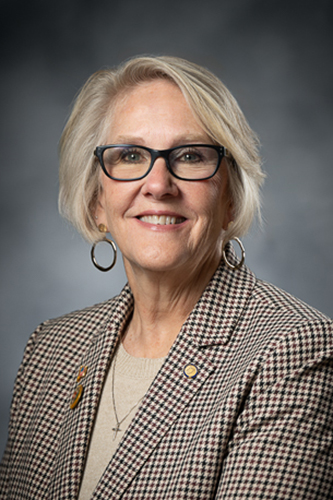
Del. Lisa White
Sponsored bills
Maddy summaryHB 5593 would allow pharmacists in West Virginia to sell ivermectin to consumers without a doctor's prescription. The bill directly affects pharmacies, pharmacists, and anyone purchasing ivermectin for personal use. It adds a new section to state law (§60A-2-204a) specifically permitting over-the-counter sales, dispensing, and possession of ivermectin. This changes current requirements by removing the need for a prescription, making the drug accessible without a healthcare provider's authorization. The bill does not address medical uses or safety considerations, only the regulatory framework for its sale.
Maddy summaryThis is a commemorative House resolution honoring former West Virginia House Speaker and Chief Justice Timothy P. Armstead following his passing. It memorializes his service, names a conference room in the House as the "Speaker Tim Armstead Memorial Conference Room," and extends condolences to his family. The resolution does not create new laws or affect policy - it formally recognizes his legacy and contributions to West Virginia.
Maddy summaryHB 5592 would allow pharmacists and pharmacies to sell ivermectin to consumers without a prescription, removing current requirements for a doctor's order. This change applies specifically to human use of ivermectin and overrides existing provisions in West Virginia law that currently require a prescription. The bill directly affects pharmacies, pharmacists, and individuals seeking ivermectin for personal use. It does not alter the medical use or safety of ivermectin, only the legal mechanism for its sale.
Maddy summaryHB 5329 would allow West Virginia counties to use up to 25% of impact fees (fees charged to developers for new construction) for operational costs, such as maintaining roads and public services, instead of only for specific infrastructure projects. The bill creates an "operational sinking fund" that can cover all county operations except schools, and existing impact fees already collected can be redirected to this fund. It takes effect immediately upon passage. This change directly affects counties managing development fees and developers paying those fees.
Maddy summaryHB 5378 would allow parents to exempt their children from required school vaccinations based on religious or philosophical beliefs, expanding beyond the current medical exemption only. This bill directly affects school-aged children and their families in West Virginia who seek to opt out of mandatory immunizations. Key provisions include requiring schools to track and report the number of exempt students, clarifying that medical exemptions remain available for health reasons, and specifying that physicians must provide written statements for exemptions. The bill does not change the list of required vaccines but modifies the exemption process and reporting requirements for schools.
Maddy summaryHouse Resolution 12 declares January 27, 2026, as Sexual Violence Awareness Day in West Virginia. The resolution recognizes West Virginia's high rates of sexual coercion victimization (ranking 5th nationally for women) and the significant impact of sexual violence on the state. It symbolically supports local victim services agencies and advocates working to address sexual violence, without creating new laws or funding. This is a ceremonial resolution, not a policy change.
Maddy summaryThis House Resolution (HR 11) encourages West Virginia's K-12 students to design a new state highway route number shield for the 2026 anniversaries of the U.S. founding (250th) and the U.S. numbered highway system (100th). It directs the West Virginia Division of Highways and Department of Tourism to hold a statewide student design competition, requiring the shield to maintain federal safety standards for legibility while incorporating West Virginia identity. The winning design would be implemented gradually on state highways starting July 2027, replacing existing signs only as they wear out, and the student designer would receive legislative recognition. The resolution is procedural and non-binding, focusing on celebration and civic engagement rather than new policy.
Maddy summaryHR 9 is a ceremonial resolution honoring the late West Virginia House Delegate Douglas John Skaff Jr. It expresses the House of Delegates' condolences to his family and commemorates his service, including his roles as a delegate representing multiple districts and as Minority Leader. The resolution has no policy impact - it is purely symbolic, acknowledging his career in public service, business, and community leadership. It was unanimously adopted by the House on February 5, 2026, the same day it was introduced.
Maddy summaryHB 5160 prohibits all unauthorized atmospheric modification activities - such as cloud seeding, stratospheric aerosol injection, and directed-energy heating - within or above West Virginia. The law establishes the West Virginia Department of Environmental Protection (DEP) as the lead agency to enforce the ban, deny permits for such activities, and pursue penalties for violations. It applies to all individuals, organizations, and government entities conducting atmospheric modification without state authorization. Violations could trigger state enforcement actions, fines, and cooperative investigations with law enforcement agencies. The bill aims to protect public health, agriculture, and environmental integrity by preventing unregulated atmospheric changes.