

Maddy summaryHB 2457 requires hospitals and county/city governments in West Virginia to report costs related to undocumented immigrants. Hospitals must collect immigration status during patient registration (with privacy safeguards) and submit quarterly reports on admissions by status to the Department of Health. Counties must report quarterly expenses for undocumented residents receiving public resources like housing or education. The Department of Health will compile annual reports for the Governor and Legislature on these costs and their impact on healthcare funding, without sharing personal patient data. This bill focuses on data collection, not policy changes or cost recovery.
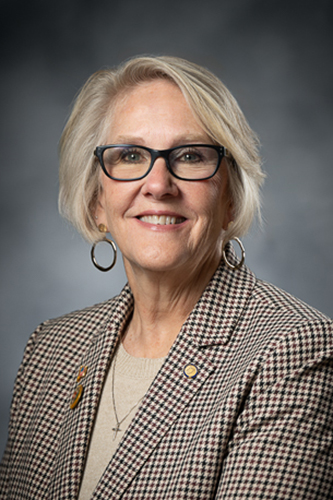
Del. Lisa White
Sponsored bills
Maddy summaryHB 2464 would establish the State Bank of West Virginia within the State Treasurer’s Office to securely hold precious metals (like gold, silver, and bullion) owned by the state, its agencies, or political subdivisions. The bank would function as a custodian, tracking deposits, managing transactions, and requiring strict record-keeping, but would not pay interest or provide banking services to the public. Only state entities, authorized agents, or designated political subdivisions could open accounts, and the Treasurer would appoint an Administrator to oversee operations. This bill creates a new state-run custody system for precious metals, not a commercial bank.
Maddy summaryHB 2481 requires most West Virginia retail businesses - including those selling food, goods, or services - to accept physical cash as payment without discrimination, meaning they cannot force customers to use credit cards or digital payments. The bill applies to in-person transactions at physical locations but excludes online, mail-order, or remote sales. Businesses violating the rule face a maximum $500 fine, and the Treasurer’s Office may create exemptions for specific situations like small transactions or certain business types. The law takes effect immediately upon passage.
Maddy summaryHB 2469 bans West Virginia municipalities and counties from charging property owners fees based on stormwater, rain, or similar runoff - commonly referred to as a "rain tax." It amends state code (§8-20-10, §16-13-16, and §16-13D-15) to prohibit such fees, directly affecting residential and commercial property owners who might have faced these charges. The bill stops local governments from using rainfall or stormwater management as a basis for fees, requiring alternative fee structures if permitted under existing law. This is a direct policy change prohibiting a specific fee type, not a new tax or service.
Maddy summaryHB 2467 would eliminate West Virginia's personal income tax for all taxpayers starting with the 2026 tax year. The bill amends state law to remove the requirement for individuals, estates, and trusts to pay this tax on their taxable income after December 31, 2025. This means residents and entities subject to the current tax would no longer owe state income tax on their earnings for tax years beginning in 2026 and later. The bill does not specify alternative revenue sources for the state.
Maddy summaryHB 2525 requires all West Virginia public elementary and secondary schools to display a durable poster or framed copy of the Ten Commandments in every classroom starting in the 2025-2026 school year. The display must be at least 16 inches wide by 20 inches tall, include the exact biblical text listed in the bill (including the full wording from "I AM the LORD thy God" to "nor anything that is thy neighbor's"), and be visible from anywhere in the classroom. Schools must accept private donations meeting these specifications if they lack compliant displays, and may replace non-compliant existing displays using public funds or donations. The bill directly affects all public K-12 schools in West Virginia, mandating a specific religious text in every classroom.
Maddy summaryHB 2425 would allow West Virginians aged 18 to 20 to carry concealed weapons without a permit, expanding current law that only permits this for those 21 and older. The bill amends sections of state code to remove the permit requirement for this age group while maintaining existing exceptions, such as carrying on one's own property, transporting unloaded weapons to/from purchase or hunting, or for specific officials like law enforcement. It does not change the penalties for violations, which remain misdemeanor or felony charges depending on prior offenses. The policy directly affects young adults aged 18-20 who currently must obtain a permit to carry concealed weapons.
Maddy summaryHB 2384 would amend West Virginia law to allow individuals aged 18-20 to carry concealed deadly weapons without a permit, matching the current allowance for those 21 and older. The bill specifically revises sections of the code that currently impose misdemeanor penalties (fines up to $1,000 or up to 12 months in jail) on 18-20 year olds carrying concealed deadly weapons without authorization. Existing exceptions remain in place, such as carrying on one's own property, transporting unloaded firearms between home and a repair shop, or during lawful hunting. This change directly affects West Virginia residents aged 18-20 who would no longer need a permit for concealed carry of deadly weapons under the revised law.
Maddy summaryHCR 33 is a concurrent resolution proposing that Spruce Knob - the highest point in West Virginia (elevation 4,863 feet) - be renamed "Trump Mountain" as a tribute to President Donald J. Trump. The resolution asks the U.S. Board on Geographic Names to consider this name change five years after Trump’s death, citing his electoral support in the state and policy achievements like tax cuts and coal industry advocacy. It does not change the name immediately but formally requests federal consideration of the renaming. The resolution affects the symbolic recognition of a geographic feature and honors Trump’s legacy, as stated in the resolution’s preamble.
Maddy summaryThis bill removes schools, public libraries, and museums from legal exemptions that currently protect them from criminal prosecution when distributing or displaying legally obscene material to minors. Under current law, these institutions could avoid charges if they followed specific conditions (like having a parent present for minors at libraries), but the bill eliminates these protections entirely. The change means these organizations could now face criminal liability for such actions without the previous safeguards. This policy shift directly affects how these public institutions handle materials legally defined as obscene when minors are involved.