

Maddy summaryHB 5273 requires candidates for municipal offices (like city council or mayor) to file campaign financial statements with their county clerk instead of the Secretary of State. It mandates that all campaign finance reports for these candidates be published online by the county clerk within 48 hours of the filing deadline. The bill also updates filing requirements for other offices, specifying electronic submission for certain statewide and county-level candidates, while allowing paper filings for others under defined conditions. This changes where municipal campaign reports are submitted and accelerates public access to this financial data.
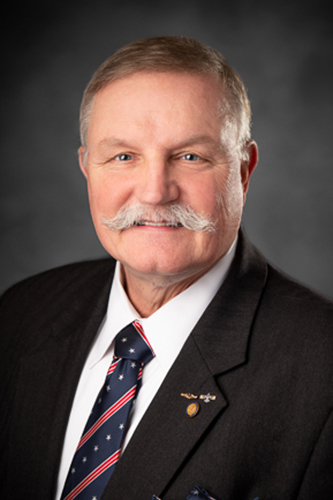
Del. Rick Hillenbrand
Sponsored bills
Maddy summaryThis House Resolution (HR 18) formally congratulates the West Virginia All Airborne Chapter of the 82nd Airborne Association for being named "Chapter of the Year for 2025" by the national association. It recognizes specific achievements listed in the resolution, including the chapter's "82nd Airborne Mustang" symbol, disaster relief efforts in California and Tennessee, fundraising for community events like Bridge Day and Christmas dinners, and their "All the Way" spirit. As a symbolic resolution, it has no legal effect or policy changes - it merely offers formal recognition to the veterans' chapter. The resolution was introduced in the West Virginia House of Delegates on February 19, 2026.
Maddy summaryHB 4709 gives the West Virginia Legislature legal standing to sue state officials (like the Governor or Secretary of State) who make unauthorized changes to election laws or rules. It also requires courts to allow the Legislature to automatically intervene as a "real party in interest" in any lawsuit challenging election law legality or constitutionality. This directly affects election officials and changes how election-related court cases are handled in West Virginia. The bill clarifies the Legislature’s role in election litigation but does not alter election rules themselves.
Maddy summaryHB 4459 would repeal all existing West Virginia laws regulating kratom (Chapter 19, Article 12F) and remove kratom ("Mitragyna speciosa") from Schedule I of the state's controlled substances list (Section 60A-2-204). This would eliminate legal restrictions on kratom sales, possession, and use for consumers and businesses currently operating under the repealed regulations. The bill directly affects kratom vendors, users, and enforcement agencies by ending the state's classification of kratom as an illegal Schedule I substance. It does not create new regulations but removes the existing legal framework governing kratom.
Maddy summaryHB 4403 requires all West Virginia homeless shelters to register annually with the Bureau for Public Health and obtain a safety certificate by July 1, 2026. Shelters must meet standardized health, fire safety, staffing, and background check requirements, including resident grievance procedures and incident reporting. Violations could result in fines up to $5,000 per violation or temporary suspension of operations. The law applies to all shelters regardless of funding source, including faith-based facilities that retain federal religious protections while complying with health and safety standards.
Maddy summaryHB 4402 establishes a new role for "school protection officers" in West Virginia, allowing sheriffs (with county commission approval) to appoint qualified county residents to serve on school property. These officers must have good moral character and no felony convictions, take an oath, and post a bond, but they are exempt from standard deputy sheriff civil service and retirement rules. The bill grants them general police powers - including arrest authority - within their assigned school district, while prohibiting them from participating in labor disputes or serving outside their district. It also clarifies that school districts paying for these officers are not considered their employers and are not liable for damages from their official actions.
Maddy summaryHB 5675, the WV Reshoring Manufacturing Act, creates a tax credit for West Virginia businesses that replace imported goods with locally manufactured products. It directly affects businesses purchasing goods for resale or use in WV (eligible taxpayers) and manufacturers operating physical facilities in the state (qualified manufacturers). The bill provides tax credits equal to a percentage of the verified dollar value of imported goods replaced by WV-made goods, requiring independent CPA verification through "reshoring activity verification reports" for both initial and continued reshoring. Credits are time-limited, non-transferable, and expire after 10 years, with separate provisions for initial reshoring and repeat purchases of reshored goods. The program aims to reduce reliance on foreign imports by incentivizing local production, as documented in the Legislature's findings of $4.8 billion in imported goods purchased by WV businesses in 2024.
Maddy summaryHB 5552 prohibits West Virginia state and county agencies from purchasing or operating drones made by entities from China or Russia, or entities under their control, starting May 1, 2029. It defines "covered foreign entities" as those on U.S. sanctions lists or linked to China/Russia, and bans state funds from being used for such drones. The bill creates a grant program to help public safety agencies replace non-compliant drones with U.S.-made or certified alternatives (like those with Defense Innovation Unit or AUVSI certifications) by reimbursing based on the drone’s current value. This applies to all public entities using drones under 55 pounds, with grants available for compliant replacements after the 2029 deadline.
Maddy summaryHB 5533, the West Virginia Federal Constitutional Authority Clarification Act, establishes a process for the state to review and potentially reject federal court decisions it deems unconstitutional or exceeding federal authority. The bill creates a Joint Committee on Constitutional Review to evaluate federal judicial rulings that conflict with West Virginia's state constitution or the U.S. Constitution's Tenth Amendment, which reserves powers to states. State officials would be required to follow this review process, and enforcing rejected federal rulings could face criminal penalties under the bill. It directly affects state government operations, including courts and executive agencies, by mandating state-level constitutional review of federal court decisions.
Maddy summaryThis is a commemorative House resolution honoring former West Virginia House Speaker and Chief Justice Timothy P. Armstead following his passing. It memorializes his service, names a conference room in the House as the "Speaker Tim Armstead Memorial Conference Room," and extends condolences to his family. The resolution does not create new laws or affect policy - it formally recognizes his legacy and contributions to West Virginia.