

Maddy summaryHB 4452 removes specific land ownership limits for religious organizations in West Virginia. It eliminates current restrictions that cap church-owned land at 10 acres within cities/towns and 60 acres outside those areas. The bill amends state law to allow religious groups to own any amount of land without these acreage limits. This change directly affects churches, congregations, and religious organizations operating within the state. The policy shift removes a longstanding legal restriction on property ownership by religious entities.

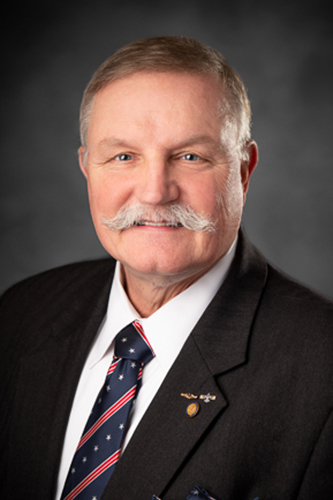
Rep. Rick Hillenbrand
Sponsored bills
Maddy summaryHB 4755 adds "aggravated vehicular homicide" (defined in §17C-5-1(c)) to West Virginia's list of offenses that trigger enhanced sentencing for repeat offenders. This change directly affects individuals convicted of aggravated vehicular homicide who have prior qualifying offenses under the state's recidivism laws. The bill amends Section 61-11-18 of the West Virginia Code to include this offense, meaning a second or third conviction for this crime could result in harsher penalties if the offender has previous serious convictions. The law focuses on increasing penalties for repeat offenders in cases involving severe DUI-related fatalities.
Maddy summaryHB 5168 establishes two new funds to increase emergency medical services (EMS) funding across West Virginia. The County Emergency Medical Services Fund supports counties with dedicated EMS taxes or fees, while the All County Emergency Medical Services Fund provides uniform support to all counties. The bill transfers $6 million annually from the state lottery fund to the renamed EMS Salary Enhancement, Crisis Response, and Mental Health Treatment Fund (for worker salaries and crisis services) and $3 million each to the two new funds. These funds must be used exclusively to boost EMS worker salaries, improve crisis response, and support mental health services to help retain staff.
Maddy summaryHB 5227 modifies West Virginia's business reporting fees and adds a new logotype for veteran-owned businesses. It sets an annual report fee at $25 (or $50 biennially) for corporations, limited partnerships, and LLCs required to file reports with the Secretary of State. The bill also grants the Secretary authority to waive late fees for these filings. Additionally, it establishes a new official logotype (a special mark or symbol) that qualified veteran-owned businesses - defined as those at least 51% owned by veterans or their spouses - may use on their materials. This bill directly affects businesses required to file annual/biennial reports and veteran-owned entities seeking the new logotype.
Maddy summaryHB 5401 expands absentee voting eligibility in West Virginia to citizens temporarily residing overseas. To qualify, voters must have been residents of West Virginia before leaving, hold a U.S. passport, not have established permanent residency abroad, and intend to return. They must also be registered or eligible to vote in another U.S. jurisdiction. The bill updates both mail-in and electronic absentee ballot rules to include this group, aligning with federal voting protections for overseas citizens.
Maddy summaryHB 5065 amends West Virginia's hotel occupancy tax law to clarify collection requirements for online booking platforms (marketplace facilitators) like Airbnb or Booking.com. It requires these platforms to: (1) separately state the tax on all bills, (2) use geofencing for accurate tax calculation, (3) provide a nine-digit postal code to ensure taxes reach the correct local government (county or municipality), and (4) maintain detailed records of each transaction. The bill directly affects marketplace facilitators that meet sales thresholds ($100,000 revenue or 200+ transactions annually) and hotels using these platforms. It also prohibits businesses from claiming they will absorb the tax, ensuring the tax remains visible to consumers.
Maddy summaryHB 4404 increases the annual funding allowance for volunteer and part-volunteer fire departments in West Virginia from $500 to $5,000 specifically for educational/training supplies and fire prevention promotional materials. This change directly affects local fire companies that rely on state funds for operational needs, allowing them to better support firefighter training and community safety outreach. The bill amends Section 8-15-8b of West Virginia Code to adjust this specific budget line item, maintaining all other authorized uses of funds unchanged. The proposed increase aims to provide greater flexibility for fire departments to invest in critical safety education resources. The bill was introduced on January 16, 2026, and referred to the House Finance Committee.
Maddy summaryHB 4474 extends the expiration date of West Virginia's Alzheimer's Disease and Other Dementia Advisory Council, which was scheduled to sunset. The bill prevents the council from automatically dissolving by renewing its operational period. The council, composed of 15 voting members (including people with dementia, caregivers, healthcare providers, and researchers) and 5 nonvoting government representatives, examines dementia care needs, reviews state services, and assesses healthcare capacity. It does not create new policies but ensures the council can continue its work on dementia-related issues. This procedural bill affects only the council's continued operation, not direct service recipients.
Maddy summaryHB 4756 requires commercial truck drivers in West Virginia who cannot comprehend English to pay triple the standard compensation for all accident-related damages and medical expenses if they cause an accident. It directly affects non-English-speaking commercial truck drivers and their employing companies. The bill’s key provision replaces standard damages with automatic "treble damages" (triple the usual amount) for qualifying accidents, without requiring separate legal proceedings. This policy change specifically targets language barriers in commercial driving incidents, mandating higher financial accountability for drivers unable to understand English during operations.
Maddy summaryHB 4463 amends West Virginia's sanitarian licensing laws to modernize training requirements and clarify licensing authority. It authorizes the Board of Sanitarians to offer online training as an alternative to in-person sessions, allowing applicants to complete training anytime during the year and finish within six months of hire (excluding on-the-job training). The bill also clarifies that Registered Sanitarians may license applicants who complete approved training and on-the-job experience. Additionally, it requires the Board to establish reciprocity standards for out-of-state licensure by May 1, 2026. These changes directly affect sanitarian applicants, current license holders, and the Board's regulatory processes.