

Maddy summaryHB 2800 requires West Virginia's Public Service Commission (PSC) to survey solid waste collection and transportation fees in border counties by October 1, 2025, and establish an annual maximum rate for these services. It directly affects private commercial waste carriers operating in those border counties, allowing them to adjust fees up to the PSC-set maximum rate. Carriers must provide customers with written notice of any fee increase at least one billing cycle in advance. The bill aims to standardize fees across border counties while giving carriers flexibility within the established rate cap.
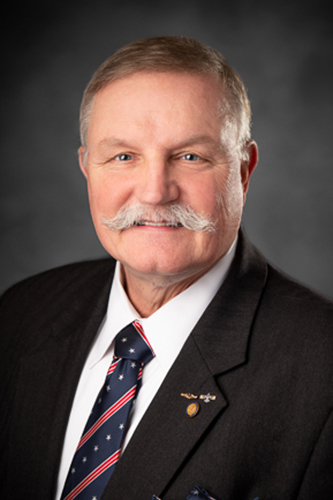
Del. Rick Hillenbrand
Sponsored bills
Maddy summaryHB 3291 (West Virginia House Bill 3291) increases penalties for employers who knowingly hire undocumented workers. It directly affects businesses and organizations in West Virginia that employ unauthorized workers, imposing escalating fines: $1,000-$10,000 for a first offense, $5,000-$20,000 for a second, and $10,000-$30,000 plus up to one year in jail for third or subsequent offenses. The bill also penalizes employers who provide false work status records or transfer assets to evade these requirements, with fines of $1,000-$5,000 or up to one year in jail. These provisions amend existing West Virginia law (§21-1B-5) to strengthen enforcement against unauthorized employment.
Maddy summaryHB 3221, the Burial Equity Act, expands burial benefits in West Virginia state cemeteries to include eligible former National Guard and military reserve members (such as Individual Mobilization Augmentees and Active Guard Reserve), their spouses, and dependent children. It sets specific eligibility criteria: four years of service, two years of West Virginia residency before death (or service in West Virginia units), and a non-dishonorable discharge, with retroactive application for deaths after March 15, 2022. The bill creates a Burial Equity Grant Program administered by the Veterans Affairs department, offering up to $1,000 per family to cover burial costs on a first-come, first-served basis. It also establishes a dedicated Burial Equity Fund, initially funded with $50,000 from the legislature, to support these grants using state appropriations, federal funds, and private donations.
Maddy summaryWest Virginia's House Concurrent Resolution 84 is a symbolic statement opposing China's misuse of UN Resolution 2758 to exclude Taiwan from international organizations. It clarifies that UNGA Resolution 2758 only addresses which government represents "China" in the UN and never intended to settle Taiwan's political status. The resolution urges the UN to stop using the resolution to deny Taiwan participation in UN bodies and reaffirms that the U.S. "one China policy" does not recognize China's claim over Taiwan. It emphasizes that UNGA Resolution 2758 does not prevent Taiwan's meaningful participation in international organizations like the WHO or ICAO. As a concurrent resolution, it has no legal force but expresses legislative position on diplomatic matters.
Maddy summaryHB 2117 changes the deadline for submitting mail-in ballot applications in West Virginia. It requires most voters' applications to be received by the sixth day before an election, while qualified first responders must submit theirs by 5:00 p.m. the day before the election. The bill maintains the same deadline (six days before) for overseas and uniformed services voters. This affects all voters requesting mail-in ballots, adjusting the timing for when applications must be accepted by election officials.
Maddy summaryHB 3149 establishes a program to provide one-time, equal grants to all chartered American Legion posts in West Virginia without requiring applications or financial documentation. The Department of Veterans Assistance will distribute these grants equally to all eligible posts by October 1, 2026, using funds appropriated through the state budget process. The bill requires the Governor to include a dedicated budget line item for this purpose in the fiscal year 2026 budget and mandates a post-distribution report to the Joint Committee on Government and Finance by January 1, 2027. This program directly supports American Legion posts statewide, which provide community and veteran services, by offering streamlined, no-strings-attached funding.
Maddy summaryHB 3175 prohibits public utilities (such as gas, water, and electric companies) from using funds paid by ratepayers to make political contributions or charitable donations. The bill bans these contributions to political candidates, campaigns, political action committees, and charitable organizations. Violations would be classified as criminal offenses with penalties. This applies to all public utilities operating in West Virginia under the state's regulatory code.
Maddy summaryHB 2683 prohibits the use of ranked choice voting for all local, state, and federal elections in West Virginia. The bill defines ranked choice voting as a system where voters rank candidates by preference, with votes redistributed in rounds if no candidate wins a majority. It declares any election using this method invalid and prevents officials from being sworn into office based on such results. The prohibition does not apply to internal political party processes like conventions or party officer elections.
Maddy summaryHB 2681 requires all West Virginia high school students to learn proper American flag etiquette - including handling, folding, displaying, honoring, and retiring the flag - as part of their graduation requirements. This bill amends existing curriculum standards to add flag etiquette instruction to civics and history courses, mandating that students pass an exam on this topic before graduating. The requirement applies specifically to public high schools and builds upon current mandates for U.S. history, civics, and government education. The bill does not alter existing health or other curriculum standards but adds a new, specific knowledge requirement for graduation.
Maddy summaryHB 3141 requires private or government entities taking property through eminent domain to pay an additional 15% fee based on the court-ordered value paid to landowners. This fee must be paid to the county where the property is located and is in addition to all other costs. The funds collected can only be used by counties for acquiring or improving public forests, parks, recreation facilities, and related infrastructure. The bill does not reduce the amount paid to landowners and applies to all eminent domain proceedings under West Virginia law. It is currently in the House Finance Committee for review.