

Maddy summaryThis bill requires mental health evaluations before setting bonds for specific misdemeanor crimes, directly affecting defendants charged with offenses like violent misdemeanors, crimes against minors, drug violations, or property crimes exceeding $250 value. Key provisions mandate judicial officers to consider mental health status when determining bond conditions for these cases, adding it to the list of factors alongside safety concerns and prior criminal history. The law modifies existing bail procedures under West Virginia Code §62-1C-1a to ensure evaluations are conducted prior to bond decisions for the specified offenses.
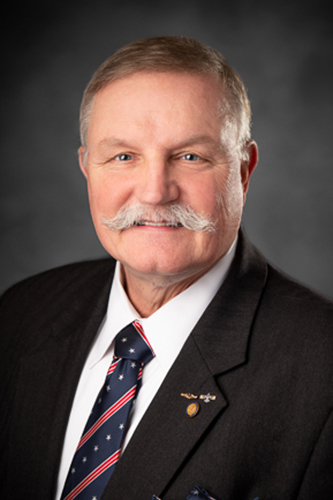
Del. Rick Hillenbrand
Sponsored bills
Maddy summaryHB 4092 requires all new law enforcement officers hired in West Virginia to provide proof of U.S. citizenship as a condition for state certification. The bill applies to all new hires by law enforcement agencies, state institutions, hospitals, or the Public Service Commission, effective upon the law's passage. Existing officers already employed as of the effective date are exempt from this requirement. The bill does not affect commercial vehicle enforcement officers hired before July 1, 2007, who were previously certified under different rules.
Maddy summaryHJR 1 proposes a constitutional amendment to increase West Virginia's homestead exemption from $20,000 to $50,000. This exemption currently protects the first $20,000 of assessed value on a primary residence (or mobile home) from property taxes for homeowners aged 65 or older, or permanently disabled residents. The change would reduce property taxes for qualifying homeowners by exempting an additional $30,000 of their home's assessed value. As a constitutional amendment, it requires voter approval in the 2026 general election to take effect.
Maddy summaryHB 4140 allows West Virginia county commissions to post legal advertisements (such as public notices or court-related announcements) on their official websites instead of publishing them in local printed newspapers. This change becomes effective July 1, 2026, and applies directly to county commissions, which would no longer be required to pay for newspaper publication for these notices. The bill modifies existing law to permit this digital alternative while maintaining the requirement that counties already maintain public websites with specific information (like meeting schedules and contact details) as mandated by §7-1-3rr. It does not require counties to switch to online posting but provides them with this option.
Maddy summaryHB 4171 clarifies how sex is classified on original West Virginia birth certificates and establishes requirements for changing sex designation on driver's licenses, ID cards, or instruction permits. The bill directly affects residents seeking to update their gender marker on official state-issued identification documents. It amends existing laws (§16-5-10 and §17B-2-6) to define the process for revising sex designations, though the specific procedural steps are not detailed in the provided text. The legislation focuses on standardizing the administrative process for these changes, without altering birth certificate classification for new births.
Maddy summaryHB 4093 would amend West Virginia law to permit individuals aged 21 or older with a valid concealed handgun permit to carry a concealed firearm in public primary and secondary school buildings and grounds. This directly affects licensed handgun carriers who currently face restrictions on school property under existing law. The bill removes the prohibition for permit holders by adding them to the list of exempt individuals under §61-7-11a(b)(2)(L), while requiring concealed handguns in vehicles to be stored out of view and secured in locked compartments when not in the driver's seat. The change applies only to public schools; private schools retain the authority to maintain their own firearm policies.
Maddy summaryHJR 10 proposes amending West Virginia's constitution to grant voters direct authority to propose new laws (initiative) and reject existing laws (referendum) at all government levels. It would require petitions signed by 10% of voters in each district (with statewide initiatives needing signatures in two-thirds of counties), and set procedures for these votes to occur at regular elections. The bill must first gain two-thirds approval in both legislative chambers before being submitted to voters for ratification in the 2028 election. If passed, it would enable West Virginia citizens to directly influence state and local laws without legislative approval.
Maddy summaryHB 4099 prohibits West Virginia from recognizing driver's licenses issued by other states to individuals who cannot prove lawful presence in the U.S. (such as licenses marked for undocumented immigrants or issued exclusively to them). It makes these licenses invalid for driving in West Virginia, requiring law enforcement to issue citations for driving without a valid license when such a license is presented. The state’s motor vehicle department must maintain an online list of out-of-state license types deemed invalid under this law. This bill directly affects undocumented immigrants who hold out-of-state licenses and would be unable to legally operate vehicles in West Virginia under this policy.
Maddy summaryHB 4154 requires West Virginia's public employee and teacher retirement systems to provide an annual cost-of-living adjustment (COLA) to retirees who have been retired for over 10 years. It directly affects current retirees from both the Public Employees Retirement System and State Teachers Retirement System who voluntarily retired in good standing. The bill mandates the first full COLA payment by June 30, 2026, with subsequent annual payments, and extends these adjustments pro-rata to beneficiaries receiving retirement benefits. This policy change modifies retirement benefit payments without altering eligibility or contribution requirements.
Maddy summaryHB 4049 replaces West Virginia's existing Contraband Forfeiture Act with a new Criminal Forfeiture Process Act specifically for property used in or derived from felony drug crimes (violations of the Controlled Substance Act). It establishes a criminal court process for forfeiture (replacing civil forfeiture), defines key terms like "contraband" (unlawful items such as drugs without prescription) and "innocent owner" (a person unaware of property use in crime), and prohibits offering seized property to federal agencies for federal forfeiture. The bill clarifies that courts handling the underlying criminal case have jurisdiction over forfeiture proceedings, and it explicitly states no property rights exist in contraband. This procedural bill directly affects law enforcement agencies, criminal defendants, and property owners involved in drug-related felony cases.