

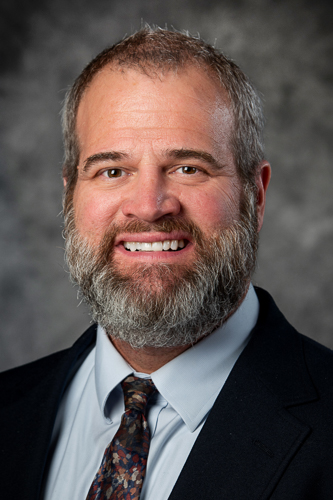
Photo of John Paul Hott
R West Virginia House of Delegates · District 85

Del. John Paul Hott

Compare
Total votes
4,054
all sessions
Attendance
100%
17 missed
Higher than 84% of chamber peers
With party
98%
of cast votes
Higher than 82% of chamber peers
Bipartisan score
1%
crosses aisle rarely
Lower than 77% of chamber peers
Sponsored
590
bills & resolutions
Near the chamber average
Committees
8
assignments
590 bills and resolutions

Sponsored bills

Total
590
Primary
73
Co-sponsor
517
This page
590
matching current filters
Co-sponsor HB 4850
Signed into law · West Virginia House of Delegates · Co-sponsor
Providing online training for Executors/Executrix of an Estate

Maddy summaryHB 4850 requires West Virginia executors and administrators of estates to complete free online training provided by the Supreme Court of Appeals, starting January 1, 2027. The training focuses on fiduciary duties and executor responsibilities, covering key legal requirements for managing estates. The video must be accessible online, for sight-impaired users, and available at all county commissions and sheriff's offices for those without internet access. This bill directly affects individuals serving as estate administrators by adding a mandatory educational requirement before they assume full authority.

Signed into law Jun 29, 2026 1 co-sponsor
Co-sponsor HB 4005
Signed into law · West Virginia House of Delegates · Co-sponsor
Skills to work

Maddy summaryHB 4005, "Skills to Work," creates a state-funded Youth Apprenticeship Program for West Virginia students aged 16 or older in 11th or 12th grade. It allows these students to earn high school credit and job skills certifications through structured apprenticeships in fields like manufacturing, healthcare, and office technology, requiring 135 classroom hours and 400 on-the-job training hours per program. The bill mandates schools to partner with employers to develop approved apprenticeships, with standards including progressive wages, performance evaluations, and school approval. It also clarifies that apprenticeships cannot include hazardous occupations prohibited for minors under federal and state child labor laws. The program must be fully implemented across all school systems by the 2025-2026 school year.

Signed into law Jun 29, 2026 1 co-sponsor
Co-sponsor HB 4869
Signed into law · West Virginia House of Delegates · Co-sponsor
Establish narrow, clearly bounded guaranteed-issue rights for Medicare Supplement policies in West Virginia.

Maddy summaryHB 4869 creates two guaranteed periods for West Virginia seniors to purchase Medicare Supplement (Medigap) policies without medical underwriting or pre-existing condition exclusions. It provides a 60-day window annually around each individual’s birthday for current policyholders to switch to a policy with the same or fewer benefits, and a 63-day window starting the day after Medicaid eligibility ends for those turning 65 or losing Medicaid. Insurers must offer coverage during these periods but are not required to provide new policies or alter existing benefit structures. The bill also mandates annual reports on Medigap premium trends for legislative review but does not change Medicare Advantage plans or require insurers to offer specific rates.

Signed into law Jun 29, 2026 1 co-sponsor
Primary HB 4416
Signed into law · West Virginia House of Delegates · Lead sponsor
Classifying forestry equipment for levy purposes

Maddy summaryHB 4416 reclassifies forestry equipment (such as skidders, feller-bunchers, and forestry trailers) as Class I property - same as agricultural equipment - for tax purposes. This exempts the sale of such equipment from West Virginia's consumer sales tax starting July 1, 2026. The bill directly affects forestry businesses and equipment manufacturers by reducing their tax burden. It also formally defines forestry as part of agriculture, encompassing forest product harvesting and processing.

Signed into law Jun 29, 2026 0 co-sponsors
Co-sponsor HB 4089
Signed into law · West Virginia House of Delegates · Co-sponsor
Preservation of hair during chemotherapy. Also known as the “Jessica Huffman Bill”

Maddy summaryHB 4089, known as "Jessica Huffman's Law," requires health insurers in West Virginia to cover scalp cooling systems for patients undergoing cancer chemotherapy starting January 1, 2027. The bill mandates that any insurance policy covering chemotherapy must include coverage for these devices - described as tools to prevent hair loss during treatment - as defined by Medicare and Medicaid. This applies to policies issued or renewed after 2026, with coverage subject to standard deductibles and coinsurance like other medical benefits. The law directly affects cancer patients seeking hair preservation and insurers offering chemotherapy coverage.

Signed into law Jun 29, 2026 1 co-sponsor
Co-sponsor HB 4009
Signed into law · West Virginia House of Delegates · Co-sponsor
Relating to the creation of the Portable Benefit Account Act

Maddy summaryHB 4009, the Portable Benefit Account Act, creates a new legal framework allowing independent contractors to access portable benefits through individually managed accounts. It directly affects independent contractors and hiring parties (businesses that contract with them), enabling voluntary contributions from hiring parties to fund benefits like health insurance, retirement plans, life insurance, and income replacement. Key provisions require written, opt-in agreements for contributions, prohibit using account contributions to determine worker classification, and mandate that accounts remain tied to the contractor - not the employer - when changing jobs. The bill establishes definitions for terms like "portable benefit account" and "provider," and requires administrative oversight by the Bank Commissioner.

Signed into law Jun 29, 2026 1 co-sponsor
Co-sponsor HB 4028
Signed into law · West Virginia House of Delegates · Co-sponsor
Relating to sales tax on construction materials

Maddy summaryHB 4028 exempts construction contractors from West Virginia's sales and use taxes on building materials and services used for constructing, repairing, or improving public elementary, secondary, or vocational school facilities. This applies to materials permanently installed in school buildings (like framing, wiring, or plumbing), but excludes tools, equipment, gasoline, or motor vehicle purchases. The bill directly affects contractors working on public school projects by reducing their costs for qualifying materials. It clarifies that this exemption applies to both state-level and municipal sales taxes on eligible school construction work. The policy change takes effect July 1, 2026, with no new revenue impact on the state.

Signed into law Jun 29, 2026 1 co-sponsor
Co-sponsor HB 4552
Signed into law · West Virginia House of Delegates · Co-sponsor
Relating to the law-enforcement powers of correctional officers

Maddy summaryHB 4552 clarifies that correctional officers in West Virginia's Division of Corrections and Rehabilitation who complete required training are recognized as law-enforcement officers. The bill authorizes these officers to make arrests on facility property for violations of state law, detain escapees, and carry firearms both on and off duty (with annual firearms training). It also establishes that qualifying officers are recognized under federal law (18 U.S.C. §926B) for off-duty carry and retirement benefits. The policy directly affects correctional officers employed by the Division, expanding their legal authority and equipment access while specifying training and certification requirements.

Signed into law Jun 29, 2026 1 co-sponsor
Co-sponsor HB 4415
Signed into law · West Virginia House of Delegates · Co-sponsor
Creating crime of attempting to smuggle contraband into federal correctional institutions within the state

Maddy summaryHB 4415 amends West Virginia law to explicitly include federal correctional facilities in existing statutes prohibiting the smuggling of prohibited items into correctional settings. The bill makes it a misdemeanor to deliver items like food, clothing, or money without permission (fines up to $500, jail up to 12 months) and a felony to transport weapons, drugs, escape tools, or telecommunications devices (fines $1,000-$5,000, prison 1-10 years). It directly affects individuals attempting to smuggle contraband into federal prisons located within West Virginia, such as visitors, family members, or others delivering unauthorized items. The law updates prior penalties for smuggling into state facilities to apply uniformly to federal correctional institutions.

Signed into law Jun 29, 2026 1 co-sponsor
Co-sponsor HB 4012
Failed · West Virginia House of Delegates · Co-sponsor
Relating to reducing the regulatory burden on utility companies when constructing and maintaining electric power generation and transmission facilities within this state

Maddy summaryHB 4012 reduces regulatory requirements for utility companies building or maintaining electric power generation and transmission facilities in West Virginia. The bill waives the need for a certificate of public convenience and necessity for projects approved by the Infrastructure and Jobs Development Council, streamlining approvals for these projects. It also shortens the Public Service Commission’s decision timeline, reducing the maximum processing time for large projects (over $50 million) from 400 days to 270 days. This directly affects utility companies seeking to develop or upgrade electric infrastructure within the state.

Failed Mar 14, 2026 1 co-sponsor
Showing 11 to 20 of 590 bills