

Maddy summaryHouse Concurrent Resolution 8 is a non-binding legislative statement by the West Virginia Legislature affirming that the state has standing in legal matters affecting its residents, based on the Tenth Amendment and the West Virginia Constitution. It declares that any judicial ruling denying this standing is invalid and a violation of state sovereignty. The resolution does not create new laws or policies but formally rejects federal or judicial actions that restrict West Virginia's authority to govern matters impacting its people. It is a procedural expression of legislative principle, not a policy change.
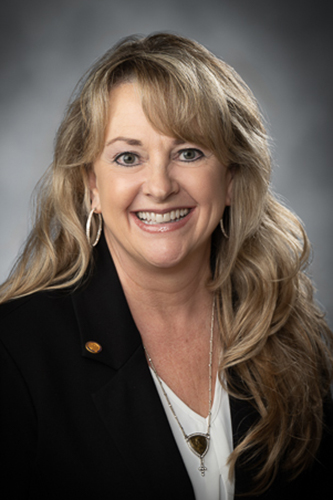
Del. Laura Kimble
Sponsored bills
Maddy summaryHB 4616 would require West Virginia courts to issue a final decision in child abuse and neglect cases within 12 months of the initial petition being filed. This time limit applies to all such proceedings and aims to prevent prolonged delays in resolving these cases. The bill does not change the legal standards for determining abuse or neglect but sets a strict deadline for court action. This change directly affects courts handling these cases and the families involved, ensuring more timely resolutions.
Maddy summaryHB 4618 would temporarily increase payments to kinship parents (relatives caring for children) to match foster parent subsidies under specific conditions. To qualify, kinship parents must pass a background check within five days of placement, pass a home safety screening, and be assigned to a child placing agency to help them become foster parent certified. The temporary payment would begin within 30 days of placement and last up to six months, ending if certification isn't completed within that time. This bill directly affects relatives caring for children in West Virginia's child welfare system who are temporarily placed with them.
Maddy summaryHB 4621 requires West Virginia circuit courts to include specific written findings of fact and conclusions of law in all juvenile child abuse and neglect court orders. This bill directly affects judges and legal proceedings in cases involving child welfare, mandating that courts explicitly state the factual basis and legal reasoning for their decisions. The key provision amends existing statutes to ensure courts document key determinations - such as whether abuse/neglect occurred and why custody decisions were made - rather than issuing general orders. This change aims to increase transparency and accountability in family court rulings without altering the underlying legal standards or services provided.
Maddy summaryHB 4586, introduced in West Virginia's 2026 legislative session, would prohibit state agencies and local governments from purchasing electric vehicles that may contain components made through forced labor or oppressive child labor. The bill defines "forced labor" as work obtained by coercion or fraud, including labor involving protected characteristics, and "oppressive child labor" as employment of children under 14 in hazardous work like mining. It requires all government contracts for electric vehicles to include a provision ensuring no components were produced using such labor, aligning with federal actions like the Uyghur Forced Labor Prevention Act. If enacted, the law would directly affect all state departments, counties, municipalities, schools, and universities purchasing electric vehicles, preventing taxpayer funds from supporting vehicles linked to unethical labor practices. The bill is currently pending in the House Government Organization Committee.
Maddy summaryHB 4619 creates a special revenue account within West Virginia’s Department of Human Services to fund expanded in-state residential treatment capacity for children, directly targeting youth currently placed out-of-state (over 10% of children in care). It establishes a Commission composed of agency leaders and stakeholders to study current placement practices, in-state facility capacity, and strategies to reduce out-of-state placements - focusing on older youth in juvenile justice systems. The Commission must develop recommendations on improving collaboration between child-serving agencies, promoting community-based alternatives, and making in-state placement availability accessible via an online system. These recommendations will guide future funding decisions and policy changes to build a more integrated, cost-effective system for at-risk children and families.
Maddy summaryHB 4617 requires West Virginia's Bureau of Social Services to formally document its existing policies as official legislative rules. The bill mandates filing a complete policy manual covering child protective services, foster care, youth services, licensing, and casework standards by July 1, 2026. Subsequent updates to these policies must also follow the legislative rule process. This is a procedural requirement - changing how policies are documented, not the policies themselves - and directly affects the Bureau of Social Services' administrative processes.
Maddy summaryThis bill requires health insurers to accept prior authorization requests via fax or electronic portal (not just mail) and mandates clear submission instructions, a 5-business-day response deadline (2 days for urgent care), and quarterly updates to lists of required authorizations. It ensures insurers include step therapy details on forms and carry approved authorizations across insurers for three months within West Virginia. The law directly affects insurers, healthcare providers, and patients by streamlining the approval process and reducing delays. Key provisions include standardized electronic notifications, clear deficiency identification, and expedited appeals within 10 business days.
Maddy summaryHB 4090 allows West Virginia county school boards to hire or accept as volunteers certified chaplains to provide support services for students, staff, and parents. The bill requires chaplains to undergo background checks like child care workers but exempts them from needing state certification or licensing. School boards must also prohibit sex offenders or child predators from serving. Chaplains are granted liability protection for actions taken in their role, unless those actions were maliciously intended to harass or intimidate. The bill directly affects public school districts across West Virginia by expanding their ability to provide spiritual support services.
Maddy summaryHB 4515 would establish rules for religious organizations leaving a denomination while keeping property. It requires a local church to get a two-thirds vote from its members to disaffiliate and mandates that the parent denomination provide a detailed financial accounting within 60 days. Property is divided into three classes: real estate (Class A) can be kept if over 50% of its costs were raised locally, movable items (Class B) go to the buyer, and financial assets (Class C) are split based on funding sources over two years. The bill aims to clarify property division during disaffiliation disputes without favoring either side.