

Maddy summaryHB 4816 eliminates municipal fire protection fees for residents and businesses located outside a city's boundaries when a county already charges a fire service fee. It requires cities and counties to enter into agreements ensuring people in shared "first due areas" pay only one fee (either municipal or county), with fees set equally for all within the agreed area. The bill prevents double-charging by mandating that cities cannot impose their fees if a county fee exists, except for a one-year transition period where fees are reconciled. After the first year, residents in shared areas pay the same fee as those within city limits. This primarily affects homeowners, businesses, and local governments in counties with county-level fire fees.
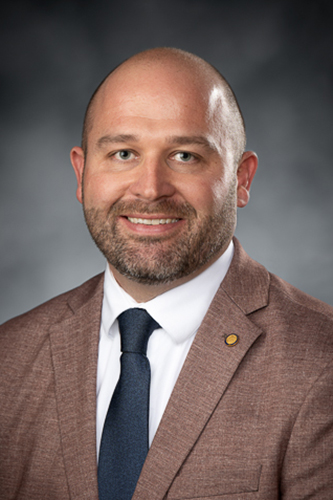
Del. Adam Burkhammer
Sponsored bills
Maddy summaryHB 4795 modifies West Virginia's foster care rules to clarify when children can be removed from foster homes. It requires the state department to temporarily remove children from foster homes if abuse/neglect allegations are verified, and permanently end foster placements only if the foster parents are at fault or other specific conditions are met (like a child turning 14 requesting to stay). The bill also mandates that foster parents apply to adopt within 30 days after a child's biological parents' rights are terminated, or the foster care arrangement may end if a better long-term placement is found. Additionally, it requires the department to notify foster or adoptive parents of siblings when a new child enters care, aiming to keep siblings together when possible.
Maddy summaryHB 4785 updates payment rules for attorneys appointed to represent indigent clients through West Virginia's Public Defender Services. It requires these panel attorneys to track work time in tenths of hours and submit vouchers for payment, with Public Defender Services processing approved claims within 45 business days. The bill also mandates annual reports from Public Defender Services to oversight bodies (including the Legislative Oversight Commission and Supreme Court) on panel attorneys' services. Disputes over rejected or reduced payments follow a clear process: attorneys can appeal to the appointing court within 15 business days for final resolution.
Maddy summaryHB 4783 would change how West Virginia distributes 25% of the fire and casualty insurance tax funds currently allocated to volunteer and part-volunteer fire departments. Instead of distributing funds based on department size (using active firefighter hours), the bill requires an equal share for all eligible departments meeting state eligibility criteria. This affects all volunteer and part-volunteer fire companies statewide that qualify under §8-15-8A. The change modifies the existing allocation method without altering the total funds available for these departments.
Maddy summaryHB 4796 establishes a Central Reception Center to provide short-term care (max 72 hours) for foster children disrupted from placements, including behavioral assessments and case coordination. It also creates "Emergency Resource Homes" to offer immediate overnight foster care, requiring specialized training for caregivers, financial incentives, and prioritization for adolescents, justice-involved youth, and children with special needs. The West Virginia Department of Human Services must contract with at least two 24/7 Central Reception Centers and expand Emergency Resource Homes statewide, with annual reports tracking child placements, success rates, and recruitment progress. This bill directly affects foster children awaiting placements and the state’s child welfare system, replacing practices like hotel placements by formalizing emergency care pathways.
Maddy summaryHB 4642 establishes the West Virginia Clean Water Act of 2026, directly affecting all public water systems in the state and their residents. The bill sets stricter drinking water quality standards exceeding federal levels, requires quarterly testing for contaminants like lead and bacteria with public reporting within 30 days, and mandates annual infrastructure assessments. It creates the West Virginia Safe Water Fund to provide grants and low-interest loans for upgrading treatment systems and replacing aging pipes, with priority for rural and underserved communities. The law also requires a statewide lead pipe survey by 2028, phased removal of lead service lines by 2036, and financial assistance for low-income households, while imposing fines up to $100,000 for violations to fund the Safe Water Fund.
Maddy summaryHB 4664 increases compensation rates for panel attorneys who represent eligible clients in public defense cases in West Virginia. It directly affects these attorneys and the Public Defender Services agency that processes their payments. Key provisions require Public Defender Services to annually report to oversight bodies on legal services provided by panel attorneys, while also clarifying voucher submission, review, and dispute resolution processes for compensation claims. The bill aims to improve payment accuracy and transparency without altering the core structure of public defense funding.
Maddy summaryHB 4532 proposes to allow homeless U.S. citizens residing in shelters or served by homeless services providers in West Virginia to obtain certain identification documents at no cost. Eligible individuals must use the shelter’s address, have a shelter employee verify their residency via affidavit, and provide proof of U.S. citizenship (such as a birth certificate or passport). The bill requires the state division to issue photo ID cards, replacement driver’s licenses, or replacement birth certificates to qualifying applicants. It defines "homeless U.S. citizen" as someone lacking a fixed residence and residing in a shelter or receiving services from a homeless provider. The bill is currently in committee review and has not yet been enacted.
Maddy summaryHB 4581 requires each county Bureau of Social Services office to hold monthly meetings to review child welfare operations and improve coordination. The bill mandates attendance by county supervisors, law enforcement, school officials, health providers, and other partners to discuss staffing, caseloads, service barriers, and child safety issues. Each meeting must produce a written report documenting attendees, key issues, and action items. This bill directly affects county child welfare offices and their local partners, aiming to enhance timely responses to child abuse and neglect through structured communication.
Maddy summaryHB 4614 requires West Virginia's Department of Human Services (DoHS) to develop and implement a statewide prevention plan by January 1, 2027. The plan must provide evidence-based, trauma-informed services to children under 18 and their families - including those in foster care, youth aging out of foster care, pregnant youth, post-adoption youth, and families with specific needs - through a mix of physical locations and telehealth. DoHS must track service outcomes, report annually starting December 2027 on county-level service reach and costs, and seek federal funding to support these services. The bill focuses on expanding accessible prevention support for vulnerable youth and families without creating new funding.