

Maddy summaryHB 4641 (the "Feed to Achieve Act") requires West Virginia county school boards to provide nutritionally adequate breakfasts and lunches meeting current federal standards, directly affecting all elementary students. It mandates limits on added sugar and sodium in school meals based on the Dietary Guidelines for Americans, and phases in free breakfasts for elementary students where feasible using existing funds like donations or federal programs. Schools must adopt approved breakfast delivery systems (e.g., "Breakfast in the Classroom") and track participation rates, while the state reports annually on program impacts to legislative committees. The bill codifies existing USDA meal patterns without creating new federal funding requirements.
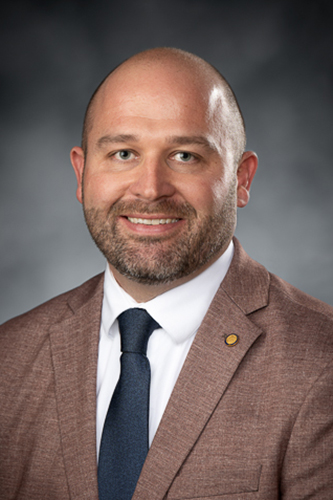
Del. Adam Burkhammer
Sponsored bills
Maddy summaryHB 5042 prohibits placing children under state custody (such as in foster care or juvenile justice) in facilities not approved by West Virginia's Department of Human Services (DHS). The bill requires DHS to maintain and annually update a public list of approved out-of-state facilities, including each facility's location and specialty (e.g., mental health care). Exceptions for unapproved facilities are only permitted in "extraordinary circumstances" with DHS Secretary approval. This law directly affects state child welfare systems, DHS oversight, and facilities seeking to house children in state care.
Maddy summaryHB 4907 restricts the use of specific pesticides near schools in West Virginia. It prohibits applying pesticides containing paraquat, atrazine, dicamba, chlorpyrifos, 2,4-D, glyphosate, or PFAS chemicals within 1,000 feet of any school property. The law defines the 1,000-foot distance as measured from the school’s closest boundary point to the spraying area. This rule takes effect on January 1, 2027, directly affecting pesticide applicators working near schools.
Maddy summaryHB 4622 reorganizes the Office of the Inspector General by removing it from the Department of Health and eliminating the requirement for the Department of Health to provide administrative support. The bill clarifies that the Inspector General can independently conduct performance, financial, and other audits of the Department of Human Services, Department of Health, and Department of Health Facilities (including their contractors). It also requires the Inspector General to submit reports and notify prosecutors/law enforcement if criminal violations are suspected during investigations. This procedural bill directly affects the Inspector General’s operational structure and oversight authority over specific state health and human services agencies.
Maddy summaryHB 4375 requires West Virginia's Bureau for Social Services to file the current Social Services Manual as a legislative rule, rather than revising it outside formal rulemaking procedures. The bill mandates that all future updates to the manual - which outlines procedures for foster care and other social services - must also be submitted through the official legislative rulemaking process. This change directly affects the Bureau for Social Services, which manages the manual, and ensures transparency for stakeholders relying on these service guidelines. The bill does not alter the manual's content but standardizes how it is officially adopted and revised. (Bill: HB 4375, introduced January 15, 2026)
Maddy summaryHB 4348 prohibits health insurance companies in West Virginia from denying coverage, increasing premiums, or canceling policies for individuals who have donated an organ while alive (living organ donors). The law specifically applies to sickness, disability, and long-term care insurance policies issued or renewed after July 1, 2026. Insurers cannot refuse coverage, limit benefits, or impose higher costs solely because someone is a living organ donor, even if no additional health risks are present. This directly protects living organ donors from insurance discrimination while ensuring they maintain access to these essential coverage types.
Maddy summaryHB 4947 allows state employees and school children to claim religious exemptions from required vaccines by submitting a notarized certification of religious belief. For employees, the exemption also covers conscientious objections, and employers cannot penalize them through withheld bonuses, pay raises, or denied promotions. Schools must accept the certification for enrollment without requiring additional medical documentation, while the list of required vaccines remains unchanged. The bill expands existing exemption options without altering vaccine requirements.
Maddy summaryHB 4853 requires West Virginia hospitals to create protocols for providing trauma-informed care to patients who have experienced miscarriage, abuse, neglect, or other stressful events. Hospitals must implement staff training, compile patient resources (including mental health contacts, grief guidance, crisis hotlines, and support groups), and develop a specific "Butterfly Protocol" for miscarriage cases. This protocol uses a discreet butterfly symbol on patient records to alert staff, who must be trained to recognize it and provide appropriate care. The bill directly affects all West Virginia hospitals by mandating these concrete procedures. It focuses on hospital operational changes rather than altering patient rights or funding.
Maddy summaryHB 4964 establishes a phased transition to a community-based child welfare system in specific West Virginia regions (Berkeley, Jefferson counties, and Region IV), starting with designated areas. It requires the Bureau for Social Services to retain initial investigation and safety authority but transfer ongoing case management and service coordination to contracted nonprofit community providers after investigations conclude. Providers must meet strict qualifications (nonprofit status, accreditation, financial stability) and operate under case-rate contracts with shared financial risk, where they may keep savings from improved outcomes or cover excess costs. The bill mandates a 24-month evaluation report assessing child safety, costs, and provider performance before considering broader implementation.
Maddy summaryHB 4353 prohibits West Virginia municipalities from collecting business and occupation (B&O) taxes on projects funded by state or federal government programs. This directly affects municipalities (which can no longer impose this tax) and projects receiving such funding (which will avoid this tax burden). The bill amends existing tax law to explicitly exclude state/federal-funded projects from municipal B&O tax collection, aligning with the current exemption for such projects under state tax code. This is a specific policy change to prevent double taxation on government-funded initiatives.