

Maddy summaryHB 2456 establishes the West Virginia Mothers and Babies Pregnancy Support Program under the Bureau for Public Health to provide state funding to pregnancy help organizations (excluding abortion industry organizations). The program funds capital improvements, new services, compliance with licensing standards, and staff training for eligible organizations. Funding is distributed through a fee-per-service model, with specific rates set by the managing agency. This bill directly affects pregnancy help organizations by providing targeted financial support for operational needs.
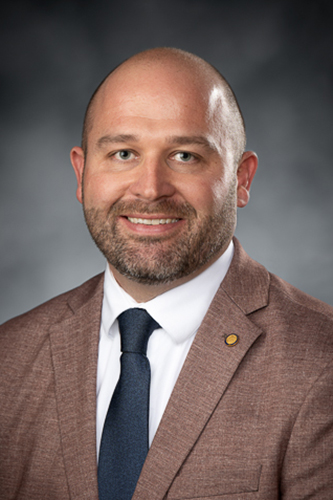
Del. Adam Burkhammer
Sponsored bills
Maddy summaryHB 3380 requires West Virginia's Bureau for Social Services to formally file the Social Services Manual as an official legislative rule, rather than updating it through internal agency procedures. This applies specifically to the manual's foster care procedures and other social services guidelines, which have been revised outside the standard rulemaking process since 1986. The bill mandates that all future updates to this manual must follow the state's formal legislative rulemaking procedures. This change aims to ensure transparency and accountability in how social services policies are established and modified. The bill does not alter the content of the manual itself, only the process for its official adoption and revision.
Maddy summaryHB 3382 establishes a central reception center to provide short-term shelter (max 72 hours) for foster children disrupted from placements, offering behavioral assessments, case coordination, and medical support. It also creates "emergency resource homes" to provide immediate overnight care, requiring specialized training for caregivers, financial incentives, and prioritized recruitment for adolescents, justice-involved youth, and children with special needs. The bill mandates the Department of Human Services to contract with at least two 24/7 reception centers and expand emergency foster homes statewide, eliminating the current practice of placing children in hotels due to placement shortages. Annual reports on child placements, success rates, and recruitment progress must be submitted to the Legislative Oversight Commission.
Maddy summaryHB 2881 expands West Virginia's State Police Child Abuse and Neglect Investigations Unit by increasing its minimum membership size and adding more regional members to directly assist Child Protective Services offices. It allows honorably retired State Police officers to rejoin the unit under specific conditions, including completing required training (like firearms and criminal law updates) but prohibiting pension accrual, promotions, or rank changes. The unit must maintain statewide statistics on child abuse convictions and submit annual reports to the legislature, tracking case investigations without disclosing individual details. These changes aim to strengthen coordination between law enforcement and child protective services in handling abuse cases.
Maddy summaryHB 2394 requires all West Virginia public schools to implement a wearable panic alert system ("Alyssa's Law") by December 31, 2025. It mandates that each school staff member receive a device capable of instantly contacting emergency services and triggering campus-wide lockdowns through integration with 9-1-1 systems. County school boards must provide the devices, ensure annual staff training on their use, and share security data (like cameras and maps) with local law enforcement. The bill directly affects all school staff in West Virginia public schools and focuses on immediate emergency response capabilities.
Maddy summaryHB 2035 establishes a three-year pilot program to provide legal representation for children in juvenile abuse and neglect cases through "Public Guardian ad Litem Services." It creates public guardian ad litem corporations in up to three West Virginia counties to employ full-time attorneys (public guardians) who will represent eligible minor children who cannot afford legal counsel. The bill outlines procedures for funding, conflict resolution (using Public Defender Service attorneys when needed), recordkeeping, and annual audits, with the program set to sunset after three years. This directly affects vulnerable children in specified court proceedings under West Virginia law, aiming to ensure quality legal assistance in these cases.
Maddy summaryHB 3379 clarifies that when a parent voluntarily relinquishes their parental rights, the West Virginia Department of Health and Human Resources is not required to make reasonable efforts to preserve the family. This amendment to West Virginia Code §49-4-604 directs courts to consider voluntary relinquishment as a factor when determining whether reasonable efforts toward family reunification are appropriate. The bill affects child welfare cases involving parental relinquishment, ensuring courts can prioritize permanent placements without requiring reunification efforts in these specific circumstances. It does not change existing requirements for reasonable efforts in cases without voluntary relinquishment.
Maddy summaryHB 3383 creates the Great Expectations Pilot Program to support West Virginia youth aging out of foster care in transitioning to community college. The program pairs eligible foster youth (those who were in foster care when earning their high school diploma or GED) with full-time coaches at a single community college, who provide personalized guidance on college applications, financial aid, transportation, career planning, and accessing support services. It allocates $95,000 annually from state general revenue to cover the coach's salary, benefits, and program resources. The three-year pilot, starting September 2025 at one college, will be evaluated in 2029 to determine potential statewide expansion.
Maddy summaryHB 3280 authorizes West Virginia's Department of Human Services to transfer ownership of state-owned land and buildings (previously leased to nonprofits) to regional mental health or intellectual disability centers operated by local nonprofit organizations. This transfer requires the facilities to be leased at a nominal rate since January 2025, used for mental health/disability services, and involves zero purchase price with nonprofits assuming maintenance, insurance, and upkeep costs. The bill exempts these transfers from standard state procurement rules like public bidding. It directly affects state facilities and qualifying nonprofit centers delivering mental health and intellectual disability services.
Maddy summaryHB 2135 creates a tax credit for West Virginia employers who hire individuals participating in substance abuse recovery programs. Employers can reduce their state taxes by up to $2,000 per eligible employee annually, based on the employer's total workforce size (e.g., businesses with 10+ employees can claim credits for up to 7 employees). To qualify, employees must be in good standing in a drug court program, work at least 120 hours monthly at minimum wage, and not displace existing workers. The credit is claimed annually through a state application process and expires after two years if the employee completes the program, with a yearly maximum cap of $14,000 per employer.