

Maddy summaryHB 2351 increases compensation rates for attorneys appointed to represent indigent clients in West Virginia criminal, juvenile, and abuse/neglect cases, as well as for guardians ad litem. It requires these attorneys to track time in tenths of an hour and submit detailed vouchers, with Public Defender Services mandated to process payments within 45 business days or reject claims with specific reasons within 30 days. The bill establishes a formal appeals process where disputed payments can be reviewed by the appointing court after initial agency review. It also requires Public Defender Services to annually report on legal services provided by guardians ad litem. These changes directly affect appointed attorneys and the state's public defender system.
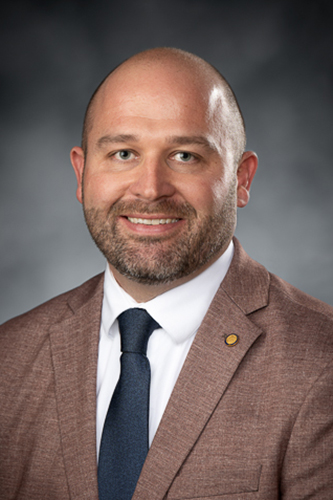
Del. Adam Burkhammer
Sponsored bills
Maddy summaryThis concurrent resolution (HCR 5) requests the West Virginia Division of Highways to rename a specific bridge in Lewis County - the Gladys Creek Box Beam bridge (Bridge #21-050/00-003.14) carrying CR 050 over Gladys Creek - as the "U.S. Army PFC William Harrison Lowther Memorial Bridge." It directs the agency to install signage identifying the bridge with this new name. The resolution commemorates PFC William Harrison Lowther (1888-1994), a WWI veteran and longtime local resident who contributed to community infrastructure in Wildcat, Lewis County. The resolution was adopted by both legislative chambers on April 12, 2025.
Maddy summaryThis bill establishes a West Virginia grant program to fund U.S. Food and Drug Administration (FDA) drug development trials for ibogaine, a substance being studied for treating opioid use disorder and related conditions. Eligible applicants (for-profit, nonprofit, or public entities) must submit detailed trial plans covering cardiac safety protocols, participant recruitment, and post-approval strategies for insurance coverage and uninsured access. The program requires applicants to seek FDA breakthrough therapy designation and establish trial sites equipped with cardiac intensive care. Funding is contingent on applicants matching state funds and committing to local biomedical industry development in West Virginia.
Maddy summaryHCR 100 is a non-binding request to the Joint Committee on Government and Finance to study hospital pricing transparency and cooperative agreements in West Virginia. The resolution asks the committee to examine current hospital price disclosure requirements, compliance with transparency laws, hospital mergers' impact on pricing, and the role of federal oversight agencies. This study will assess whether current policies foster competition, reduce healthcare costs, and improve patient outcomes. The committee is required to report findings and potential legislative recommendations to the Legislature by 2026.
Maddy summaryHB 2389 would allow West Virginia to join the Dietitian Licensure Compact, enabling licensed dietitians to practice across participating states without obtaining separate licenses in each. The bill establishes uniform requirements for licensure, including background checks and education standards, while eliminating the need for multiple state licenses. It directly affects licensed dietitians, particularly those relocating or serving military personnel and spouses, by simplifying cross-state practice. Key provisions include standardized disciplinary procedures, a fee structure for compact privileges, and protections for active-duty military members and their families. The compact aims to improve public access to dietetics services while maintaining state regulatory authority.
Maddy summaryHCR 88 is a ceremonial resolution honoring two West Virginia first responders nominated for the Medal of Valor. It specifically recognizes Captain Donald Lawson (New Martinsville Police) for rescuing two people from carbon monoxide poisoning despite his own hospitalization, and Darrell Lambert (Lake Volunteer Firefighter) for entering a burning building without protective gear to save a trapped resident, sustaining burns in the process. The resolution formally confirms the Legislature's approval of their award and directs the House Clerk to send a copy to Governor Morrisey. This is a symbolic honor with no new policy or funding changes, directly affecting only these two nominees. It passed unanimously in both chambers on April 3, 2025.
Maddy summaryHB 2777 simplifies documentation requirements for home-schooled children in West Virginia by establishing a digital "School Choice Portal" and email option for parents to submit required notices of intent. It replaces previous paper-based submission methods with these electronic alternatives, while still requiring parents to provide details about instruction subjects and annual assessments. The bill directly affects families homeschooling children who qualify for exemption under West Virginia's compulsory attendance laws. The portal must be operational by the 2025-2026 school year and will meet security and accessibility standards.
Maddy summaryHB 2027 updates West Virginia's foster care laws by clarifying when a child can be temporarily or permanently removed from a foster home. It requires the Department of Health and Human Resources to investigate abuse/neglect allegations before removing children, and mandates that foster placements lasting over 18 months (or 50% of a child’s life) cannot be terminated without specific justification - such as parental rights ending, sibling reunification, or a child aged 14+ requesting it. The bill also requires the department to notify foster/adoptive parents about available siblings within 90 days to promote placement together, while allowing court-approved separation if reunification would harm a child. This directly affects foster children, foster parents, and the department, focusing on stability and family connections.
Maddy summaryHB 2503 establishes a clothing allowance program for children in foster care in West Virginia. It requires placement providers (foster parents, kinship caregivers, or residential care providers) to assess each child's clothing and necessity needs at initial placement, providing an initial allowance of at least $375 for an adequate wardrobe and approved necessities (non-clothing items like hygiene products), with supplementary allowances of $175 for extraordinary needs like illness or damaged items. The bill mandates that placement providers maintain a child's clothing inventory throughout care and outlines three payment methods: a reloadable instant card (issued within 48 hours), child welfare worker purchasing cards, or reimbursement for provider-purchased items. This policy directly affects children in foster care and their caregivers, ensuring consistent access to essential clothing and supplies through defined financial support.
Maddy summaryHB 2377 updates West Virginia's child welfare laws to improve reporting and oversight of child abuse and neglect cases. It requires immediate reporting via a 24-hour hotline or web system with a case identifier, mandates a backup reporting system by July 1, 2023, and creates a Critical Incident Review Team to analyze serious cases. The bill also permits the Foster Care Ombudsman access to case details (including reporter identity) and changes public access to abuse reports to align with the team's reporting guidelines. Additionally, it adds new requirements for the child welfare dashboard and ensures confidentiality for reporters.