

Maddy summaryHB 3390 would provide a 15% pay raise to non-uniformed employees working within West Virginia's Division of Corrections and Rehabilitation. The bill amends §15A-3-7 of the state code to require this specific wage increase for eligible staff, excluding uniformed correctional officers. It directly affects approximately 1,200 non-uniformed workers in the corrections system, including administrative, medical, and support personnel. The bill, introduced on March 17, 2025, is currently pending in the House Judiciary and Finance committees. This is a concrete salary adjustment with no additional requirements or mechanisms beyond the specified percentage increase.
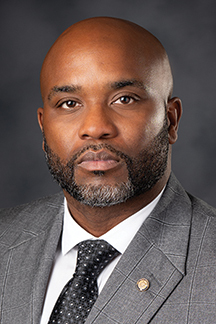
Del. Hollis Lewis
Sponsored bills
Maddy summaryHB 3392 allows West Virginia's Governor to temporarily borrow up to $50 million from the state's Revenue Shortfall Reserve Fund to support the Unemployment Compensation Fund when its balance falls below $50 million. The Governor must first confirm a projected shortfall within 30 days, and borrowed funds can only cover unemployment benefit payments. These loans must be repaid within 180 days without interest from excess funds in the Unemployment Compensation Fund, and no borrowing is permitted after September 1, 2027. The bill directly affects unemployment benefit recipients by ensuring funds remain available during short-term financial strain.
Maddy summaryHB 3340 prohibits discrimination based on hair texture or protective hairstyles (such as braids, afros, curls, and twists) in workplaces and educational institutions. It directly affects people whose hair textures or styles are historically associated with Black communities, particularly in settings with dress codes or grooming policies. The bill allows individuals to challenge discriminatory policies by showing that safety concerns are unfounded, could be mitigated with alternative tools, or are a pretext for bias. It does not ban all hair policies but requires institutions to justify restrictions that disproportionately impact textured hair. The bill is currently pending in the House Government Organization Committee after its March 13, 2025, introduction.
Maddy summaryHB 3339 requires health insurance plans in West Virginia to cover diagnostic and supplemental breast examinations without any out-of-pocket costs (such as deductibles or copays). Diagnostic exams evaluate breast abnormalities found during screening or by other means, while supplemental exams screen higher-risk individuals (e.g., due to family history) without prior abnormalities. The bill allows cost-sharing for Health Savings Account-qualified high-deductible plans only after meeting the federal minimum deductible, except for preventive care, which remains fully covered. The Insurance Commissioner may propose rules to implement these requirements using current medical guidelines from organizations like the National Comprehensive Cancer Network.
Maddy summaryHB 3327 modifies West Virginia's Hope Scholarship Program to clarify eligibility requirements for nonpublic schools and education service providers. It requires these entities to submit participation notices, provide expense receipts to parents, pass background checks for staff, and certify against discrimination to accept scholarship funds. The bill explicitly states participating schools and providers are not required to change their curriculum, admission policies, or religious practices to participate. This directly affects nonpublic schools and educational service organizations seeking to offer services to Hope Scholarship students. The changes aim to formalize participation rules while preserving provider autonomy.
Maddy summaryHB 3283 (the "GRAM'S Act") allows residents of West Virginia long-term care facilities, or their legal representatives (guardians or attorneys-in-fact), to install video or audio monitoring devices in their private rooms. The bill requires residents to pay for the device and installation (excluding electricity), obtain consent from other residents sharing the room (or their representatives), and use facility-provided forms for authorization. Facilities must accommodate residents who withdraw consent and may face license violations for noncompliance. This bill directly affects residents in nursing homes, personal care homes, and similar facilities by expanding their ability to monitor their living spaces with consent requirements.
Maddy summaryHB 3285 amends West Virginia's PROMISE Scholarship Program to provide full tuition, room, and board coverage for students majoring in STEM fields (science, technology, engineering, and mathematics) at state institutions of higher education. Currently, the program caps scholarships at $4,750 per year (or tuition cost, whichever is lower) for most students, but this bill removes that cap specifically for STEM majors. The change applies only to students enrolled in state institutions pursuing qualifying STEM degrees, while maintaining existing eligibility requirements like a 3.0 GPA and citizenship status. The bill does not alter the overall annual funding limit for the scholarship program.
Maddy summaryHB 3287 proposes a tax credit for retail food distributors who donate surplus food to nonprofit organizations serving people in need. It allows a credit equal to 10% of the original retail value of donated "apparently fit" food products, up to a $5,000 annual limit per taxpayer, applicable against corporate or personal income tax. Distributors must maintain receipts as proof of donation, and the Tax Commissioner must create rules and notify distributors through the Department of Human Services. The bill aims to incentivize food donation by reducing tax liability for participating businesses, building on existing liability protections under West Virginia’s Good Samaritan Food Donation Act.
Maddy summaryHB 3284 creates a tax credit against West Virginia personal income tax for residents who graduate from in-state colleges and stay in the state. It allows individuals or their employers to claim credit for student loan payments made while working in West Virginia, with special provisions for STEM degree holders (who get a refundable credit). The credit is calculated based on actual loan payments during the taxable year while employed in the state, and transfers from out-of-state schools qualify for reduced credit amounts. The bill also establishes eligibility rules, defines "qualified individual," and requires the credit to be tied to the financial aid package. It directly affects recent West Virginia college graduates and their employers who pay for qualifying student loans.
Maddy summaryHB 3286 prohibits West Virginia insurers from using a person's credit history to make decisions about specific insurance policies. It directly affects residents applying for or holding passenger vehicle, residential property, or other personal insurance policies. The bill bans insurers from refusing coverage, canceling policies, increasing premiums, setting rates (including discounts or rating tiers), or requiring payment plans based on credit history. This creates a concrete policy change requiring insurers to base decisions solely on other factors, not credit data. The law applies to all insurers operating in West Virginia for these covered insurance lines.