

Maddy summaryHCR 67 is a procedural resolution requesting that West Virginia's Division of Highways name a new bridge in Kanawha County the "U.S. Army 2LT Darwin Keith 'Gus' Kyle Memorial Bridge - a Medal of Honor Recipient." The bridge, located over Kanawha Boulevard and Davis Creek on Jefferson Road (County Route 601), will be marked with this commemorative title. The resolution honors Kyle's Medal of Honor service during the Korean War, including his heroic actions at the Hungnam evacuation and his death leading troops in 1951. As a naming resolution, it has no budgetary or regulatory impact - it solely requests a permanent memorial designation.
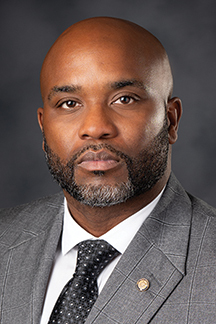
Del. Hollis Lewis
Sponsored bills
Maddy summaryHCR 72 designates March 20, 2025 as "Black Lung Awareness Day" in West Virginia. It honors coal miners affected by black lung disease (coal worker's pneumoconiosis), a preventable occupational lung condition caused by coal dust exposure. The resolution does not create new laws, funding, or policy changes - it serves as a ceremonial observance recognizing the disease's impact and existing protections like the Black Lung Benefits Act. It follows the Federal Coal Mine Health and Safety Act's emphasis on miner safety without altering current regulations.
Maddy summaryHCR 22 is a symbolic resolution requesting the West Virginia Division of Highways name a specific road segment in Oak Hill, Fayette County as "James Monroe Ellis Memorial Road." The bill defines the road section between two intersections (with GPS coordinates) along Greentown Loop Road. It honors James Monroe Ellis, West Virginia's first Black attorney admitted to the state bar, who served in the legislature and died in Oak Hill. This resolution does not change laws or affect any policies - it is solely a commemorative gesture to memorialize Ellis's contributions.
Maddy summaryHouse Resolution 10 is a non-binding resolution from the West Virginia House of Delegates urging Congress to extend enhanced premium tax credits for health insurance under the Affordable Care Act beyond 2025. These tax credits, established by the American Rescue Plan and extended by the Inflation Reduction Act, have helped over 64,800 West Virginia residents afford health insurance. Without extension, premiums would more than double for many residents, making coverage unaffordable and potentially forcing people to choose between health care and basic needs like housing and food. The resolution calls on West Virginia's congressional delegation to support extending these credits to maintain affordable health care access for state residents.
Maddy summaryHouse Resolution 9 is a non-binding resolution urging West Virginia's Governor and federal representatives to prevent federal job losses in the state. It highlights that over 17,000 West Virginians work for federal agencies and cites recent layoffs (200-250 at a Parkersburg facility) as a threat to local economies and state finances. The resolution calls for action to protect these jobs, arguing that losing them would harm communities, small businesses, and social services. It specifically urges state leaders to oppose federal workforce cuts, though it does not create new policy or funding mechanisms. The resolution was introduced on March 18, 2025, and referred to the Rules committee.
Maddy summaryHB 3502 allocates $250 million from West Virginia's Revenue Shortfall Fund ($100 million) and Income Tax Reserve Fund ($150 million) to create the West Virginia Flood Resiliency Trust Fund. This fund finances flood prevention projects in communities vulnerable to severe flooding, aiming to reduce future damage through proactive infrastructure and planning. The bill requires the State Resiliency Officer to submit annual spending reports for board review, and mandates that 6% of federal flood disaster recovery funds be dedicated to long-term resiliency planning. It directly affects state agencies managing flood response and residents in flood-prone areas by prioritizing prevention over reactive recovery.
Maddy summaryHB 3396 establishes a three-year pilot program in West Virginia schools to provide mental and behavioral health services as an alternative to disciplinary action for students with disruptive behavior. Schools participating must already operate a school-based health center or use the state’s "expanded school mental health framework," then provide assessments, ongoing treatment, and family involvement for students referred by schools or courts. The program requires schools to bill insurance, school funds (for behavioral referrals), or the Department of Health (for court-ordered cases) for services. This directly affects students facing discipline, their families, and participating schools, shifting focus from punishment to mental health support.
Maddy summaryHB 3397, the Safe Play Act, increases fines for individuals convicted of assaulting or battering athletic officials during sports events. The bill specifically targets offenses against referees, umpires, and coaches who are enforcing rules or supervising participants at the time of the incident. It amends West Virginia law to raise penalty ranges for these crimes, though exact new fine amounts are not specified in the provided text. The legislation aims to strengthen consequences for violence against officials responsible for maintaining safety and order in sports.
Maddy summaryHB 3395 requires all health insurance plans in West Virginia (both public and private) to cover screening for adverse childhood experiences (ACEs) during routine child wellness visits. It also mandates the State Department of Education to create a school-based screening program for children without health insurance. The bill defines ACEs as traumatic childhood experiences linked to long-term health risks like obesity and heart disease. This policy directly affects insurers, schools, and children under 18 by making ACE screenings a standard part of preventive care. The bill does not require treatment, only screening as part of existing wellness visits.
Maddy summaryThis bill would allow certain zero-emission vehicle manufacturers to operate as new car dealers in West Virginia, directly affecting companies that exclusively produce electric or hydrogen-powered vehicles. To qualify, manufacturers must have made zero-emission vehicles since 2008, never sold through franchised dealers in the state, and have no ownership ties to franchising entities. The key provision removes barriers preventing these manufacturers from selling directly to consumers, bypassing traditional dealership models. It applies only to zero-emission vehicle producers meeting all three criteria, not to conventional automakers.