

Maddy summaryHB 4511 requires the West Virginia Department of Human Services to conduct drug testing on all adults applying to become foster parents, kinship caregivers (family members caring for children), or designated caregivers for children in the department's legal custody. The testing screens for specific substances like marijuana, cocaine, and opioids, with valid prescriptions for detected drugs exempting applicants from penalties. Applicants with a positive test must complete approved substance abuse treatment; repeated positives lead to suspension or permanent ineligibility, and refusal to test also disqualifies applicants. The department covers initial test costs, but applicants pay for any additional testing at alternative facilities.
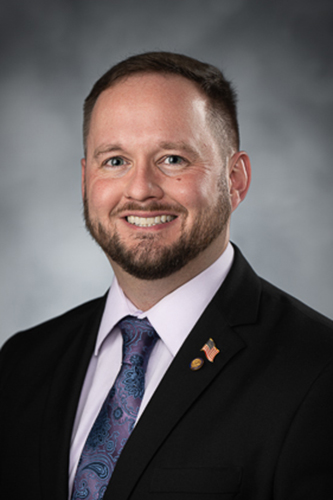
Del. Elliott Pritt
Sponsored bills
Maddy summaryHB 4136 would require teachers reviewing homeschool portfolios to have specific training in English, math, and science. Currently, any certified teacher can review these portfolios, but this bill adds a mandatory training requirement for reviewers in those core subjects. The change directly affects homeschooling families in West Virginia, as their children's annual academic assessments must now be conducted by teachers meeting this new standard. The Department of Education would need to update its guidelines to implement this requirement.
Maddy summaryHB 4521 requires the West Virginia state government to reimburse counties for the daily costs of housing inmates when a conviction results in credit for time already served in jail. This directly affects counties operating local jails and inmates whose sentences are reduced due to prior incarceration time. The bill amends existing law to mandate state reimbursement for the days an inmate is credited toward their sentence, rather than having counties absorb those costs. It clarifies that counties should be paid back for these specific days through the state's correctional funds, ensuring counties aren't financially burdened by reduced sentences.
Maddy summaryHB 4514 modifies how West Virginia deputy sheriffs' retirement benefits are calculated by changing the method for determining their final average salary. Instead of using previous calculation rules, it specifies that the highest three years of compensation within the member's last 10 years of service will now be used. This directly affects active and retired deputy sheriffs enrolled in the West Virginia Deputy Sheriff Retirement Fund. The bill is procedural, adjusting a calculation method without creating new benefits or funding.
Maddy summaryHB 4448 removes exemptions that currently protect bona fide schools, public libraries, and museums from criminal charges when distributing or displaying obscene material to minors. The bill amends West Virginia law to eliminate these specific protections, meaning these institutions would no longer be shielded from prosecution under the existing obscenity statute (§61-8A-3). Previously, schools were exempt when showing material as part of approved curriculum, and libraries/museums were exempt if minors were accompanied by parents. This change directly affects how these public institutions handle materials accessible to minors. The bill does not alter other existing exemptions, such as those for medical professionals or internet service providers.
Maddy summaryHB 4432 establishes new tenant protections and landlord notice requirements for residents in factory-built home rental communities (including mobile homes, manufactured homes, modular homes, and house trailers). It defines "good cause" for eviction, requiring landlords to provide written notice before terminating tenancy for reasons like rent arrears or lease violations, and clarifies that tenants cannot be deemed to have abandoned their home due to catastrophic events like floods or tornadoes. The bill also defines key terms like "factory-built home rental community" and "good cause" to standardize protections. These changes directly affect tenants and landlords in multi-unit factory-built home communities across West Virginia.
Maddy summaryHB 4420 increases the West Virginia Parkways Authority's membership from seven to eleven members by adding two representatives each from Kanawha, Fayette, Raleigh, and Mercer counties. The bill maintains existing representation with two members from each congressional district and one at-large public member, while expanding regional coverage to include these specific counties. This change directly affects the authority's governance structure, ensuring county-level representation in its decision-making. The bill also includes standard provisions for member terms, qualifications, and administrative procedures, without altering the authority's core responsibilities.
Maddy summaryHB 4423 would eliminate 14 specific restrictions on outdoor advertising signs along roads in West Virginia. These restrictions currently prohibit rotating signs, limit sign size (e.g., banning signs over 672 square feet), require 500-foot buffers near schools/churches, and restrict certain lighting or placement near traffic features. The bill would allow businesses to erect and maintain larger, motion-based, or closer-to-sensitive areas signs that were previously prohibited. This change would directly affect outdoor advertising companies and businesses using roadside billboards for marketing.
Maddy summaryHB 4399 clarifies the definition of a "disabled veteran taxpayer" in West Virginia law to ensure consistency for property tax benefits. The bill specifically adds that a disabled veteran must have a 90% or greater service-connected disability rating from the U.S. Department of Veterans Affairs (VA) or qualify for individual unemployability under VA disability ratings. This change directly affects disabled veterans who seek the property tax credit authorized under §11-13MM-4 of the code, as it defines eligibility more precisely. The bill does not alter tax rates or create new benefits, but ensures the existing credit applies only to veterans meeting the clarified VA disability standard.
Maddy summaryHB 4451, the Veteran Justice Act, creates a program allowing eligible veterans charged with certain offenses to avoid a criminal conviction or have a felony reduced to a misdemeanor. It applies to veterans with military-related conditions like PTSD, TBI, or substance use disorder (SUD) that contributed to their offense, provided the crime is probation-eligible and not excluded (e.g., murder, sexual assault). Eligible veterans enter a court-supervised program involving evidence-based treatment tailored to their military service challenges, a personalized case plan, and probation instead of incarceration. If they successfully complete the plan, they avoid conviction; failure results in standard sentencing. The bill excludes serious crimes like human trafficking and requires verification of veteran status using federal databases like SQUARES.