

Maddy summaryHB 4613 establishes the State Resiliency Office and requires the State Resiliency Officer to update West Virginia's Flood Resiliency Plan every two years (by June 30 in even-numbered years). The plan must include recommendations for high-impact flood prevention measures and prioritize the five most critical flood prevention projects in each regional planning zone, with estimated costs for each project. The State Resiliency Officer must also provide quarterly reports to the Joint Legislative Committee on Flooding, coordinate flood mitigation efforts with federal and state agencies, and maintain a centralized website for flood-related information. This bill directly affects the State Resiliency Office, the Governor's office, and the legislative committee, aiming to improve statewide flood preparedness and resource allocation.
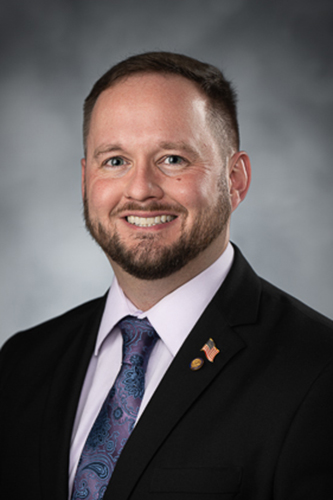
Del. Elliott Pritt
Sponsored bills
Maddy summaryHB 4572 creates a pilot program allowing West Virginia county boards to designate struggling rural public schools as "Rural Innovation Schools" to prevent closures. It provides these schools with specific flexibilities unavailable to traditional public schools, including class-size waivers, staffing flexibility (like certification exemptions and bypassing seniority rules), calendar/scheduling adjustments, budget repurposing authority, and curricular choices - while keeping them under county board governance. Schools must meet criteria like low enrollment, geographic isolation, or recent closure threats to qualify, and must enter a performance agreement with the state charter school board for three-year reviews. The program also allows schools closed within the past two years to apply for reopening under these provisions if facilities are safe and viable.
Maddy summaryHB 4554 would establish a voluntary registry for individuals with certain disabilities - such as autism, Alzheimer’s, or Down syndrome - to help law enforcement better interact with them during encounters. People with disabilities, or their parents/guardians for minors or incapacitated adults, could enroll by providing medical certification (e.g., from a doctor or psychologist) or legal documentation (e.g., court orders or guardianship papers). The registry, maintained by local law enforcement, would include personal details and disability information but remain confidential and exempt from public disclosure. Individuals could request removal from the registry at any time, with law enforcement required to comply within five business days.
Maddy summaryHB 4519 requires full cash bail for individuals rearrested for violent or gun-related crimes while already out on bail for a previous violent or gun-related offense. It also mandates that if convicted of these subsequent crimes, sentences must run consecutively (one after another) rather than concurrently. This bill directly affects defendants charged with violent or gun-related offenses who are already on bail for similar crimes when re-arrested. The key provisions replace standard bail procedures with mandatory cash bail requirements for these specific re-arrests and alter sentencing structure for repeat offenses. The bill does not change general bail rules but targets repeat offenders in these categories.
Maddy summaryHB 4513 would expand a state tax exemption for pension benefits by extending the existing $2,000 annual exclusion from West Virginia income tax to include Division of Natural Resources police, deputy sheriffs, full-time firefighters, and municipal police officers. Currently, this exemption applies to some retirement benefits but excludes these specific public safety roles. The bill modifies tax code sections to explicitly add these officers to the list of law enforcement personnel whose pension payments qualify for the exemption. This change directly affects eligible officers in these roles by reducing their taxable income for state tax purposes. The bill is in early stages, having been introduced on January 19, 2026, and referred to the House Finance Committee.
Maddy summaryThis bill prohibits any organization receiving state funding from requiring COVID-19 vaccination as a condition for employment or participation in its programs. It mandates exemptions for medical reasons (verified by a physician) or sincerely held religious beliefs (via notarized statement), and bans discrimination against employees using these exemptions. The law applies to all state-funded entities, including government agencies, schools, and private businesses, but excludes Medicare/Medicaid-certified facilities due to federal regulations. The bill takes immediate effect upon passage.
Maddy summaryHB 4512 requires child protective services (CPS) workers to audio-record all interactions during investigations of suspected child abuse or neglect. This applies to every visit or interview with a person under investigation, though workers must obtain informed consent or a court order before recording in private settings like homes. The bill also mandates a face-to-face interview with the child within 14 days of investigation initiation to develop a safety plan. It directly affects CPS workers conducting investigations and families involved in ongoing abuse/neglect cases. The law amends existing West Virginia code to establish this recording requirement as a standard procedure.
Maddy summaryHB 4090 allows West Virginia county school boards to hire or accept as volunteers certified chaplains to provide support services for students, staff, and parents. The bill requires chaplains to undergo background checks like child care workers but exempts them from needing state certification or licensing. School boards must also prohibit sex offenders or child predators from serving. Chaplains are granted liability protection for actions taken in their role, unless those actions were maliciously intended to harass or intimidate. The bill directly affects public school districts across West Virginia by expanding their ability to provide spiritual support services.
Maddy summaryHB 4526 establishes rules for election observers in West Virginia, affecting political parties, candidates, and third-party organizations that may send up to two observers per election location. The bill requires observers to present a letter of appointment and wear a badge, while allowing them to observe most election activities - including ballot handling, tabulation, and equipment testing - except for individual vote casting or confidential ballot completion. It mandates election officials to provide full access to observation areas, prohibit obstructing observers, and ensure public access to ballot reviews and recounts. The law also permits observers to use recording devices and handwritten notes, with officials facing potential sanctions for noncompliance.
Maddy summaryHB 4520 would provide a 25% discount on lodging and services at West Virginia State Parks for residents who present a valid West Virginia driver's license or state ID. The bill requires state park directors to implement this discount for all qualifying residents. It directly affects West Virginia residents seeking to use state park lodging or services. The policy change would make park stays more affordable for in-state residents under this specific program.