

Maddy summaryHB 4658 would add a new pay increment for teachers with a Master's degree plus 60 credits (or equivalent) to West Virginia's teacher salary schedule, which currently only includes increments up to Master's plus 15. The bill establishes a base salary amount for this category and an additional $69 per year of experience (up to 35 years), matching the structure of existing increments like "A.B. + 30" and "M.A. + 15." This change would directly increase pay for teachers meeting this specific qualification, including those with a Master's degree and 60 additional credits beyond the degree. The bill does not affect the existing "Bachelor’s Plus 30" increment, which is already listed in the current salary schedule.
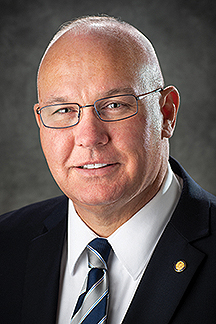
Del. Jeff Campbell
Sponsored bills
Maddy summaryThe Disaster Recovery Acceleration Act allows West Virginia homeowners to rebuild or repair homes damaged by natural disasters up to 125% of the original square footage without triggering new development standards or lengthy environmental reviews. It requires rebuilding to follow current building codes, while preserving any grandfathered rules (such as older construction standards) that applied to the original property. This applies directly to individuals restoring their own residential property after a disaster, aiming to simplify and speed up recovery efforts. The bill does not alter building code requirements but removes additional regulatory barriers for reconstruction.
Maddy summaryHB 4479 provides tax credits to West Virginia manufacturers that transform locally harvested wood into value-added products like veneer, engineered lumber, or wood pellets. The credits - ranging from $1.25 to $6 per ton of processed wood - apply to corporate or personal income tax based on volume tiers, with annual caps of $1.25 million for existing facilities and $2.5 million for new operations or expansions. To qualify, manufacturers must meet a "minimum transformation standard" (e.g., altering wood structure) using West Virginia-sourced feedstock, excluding basic handling like cutting or sorting. Credits are prorated based on the percentage of West Virginia wood used in production.
Maddy summaryHB 4420 increases the West Virginia Parkways Authority's membership from seven to eleven members by adding two representatives each from Kanawha, Fayette, Raleigh, and Mercer counties. The bill maintains existing representation with two members from each congressional district and one at-large public member, while expanding regional coverage to include these specific counties. This change directly affects the authority's governance structure, ensuring county-level representation in its decision-making. The bill also includes standard provisions for member terms, qualifications, and administrative procedures, without altering the authority's core responsibilities.
Maddy summaryHB 4480 modifies West Virginia's rules for access points to state highways used by commercial or industrial properties. It removes permit requirements for new access points, streamlining the process for businesses. The bill also creates standards for reviewing existing access points (especially those over 50 feet wide on highways with speed limits above 45 mph), allowing the Division of Highways to require safety changes like "no parking" signs based on traffic data. These changes directly affect property owners with highway-facing commercial or industrial properties.
Maddy summaryHB 4424 allows landowners or lessees whose property is damaged by deer or other wildlife to hire a third-party hunter to kill the animals using a bow and arrow. Landowners must report the damage to wildlife authorities, who will investigate and issue a permit enabling the hiring of a hunter. The hunter must follow the same bow and arrow restrictions as during regular hunting seasons, such as minimum bow poundage requirements. This bill does not change hunting seasons but provides a specific method for landowners to address property damage.
Maddy summaryHB 3313 allows high school students to take community college courses while still enrolled in high school, earning both high school and college credit. It directly affects high school students in participating school districts by expanding access to college-level coursework without requiring separate enrollment. The key provision establishes a streamlined process for high schools to partner with community colleges, ensuring courses meet academic standards and transferable credit requirements. This policy change simplifies pathways for students to begin higher education earlier, reducing future college costs and accelerating degree completion. The bill was signed into law on April 25, 2025, and is now effective.
Maddy summaryHB 2516 repealed outdated and unused sections of state code. It did not create new laws or impact residents, as it solely removed obsolete legal language from the statutes. The bill was signed into law by the governor on April 8, 2025, and became Chapter 59 of the 2025 regular session laws. This procedural action simplified the legal code without altering policy or affecting any individuals or entities.
Maddy summaryHB 3209 requires every public and charter school in the state to have at least one school counselor for every 250 students. This law directly affects all public and charter schools by mandating a specific counselor-to-student ratio. The key provision sets a clear standard: schools must maintain a minimum of one counselor per 250 enrolled students, ensuring consistent access to counseling services. The bill became law on July 30, 2025, after approval by the governor.
Maddy summaryHB 3164 requires registered sex offenders to pay an annual fee starting in 2025. This law directly affects individuals classified as registered sex offenders under state law, imposing a new financial obligation on them. The key provision mandates an annual payment to the state, replacing or adding to previous requirements. The bill became law after Governor approval on April 28, 2025, and was enacted as Chapter 81 of the 2025 Regular Session.